A faster and stable app is what separates a good iOS product from a forgettable one, and that starts with Swift. It cuts crashes, speeds up load times, and taps into every Apple device seamlessly. Together, this drives better retention, stronger ratings, and real business growth.
Why Swift App Development Wins for iOS Apps
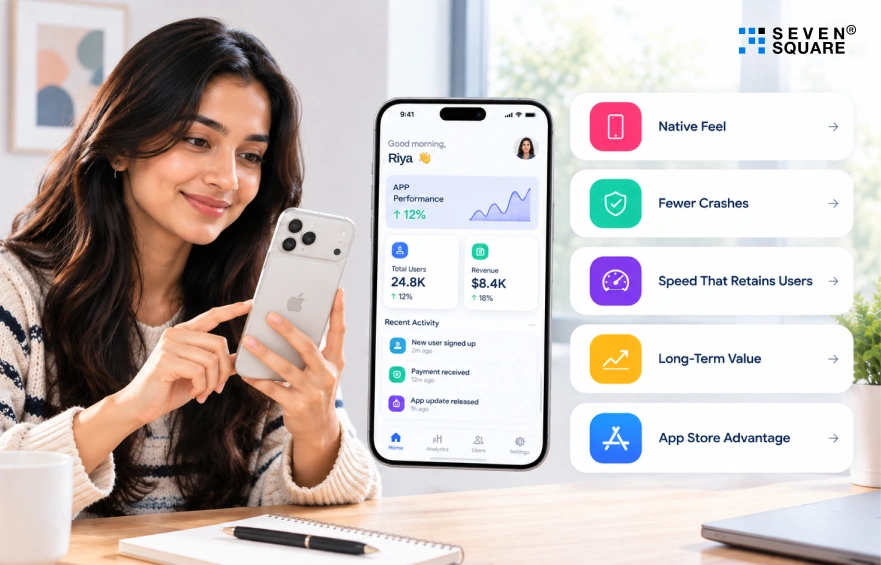
1. Native Feel
Users can usually tell when an app feels native versus adapted.
Swift apps blend into iOS naturally, matching Apple’s own design language closely.
That familiarity builds trust with users almost instantly.
2. Fewer Crashes
Swift’s structure removes entire categories of bugs common in older languages.
Fewer crashes mean users stick around longer instead of deleting the app in frustration.
Stability quietly protects your app store rating over time.
3. Speed That Retains Users
Modern iOS devices are built to run Swift efficiently, resulting in noticeably faster load times.
Every extra second of loading pushes users closer to abandoning the app.
Speed isn’t a nice-to-have, it’s a retention tool.
4. Long-Term Value
Apple continues pouring resources into Swift’s development every year without slowing down.
Choosing Swift today means the app won’t feel dated or unsupported in two years.
That long runway protects your original investment.
5. App Store Advantage
Apps built with Swift and SwiftUI can make the Apple review process easier.
Following platform guidelines closely means fewer rejections and delays.
Faster approval gets your product in front of users sooner.
Swift App Development Versus Older Approaches
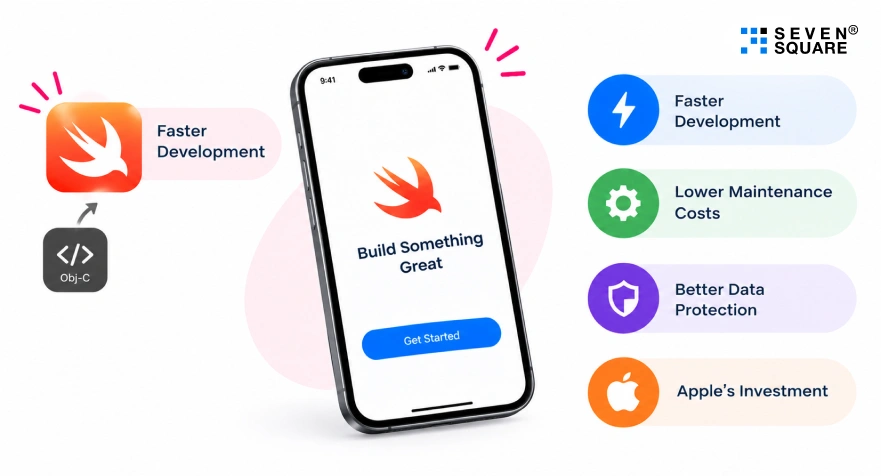
1. Shorter Path From Idea to Launch
Swift’s cleaner, more modern syntax lets developers build features noticeably faster than before.
A shorter development cycle means your product reaches the market sooner.
Speed to market often matters more than perfection at launch.
2. Lower Maintenance Costs
Code that’s easier to read is naturally easier and cheaper to update later.
Businesses avoid the trap of depending on developers who understands outdated code.
This keeps future feature costs predictable.
3. Protection for User Data
Swift catches many common coding errors before they ever reach a live app.
This matters enormously for apps handling payments, health data, or personal information.
Fewer vulnerabilities mean fewer headaches down the line.
4. Apple’s Investment
Apple continues expanding Swift’s capabilities with every new iOS release.
Objective-C, meanwhile, is being phased out gradually across the ecosystem.
Betting on Swift means betting on where Apple itself is headed.
Choosing the Right Swift App Development Company
1. Proven Track Record
Ask any potential company to show real, shipped iOS apps they’ve built before.
Experience reveals itself in how few surprises show up mid-project.
A proven history is worth far more than a confident sales pitch.
2. Business-First Approach
The right company asks about your customers and revenue model before writing any code.
Every technical decision should trace back to a real business reason.
Technology should always serve the product’s purpose, not the other way around.
3. Security Focus
Ask directly how a team plans to protect user data and payment information.
This becomes non-negotiable for apps in finance, healthcare, or e-commerce.
The companies who can’t answer clearly is a red flag worth noticing.
4. Clear Communication
You shouldn’t need a computer science degree to understand a weekly project update.
A good company translates technical progress into plain, useful language.
This transparency builds trust throughout the entire build process.
How Swift App Development Grows With Your Business
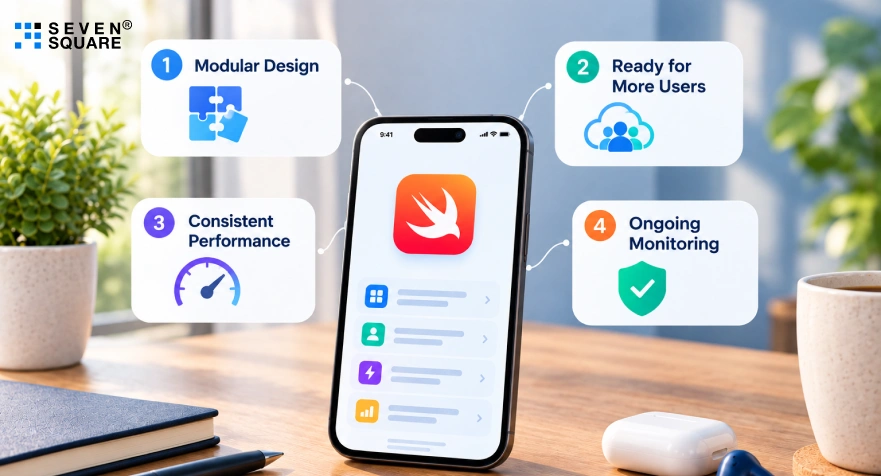
1. Modular Design
Apps constructed from smaller, modular parts are far easier to expand later.
New features slot in without disturbing what already works reliably.
This flexibility saves time and cost during future updates.
2. Ready for More Users
A properly built Swift app connects easily to cloud infrastructure as demand grows.
This means a spike in users doesn’t require rebuilding the app’s backend from scratch.
Growth becomes a milestone, not a crisis.
3. Consistent Performance
Background processing keeps an app responsive even as usage climbs steadily.
Users should never notice their app slowing down just because it’s gaining traction.
Consistent performance is part of what keeps people coming back.
4. Ongoing Monitoring
Regular performance monitoring catches small issues before they turn into visible problems.
This proactive approach protects your app store reviews over the long run.
An app that’s watched closely rarely breaks unexpectedly.
Why Work With Us for Your Swift App Development
1. Real Deliveries
We’ve built high-performing iOS apps across several different industries and use cases.
That range of experience means fewer costly missteps during your specific project.
Real delivery history speaks louder than any pitch deck.
2. Goal-Driven Decisions
We start every project by understanding what your business actually needs to achieve.
Every technical choice afterward ties directly back to that original goal.
Technology serves the strategy, never the reverse.
3. Full Ecosystem Support
Our builds work seamlessly across iPhone, iPad, and Apple Watch from day one.
Your users get one smooth, consistent experience no matter which device they’re using.
That consistency reflects directly on your brand’s credibility.
4. Partnership Built on Straight Answers
We explain every decision in plain language throughout the project.
You’ll always understand why something is being built a specific way.
That honesty is what turns a single project into an ongoing partnership.
FAQs
If your product is aimed primarily at iPhone or iPad users, Swift is almost always the stronger long-term choice over cross-platform tools. We usually walk founders through this decision early, since it shapes both cost and performance down the line.
Not necessarily. Swift can take slightly longer to set up for multi-platform products, but for iOS-only apps, it often saves money through fewer bugs and stronger performance. We help clients weigh this trade-off honestly before committing to either path.
Timelines vary with feature complexity, but a focused MVP can often launch within a matter of weeks. We prioritize getting a working version in front of real users quickly, then improving it based on actual feedback.
In many cases, yes, especially if the core logic is solid and only performance or design needs work. We typically assess the existing app first to figure out what can be reused versus rebuilt from scratch.
Starting with iOS does not mean ignoring Android. We can structure the app with future expansion in mind, making it easier to plan and build the Android version when your business is ready.