A music streaming platform in 2026 costs between $45,000 and $500,000+ depending on features, infrastructure, and scope. An MVP takes 10 to 16 weeks. A full ecosystem with live streaming, NFT minting, and concert booking takes 8 to 12 months.
Is your platform giving users a reason to stay
or just a place to listen?

Most music streaming platforms still feel transactional.
The interaction ends the moment the music stops.
And this model is getting weaker every year.
Listeners want discovery that evolves.
Creators want ownership and direct audiences.
Artists want engagement outside of streams.
The platforms growing in 2026 are not built around playback alone.
They are built around interaction, community, and participation.
That is the direction most founders underestimate before they start building.
The Market Reality Behind Music Streaming in 2026

The global music streaming market sits at $58.70 billion in 2026.
That number attracts startups.
But it also attracts the wrong kind of confidence.
1. Where Real Growth Is Happening
Emerging markets are driving the next wave of streaming growth.
Monetization and interactive platforms are growing faster than passive listening models.
The gap is not more subscribers.
It is owning the model nobody has built yet.
2. Subscription Fatigue Is Real
50% of consumers feel overwhelmed by subscriptions.
Pure subscription revenue is the most crowded position in the market.
Winning platforms layer memberships, tokens, and live events into the model.
3. Retention Reality Most People Ignore
| Metric | Reality |
|---|---|
| App retention rate | 3.5% |
| Day-1 activation | 19.2% |
| Day-30 activation | 5.8% |
| Monthly drop-off | 6.3% |
| Annual drop-off | 54.1% |
A platform with 100,000 users and 54% annual churn is not scaling.
It is replacing the same users every year at acquisition cost.
Why Most Music Streaming Platforms Lose Users
The problem is not access to music anymore.
It is what happens after the play button.
1. Catalog Without Context Exhausts Users Fast
Users do not leave because of audio quality.
They leave when the platform stops surprising them.
That is an engagement design failure, not a catalog failure.
Mood and context keep users discovering.
Genre tabs exhaust them in weeks.
2. Artists Have No Reason to Promote You
Streaming services retain approximately 30% of collected revenue
100,000 streams earns $300. No reason to commit to your platform
Platforms that fix creator monetization attract creators who bring their audiences with them.
3. Live Streaming Converts Listeners Into Participants
Streaming alone builds no relationship between fan and artist.
Live sessions with Q&A and exclusive drops convert a listener into a participant.
Playback to the engagement ecosystem is the minimum requirement to compete in 2026.
4. Ownership Build the Strongest Habit Loops
A fan holding an NFT tied to an artist earns from streams.
People earning from streams check the platform daily.
That is not a feature addition.
That is retention built into the product architecture.
What It Actually Costs to Build in 2026
| Platform Type | Scope | Cost | Timeline |
|---|---|---|---|
| Streaming MVP | Audio, playlists, feed, profiles | $45,000 – $80,000 | 10 – 16 weeks |
| Mid-level | Creator tools, live streaming, AI, social | $90,000 – $200,000 | 5 – 7 months |
| Full Ecosystem | NFTs, token economy, concert booking | $250,000 – $500,000+ | 8 – 12 months |
Post-Launch Budgets
| Areas | Operational Reality |
|---|---|
| Music licensing | Mechanical, master, and publishing rights by region. |
| CDN and bandwidth | Costs rise with active streams |
| AI infrastructure | Ongoing training and processing |
| Concurrency scaling | Traffic spikes during live events |
| Mobile maintenance | Updates for OS versions and security |
Licensing alone has shut down more streaming platforms than any technical failure.
Budget for it before you build not after your first dispute.
Stack Decisions That Scale or Break You
| Layer | Technology | Why It Matters |
|---|---|---|
| Mobile | React Native | iOS and Android from one codebase |
| Backend | Node.js + Express | Streaming logic, real-time events, APIs |
| Database | MongoDB | Flexible schema for playlists, NFTs, events |
| Audio processing | FFmpeg or Mux | Transcoding without custom server clusters |
| Storage | AWS S3 | Petabyte-scale with JIT integration |
| CDN | Cloudflare | Sub-200ms global audio delivery |
| Real-time | Firebase or WebSockets | Live sessions, fan chat, push events |
Every architecture decision impacts how your platform scales.
Custom software development ensures every layer is built around around real user behavior.
Get it right once everything you build after compounds.
How MadHouse Reached 60%+ App Engagement
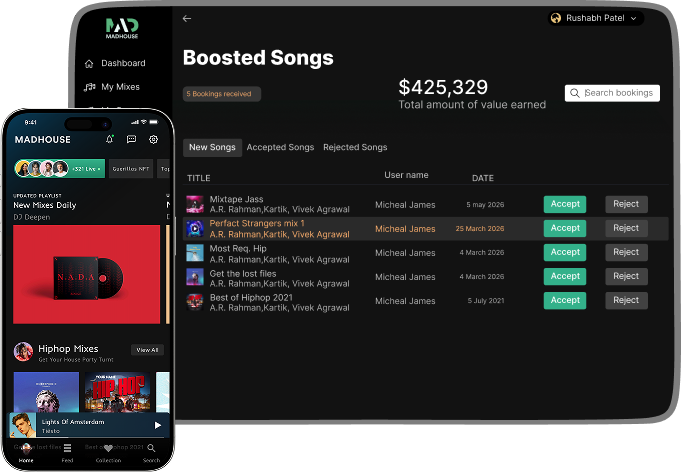
MadHouse was built to fix a broken fan experience in music.
Streaming, tickets, NFTs, and artist updates lived on separate platforms.
Fan loyalty existed. No system was designed to reward it.
Artists had no way to monetize direct relationships with their audience.
What We Built Inside the Platform
We brought the entire music experience into one connected system.
Audio streaming → NFT ownership → Concert booking → Social tokens → Live fan interaction.
Every role has their own purpose-built workflow.
Platform Impact After Launch
| Metric | Reality |
|---|---|
| Mobile-First Usage | 60%+ across streaming and fan interactions |
| Social and Event Interactions | 3X through app-driven promotions/td> |
| User Retention Improvement | 38% driven by loyalty-based features |
| Concert Booking Response | 40% faster through in-app workflows |
The fan experience did not change on its own.
The architecture underneath it did.
And that architecture is now what MadHouse scales on.
Want to see how we built the live streaming layer?
If You Are Ready to Build This, We Are Ready to Get It Right
1. Map the Gaps Before Designing Anything
We start with what makes users stay and creators commit.
Identify where the listener journey breaks and where creator monetization fails.
That map becomes the product architecture.
2. Build What Proves Value First
The first version targets the specific layer that makes the platform worth using on day one.
Real users test it and that behaviour shapes what comes next.
You see outcomes before the full build is complete.
3. Every Layer Is Configured Before the First User Signs
Every decision is accounted for before rollout.
Your platform does not adapt as it grows.
It is built to handle growth from the start.
The music streaming market in 2026 is not short on platforms.
It is short on ones that give creators a reason to stay and fans a reason to belong.
Every week without the right architecture is a week your future users are on someone else’s platform.
FAQs
Catalog solves discovery for two weeks. After that, users need the platform to understand mood, context, and behaviour. Without that layer, catalog size stops mattering. We build the recommendation architecture that keeps it working long after onboarding.
In-house builds stall at transcoding, concurrency, and AI pipelines. These are system design decisions that get expensive when made wrong early. We have solved them across platforms already and bring that directly into your build.
We map how your fans engage and where monetization gaps exist. Token and NFT structure follows that logic, not a template. We design the economy first. Then build the system around it.
Concurrency is the most expensive decision to fix post-launch. We design cell-based architecture from the start so the platform handles spikes without degradation. Your biggest event should be your strongest performance moment.