AI exam preparation app development in 2026 costs $40,000 to $200,000+, depending on AI features like adaptive learning, AI tutoring, and predictive analytics. An MVP takes 12 to 14 weeks to build, while a full platform can take up to 24 weeks.
When a student misses three study sessions,
does your app intervene, or does anyone notice?

An aspirant downloads your app three days before starting a new study plan.
She completes onboarding, selects her exam date,
and starts the recommended schedule.
On Day 4, she misses a study session.
The app sends the same reminder it sends everyone else.
She misses another session the next day
Nothing changes.
Her study plan stays the same.
No one knows she is falling behind.
By the second week,
she is spending more time on YouTube and Telegram than inside your app.
She has not stopped preparing for the exam.
She has simply stopped using your app.
That is not a content problem.
It is a retention system problem.
The Retention Math Behind AI Exam Preparation Apps

1. EdTech Retention Sits Below Every Other Category
Education apps retain just 2% of users by day 30,
against a cross-category average of roughly 5-7%.
That gap holds even against other low-engagement categories like ecommerce.
Most learners are gone well before the app becomes a habit.
2. Student Behavior Online Shows the Real Cost
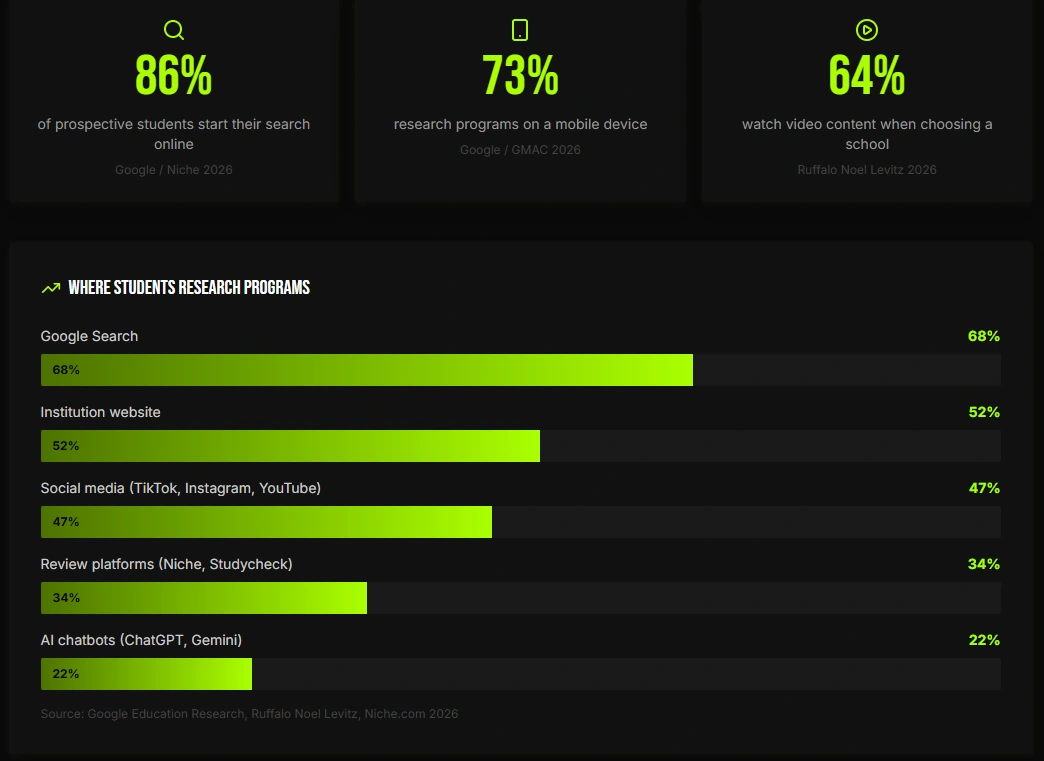
The average prospective student visits 12 institution websites before deciding.
Losing that student early wastes weeks of research effort.
Retention is where all that acquisition effort finally pays off.
3. Course Completion Ironically Drives Cancellations
Students hit their goal, then they walk away.
The app delivered on its promise, then stopped there.
That’s not a learning failure. It’s a retention design gap.
Success should open a next step, not an exit.
Why Generic Exam Preparation Apps Don’t Retain Students

1. Fluency Illusion Fakes Real Progress
AI tools often make students feel more prepared.
That confidence doesn’t hold up on delayed recall.
Psychologists call this pattern the fluency illusion.
Auto-generated content skips the effort that builds memory.
2. Late Reminders Can’t Win Students Bac
Most apps wait too long to re-engage students.
By then, the decision to leave is made.
The real re-engagement window comes early, not late.
Late reminders document issues, they don’t reverse it.
3. Feature Lists Are Not a Learning System
Bolting a chatbot onto content isn’t intelligence.
A real learning system runs on a closed loop.
Every action feeds data back into what comes next.
Scattered features can’t replicate that connected feedback cycle.
Core Features Every AI Exam Preparation App Needs
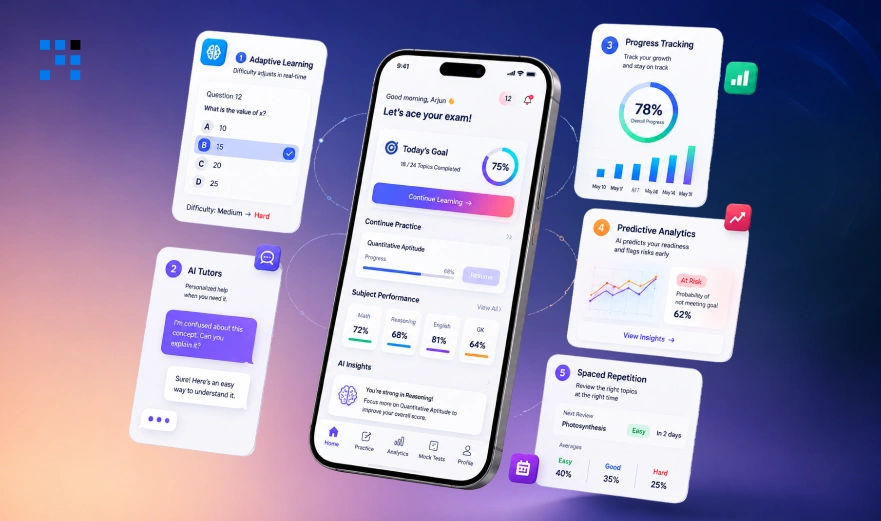
1. Adaptive Learning
Static content treats every student the same way.
Adaptive systems adjust difficulty and pacing in real time.
That responsiveness is one of the strongest retention levers.
It meets students where they actually are.
2. AI Tutors
A basic chatbot has no memory of the student.
AI tutors intervene right when confusion happens.
Feedback given mid-struggle sticks, late feedback doesn’t.
The real gap isn’t intelligence, it’s timing.
3. Progress Tracking
Students need to see their own readiness clearly.
Visible progress turns effort into something measurable, not invisible.
It also feeds the predictive layer with real signal.
Without it, students quit before they see momentum.
4. Predictive Analytics
Missed logins and stalled progress predict churn early.
Flagging risk in week one creates room to intervene.
Prevention at that stage beats any later recovery.
Early signals matter more than late interventions.
5. Spaced Repetition
Students who write their own flashcards retain more.
Manual recall forces the brain to do real work.
Auto-generated summaries skip that effortful learning step.
The fix is balance, not removing AI entirely.
What Goes Into AI Exam Preparation App Development
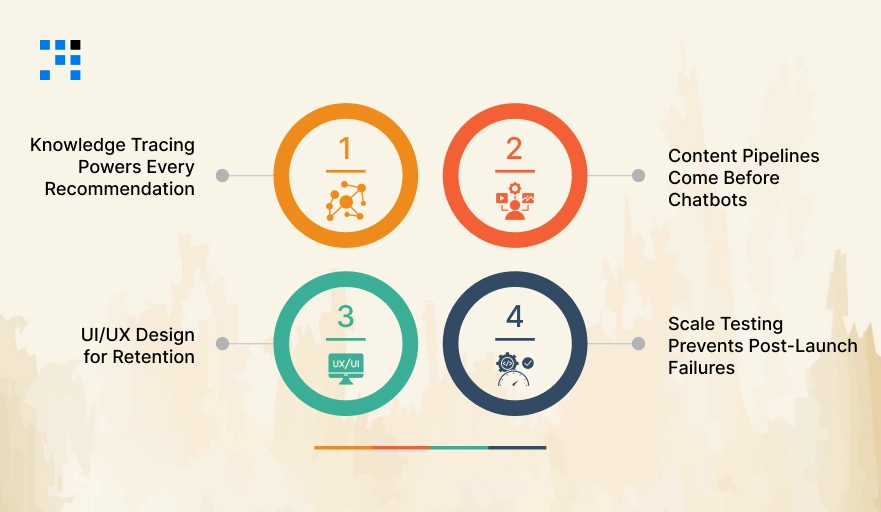
1. Knowledge Tracing Powers Every Recommendation
Knowledge tracing models what a student knows.
It updates that model after every interaction.
This layer decides what a student sees next.
Get it wrong, and personalization becomes guesswork.
2. Content Pipelines Come Before Chatbots
Syllabus mapping and content tagging happen first.
Question-generation pipelines target specific weak areas.
RAG grounds AI answers in verified content.
This reduces hallucination risk in explanations.
3. UI/UX Design for Retention
Too many screens delay the first real learning win.
Students need value before they lose interest.
Give them one useful result quickly.
Do not make them explore ten features first.
4. Scale Testing Prevents Post-Launch Failures
Production systems need 10,000+ concurrent sessions handled.
Real-time inference needs sub-100ms response latency.
Testing at scale catches issues before students do.
Skipping this step shows up during peak usage.
Why Data Privacy Decides Trust in AI Exam Preparation App
1. FERPA and GDPR Compliance Builds Institutional Trust
Districts ask for data flow diagrams before signing anything.
Parents ask who sees their child’s learning history.
Real compliance means audit trails, not a checkbox in a form.
2. Data Security Protects the Learning Platform’s Business
One breach in a K-12 platform ends the sales conversation.
Vendor vetting, encrypted storage, and role-based access aren’t optional add-ons.
Security debt compounds quietly until it becomes a headline.
3. Privacy by Design Prevents Costly Rebuilds
Privacy decisions belong in schema design, not settings pages.
Data minimization, encryption, and access controls come from day one.
Retrofitting compliance means rebuilding half your data layer later.
What AI Exam Preparation App Development Costs
Cost scales with how much AI intelligence you build in.
A quiz app and a true adaptive system are not the same investment.
The table below breaks down what changes at each tier.
| Tier | What’s Included | Cost Range | Timeline |
|---|---|---|---|
| MVP | Core content, basic AI recommendations, mock tests | $40,000-$75,000 | 12-14 weeks |
| Mid-Level | Adaptive engine, AI tutor, analytics dashboard | $80,000-$140,000 | 16-20 weeks |
| Full Platform | Knowledge tracing, early warning system, multi-language tutor | $150,000-$200,000+ | 20-24 weeks |
Feature depth drives cost here, not visual polish.
Educational app development lets you build the retention loop around your actual students,
Pick the right tier now or rebuild the AI layer in the next six months.
How UPSC Exam Preparation App Hit 40% Higher User Retention
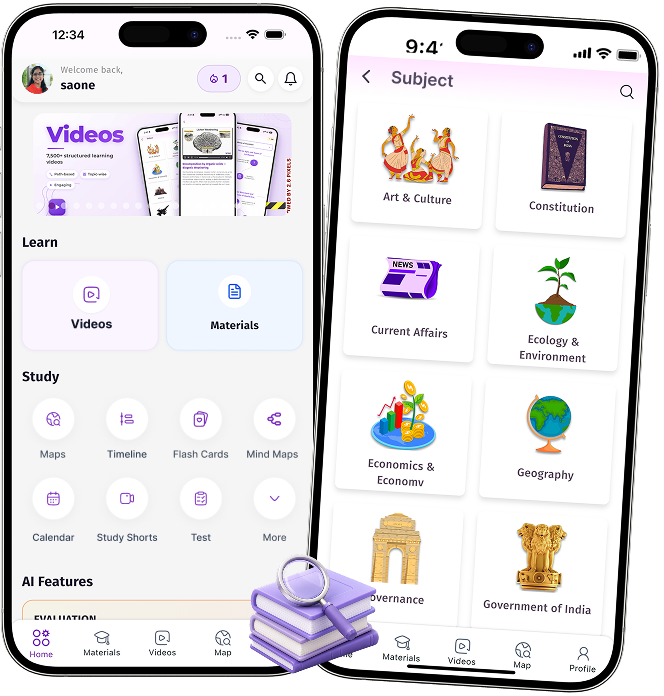
Self Study wanted to help UPSC aspirants prepare for one of India’s toughest exams.
But aspirants had no way to trust or even understand it.
They came to us to turn that vision into an app users could rely on.
Where Aspirants Were Struggling to Prepare
| Area | What Was Happening |
|---|---|
| Structured Learning | No clear path through subjects or syllabus |
| Doubt Resolution | Students had no real-time way to resolve doubts |
| Practice Tools | MCQs and flashcards existed nowhere in one place |
| Progress Tracking | Weak visibility into exam readiness |
What Changed After We Stepped In
We built features and connected them into a single learning journey.
Subject discovery led into guided video learning, in one flow.
AI mentorship resolved doubts in real time, without leaving the app.
MCQ practice and flashcards closed the loop, right where users needed it.
Impact After Implementation
| Metric | Result |
|---|---|
| Structured Content Library | Coverage across every GS subject |
| Active Aspirants | 14,900+ learning on the platform |
| User Retention | 40% higher |
| Feature Visibility | Dedicated pages for AI mentor, MCQs, flashcards |
| App Downloads | 2X increase |
| Active User Growth | 12.3X |
The 40% retention gain came from connecting features, not adding more of them.
This is what AI exam preparation app development looks like when the loop actually works.
Want to know exactly how we built it for them?
Why We’re the AI Exam Prep Development Partner You Need
1. Retention Gap Analysis
Every student drop-off point gets mapped first.
Day 3, day 7, and post-completion drop-off.
That audit becomes the blueprint for development.
Guesswork never drives a single build decision.
2. AI Architecture Built Around Your Actual Students
Knowledge tracing and early warning signals ship together.
Nothing gets built as a disconnected add-on.
The system reflects your syllabus, not a template.
Generic AI wrappers get rejected at the design stage.
3. Real Aspirants Test Every Flow Before Launch
Working prototypes reach real students before launch day.
Friction points surface before development locks anything in.
Every fix happens before it costs you a single user.
Nothing ships untested against actual student behavior.
4. You Run Content | We Run the Infrastructure
Onboarding, AI tutor, and early alerts get configured first.
Roles and workflows are ready before first login.
Content and community stay entirely in your hands.
The system underneath runs without your daily involvement.

EdTech apps lose students when retention systems fail to respond early.
Start with the right architecture before drop-offs compound.
FAQs
Nothing gets discarded. We audit your existing content first and map it into the new structure before any development starts. Your team keeps working with what you already have while we build the system around it, not instead of it.
Early signals first-session completion, day-3 return rate show up within the first couple weeks. Deeper retention shifts, like the kind tied to knowledge tracing and adaptive difficulty, typically take 60-90 days to show a clear trend, since that’s how long it takes real usage data to train the system properly.
No. Everything from knowledge tracing, adaptive difficulty, early warning signals gets configured and handed off before your first user logs in. Your team manages content and community. The AI layer runs on its own underneath that.
Yes, that’s part of why the architecture matters early. A system built around your actual syllabus from day one scales to new subjects without a rebuild. A generic system usually can’t say the same.