A loyalty platform fixes redemption by connecting balance, reward, and checkout into one instant action. It removes the guesswork between earning a point and actually using it.
If your best customer walked in today to redeem points,
would your system even know what to give them?

A regular buys coffee at the same shop every morning.
Each purchase adds points to her account, in the background.
She never checks the app, because nothing ever tells her to.
By May she has 450 points sitting unused.
In June she finally opens the app, right at the counter.
The reward she wants needs 600 points.
She has no idea she’s only 150 away.
So she pays full price and puts her phone away.
She doesn’t open the app again for weeks.
By August, those 450 points quietly expire.
She was loyal for months and still got nothing for it.
A new coffee shop opens two blocks away, no app needed.
She switches, because at least there she knows what she’s paying for.
The brand didn’t lose a sale.
They lost her, and never noticed.
Why Most Loyalty Platforms Lose Members at Redemption
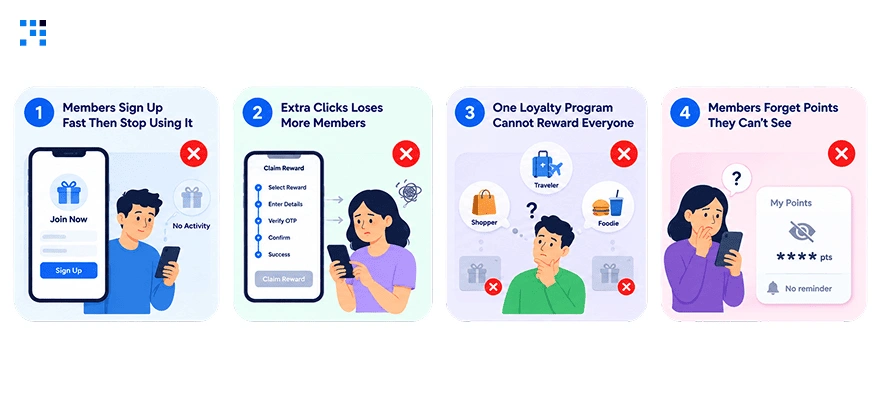
1. Members Sign Up Fast Then Stop Using It
Sign-up takes one form and a discount code.
Using the reward later takes a login, a search, and a decision.
Deloitte found shoppers join eight programs but actively use only five.
That gap is spend you already paid for and never got back.
2. Extra Clicks Loses More Members
Most redemption flows have five or six screens.
Check balance, browse rewards, filter, pick one, confirm, get a receipt.
Each screen is a chance for someone to give up.
Cut it to two screens and more people finish.
3. One Loyalty Program Cannot Reward Everyone
A basic catalog shows the same offers to everyone.
A skincare shopper and a one-time gadget buyer see identical options.
Neither one finds anything worth the effort.
Sorting rewards by what people actually buy fixes this.
4. Members Forget Points They Can’t See
Points sit in a tab nobody opens after week one.
No badge, no email, no notification reminds them it’s there.
Most of the members admit they simply forget to redeem.
A balance that’s easy to see is what breaks that habit.
What a Loyalty Platform Must Fix Before Members Return
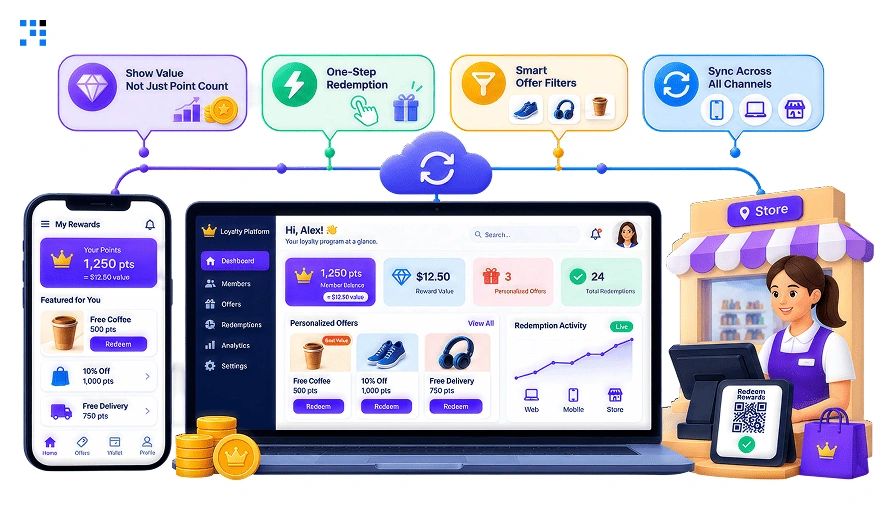
1. Show Value Not Just Point Count
5,000 points means nothing to most people.
$50 is a number anyone understands instantly.
Showing real value skips the mental math step.
That one change lifts redemption without changing the reward.
2. Cut Redemption Down to One Step
One tap should check balance eligibility and confirm.
No separate cart, no separate checkout, no extra screen.
This only works if the system checks things instantly.
A fast backend is what makes the fast tap possible.
3. Loyalty Rewards Program Should Filter
A list of thirty rewards forces people to search.
Three rewards picked from past purchases force a quick choice.
Fewer, more relevant options convert faster than a big list.
This is about ranking rewards well, not adding more of them.
4. Sync Balances Across Every Channel
A point earned in store should show online in seconds.
Overnight syncs create a lag that members actually notice.
That lag makes the brand look like it lost track.
Real-time sync needs one shared system, not separate ones per channel.
How a Loyalty Platform Turns Redemption Into Data
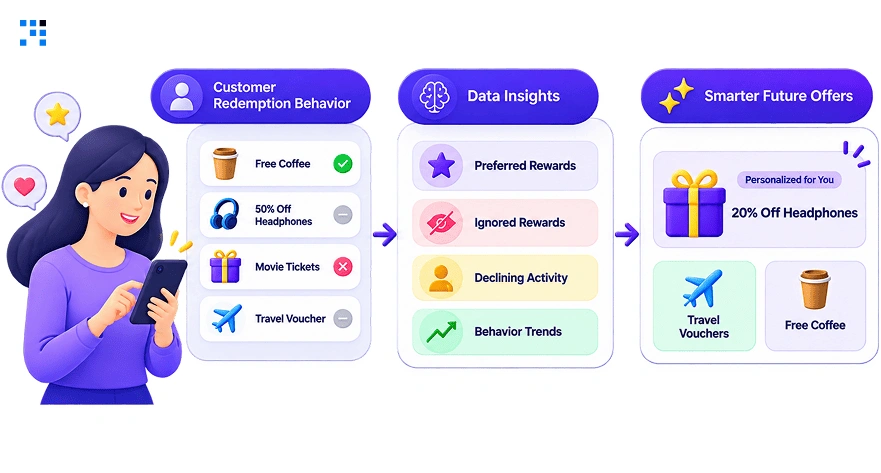
1. Every Redemption Teaches Something
Redeemed reward shows exactly what that member wanted.
That should update their profile before the next offer goes out.
Profiles that never update keep sending offers nobody wants.
Redemption is the clearest signal the program ever gets.
2. Ignored Rewards Are a Warning Sign
A reward nobody claims in 60 days was the wrong reward.
Most systems just let it sit until it expires quietly.
The system should flag this for the team on its own.
Catching it early costs less than losing that member later.
3. Loyalty Program Software Spots Members Leaving
Members who redeemed monthly and suddenly stop is a warning sign.
This usually shows up before their actual purchases drop off.
Tracking redemption habits catches this a full cycle earlier.
Acting early costs a discount, not a lost customer.
4. Past User Behavior Should Train Future Offers
Users who always pick free shipping are telling you something clear.
Shipping cost is likely the real reason they hesitate to buy.
That pattern should shape the next offer automatically.
Planning offers by hand misses this every single time.
What a Loyalty Platform Needs at Its Core
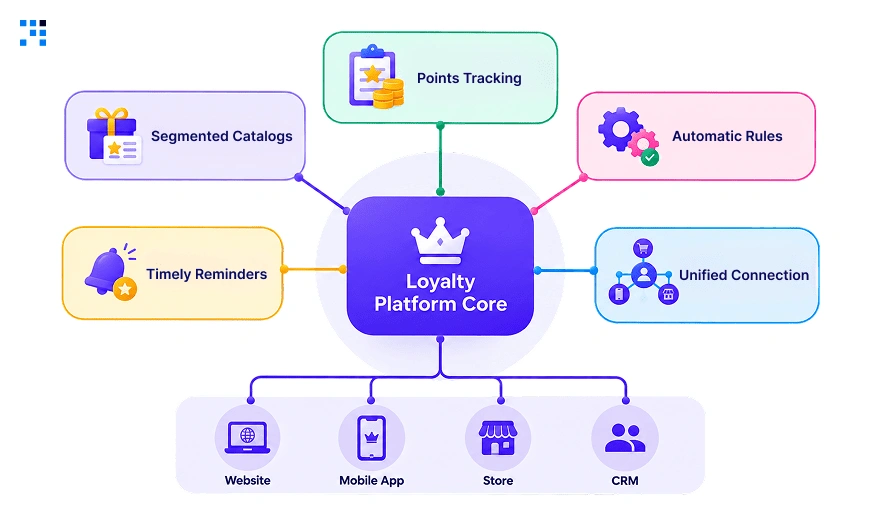
1. Point Tracking
Every point earned, spent, or expired needs a timestamp.
Without one, a member complaint becomes a guessing game.
A clear record is what makes point balances trustworthy.
Every other feature in the platform reads from this record.
2. Automatic Rules
Tier level, order size, and product limits all matter at redemption.
A good system checks all of these the instant someone redeems.
Without it, staff has to approve special cases by hand.
That manual step is what slows everything down as you grow.
3. Segmented Catalogs
A single catalog served to all members ignores purchase history entirely.
A segmented catalog pulls different reward sets per customer group.
This requires tagging rewards by category, tier, and eligibility upfront.
Segmentation done at the catalog layer is what personalization actually runs on.
4. Timely Reminders
A message sent at 3 am gets deleted unread.
Timing should match when each member actually opens the app.
This means tracking real activity, not sending on one fixed schedule.
A reminder sent at the right time gets noticed and acted on.
5. Unified Connection
Website, app store, and CRM each hold a piece of the picture.
Without one shared system, each place shows a different balance.
Every purchase or redemption should update one central record.
This is what makes “one account everywhere” actually true.
How Wishbone Club Gained 72% Engagement Growth
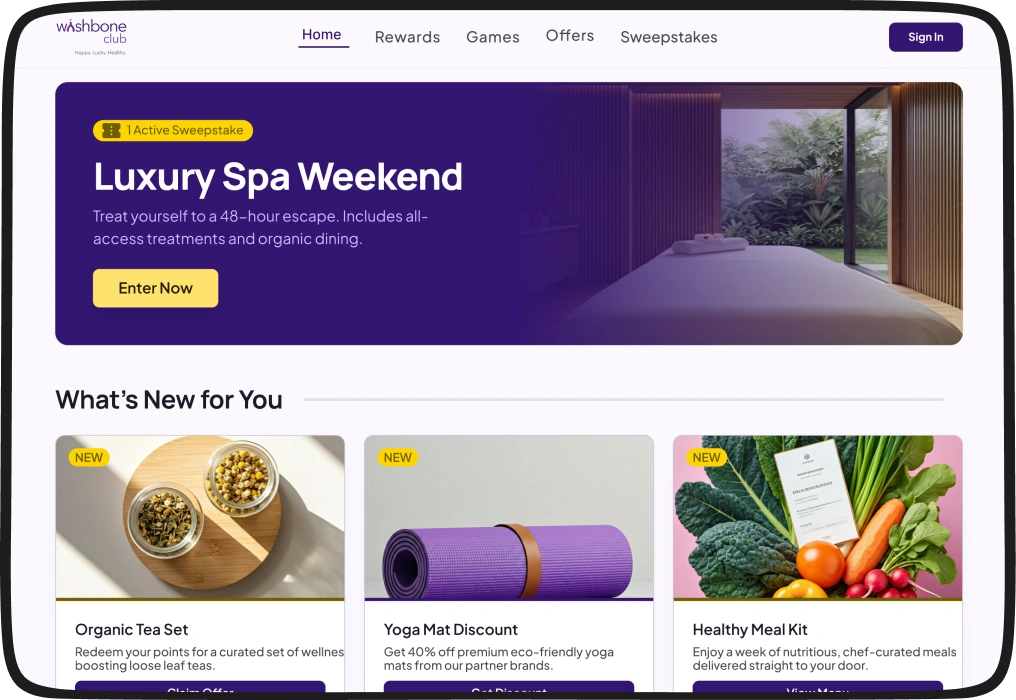
Wishbone Club wanted health-conscious members to actually open the app.
Most wellness loyalty apps get downloaded once and forgotten.
They came to us to make membership something people checked daily.
Where Members Were Losing Interest
| Area | What Was Happening |
|---|---|
| Reward Format | Discount cards nobody redeemed |
| Engagement Loop | Points with no reason to check back |
| Offer Targeting | Same generic offers for every member |
What Changed After We Stepped In
Daily challenges connected directly into a points-earning loop.
Wellness offers became visible the moment points unlocked them.
Sweepstakes entries and brand campaigns ran inside one dashboard.
Impact After Implementation
| Area | Result |
|---|---|
| Daily Challenge Logins | 72% Member Engagement Growth |
| Wellness Deal Claimed | 65% Offer Redemption Rate |
| Weekly Streak Check-Ins | 58% Returning Visitor Increase |
| Games Offers Sweepstakes | 3X Overall Platform Participation |
The 72% gain came from connecting the loop, not adding features.
This is what a loyalty platform looks like when redemption works.
Want to know exactly how we built it for them?
Why We’re the Right Team to Build Your Loyalty Platform
1. Drop-Off Points Get Mapped First
Members’ steps get traced from signup to redemption.
Every point where they quit gets logged.
That map becomes the blueprint for the build.
2. Tracking and Rules Get Built First
Point tracking and reward rules come first.
The redemption flow gets built on top.
Gamification and campaigns come only after that.
Building it in this order avoids rework later
3. Access and Tiers Get Set Before Launch
Reward tiers and expiry rules get set upfront.
Staff access gets defined before going live.
Real members test every screen before launch.
Your team runs the program, not the backend.

You’re promising rewards you can’t actually deliver yet.
Every month you delay, you lose customers you already paid to win.
FAQ
A focused build takes 10 to 16 weeks from discovery to launch. We scope the exact timeline after auditing your channels and reward types first. That audit happens before any commitment on dates.
Yes, migration happens before anything goes live for members. Existing balances and redemption history move over intact. Members never notice a gap or lose a single point.
No, reward rules, tiers, and redemption logic get configured before your first user logs in. Your team runs campaigns and offers day-to-day. Everything underneath the interface stays handled on our end.
Tracking and redemption are two different problems entirely. A platform can track perfectly and still fail to bring members back. The first audit call tells you whether it’s a rules issue or a visibility issue.
Generic apps run on template rules that break under custom eligibility logic. Tiers, channels, and reward types get built around how your program actually runs. That’s the gap between a program members use and one they abandon.