Sales workflow automation uses CRM rules to move every enquiry, quote, and order forward without manual chasing. Rules assign owners, schedule follow-ups, and flag stalled deals. Manufacturers gain faster replies, cleaner handovers, and a pipeline they can trust.
Would you rather chase 40 open quotes by hand,
or watch each one follow itself up?

Wednesday 9:10 AM.
A dealer in Rotterdam requests a quote for 12 units.
Your regional manager gets the request on WhatsApp.
Friday 11:00 AM.
Nobody has replied yet.
The dealer has already called a competitor.
Saturday 4:30 PM.
Directors ask why the monthly target was missed by 18%.
Excel shows one number.
Regional managers remember another.
Quotes sit across five phones and three spreadsheets.
Enterprises without a defined workflow live this every single week.
Whoever quotes first and follows up fastest wins the order.
What Sales Workflow Automation Actually Does
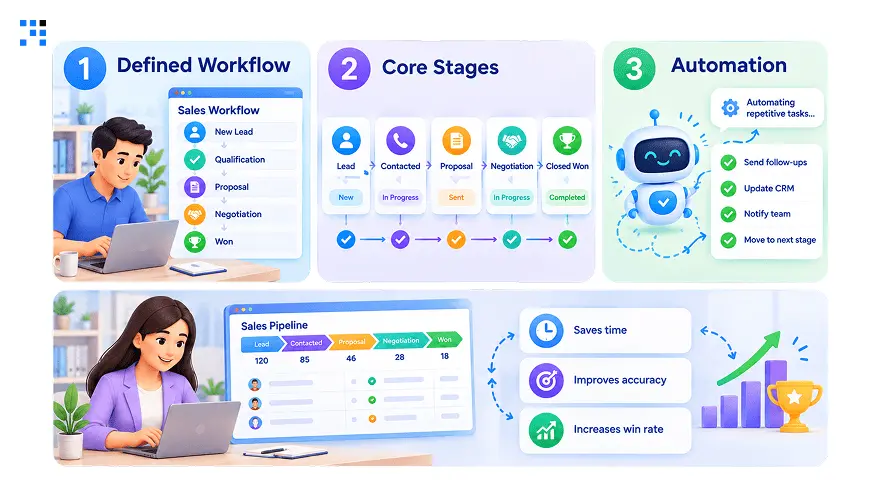
1. Defined Workflow
Workflow means the exact steps a rep takes to close.
Automation runs those steps through CRM rules without reminders.
Every account then receives the same level of care.
Reps stop guessing who to call or email next.
2. Core Stages
Most manufacturers run seven stages from enquiry to onboarding.
Capture and scoring come first followed by outreach and demo.
Objection handling and closing then involve legal and procurement.
Onboarding hands the full deal context over to customer success.
3. Automation
Repetitive work like data entry and reminders suits automation best.
Pitching and price negotiation still belong to your seasoned reps.
Handoffs between marketing and sales also deserve clear written rules.
Prospects then stop answering questions they already answered once.
Benefits of Sales Workflow Automation for Your Pipeline
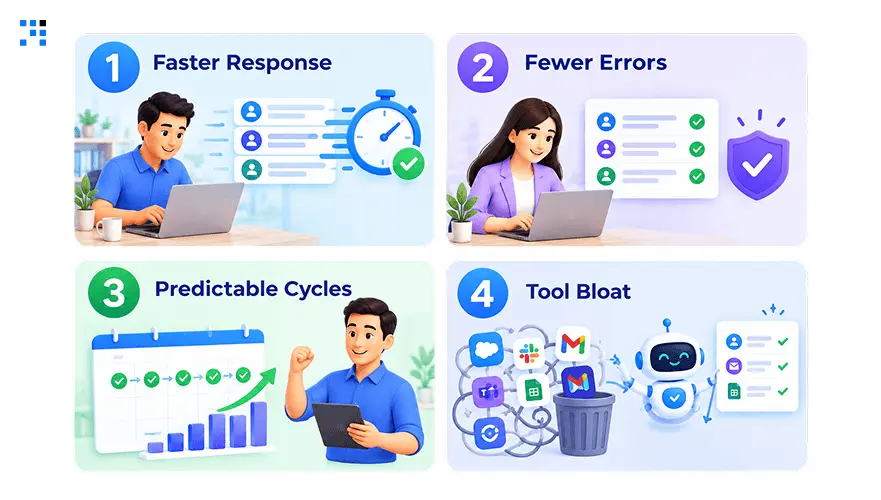
1. Faster Response
Alerts tell reps when a prospect opens a proposal.
Follow-up lands in the moment while buyer intent peaks.
Long approval chains stop eating into your response window.
2. Fewer Errors
Standard templates and auto entry cut costly quoting mistakes.
Buyers notice sloppy paperwork much faster than you think.
Tighter processes keep every outbound message looking professional and consistent.
3. Predictable Cycles
Defined paths make revenue forecasting far easier for leaders.
Stalled opportunities become visible on the very same day.
Plant heads then plan production against numbers they trust.
Deals keep moving at a steady and measurable pace.
4. Tool Bloat
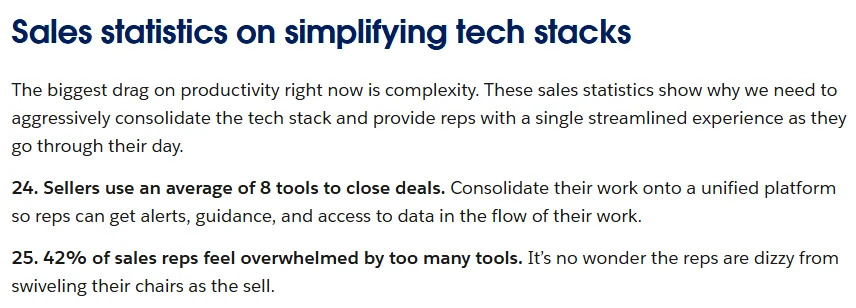
Salesforce’s State of Sales found 42% of reps feel overwhelmed.
Only a third of teams use one unified platform.
Average teams juggle eight tools and risk serious tech bloat.
Fragmented data blinds managers and coaching suffers as quotas slip.
Which Sales Workflow Automation Features Matter Most
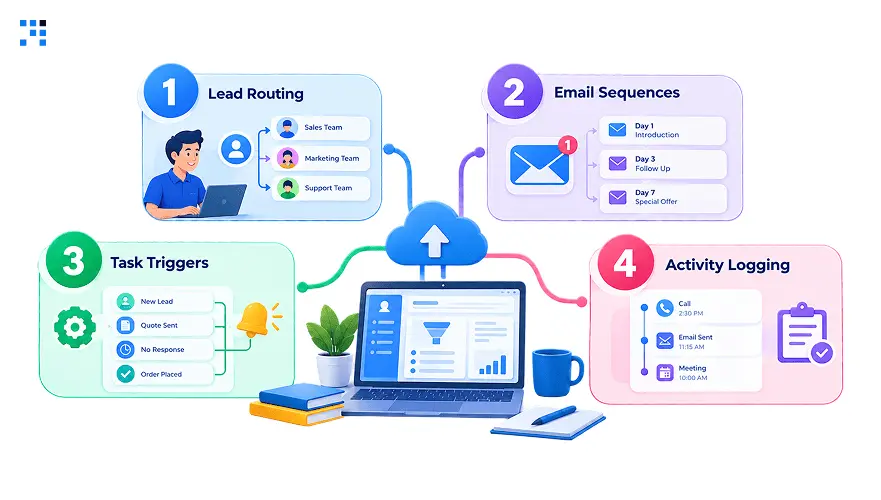
1. Lead Routing
Assignment rules push high-value prospects to top performers instantly.
Routing by hand wastes selling hours and lets interest cool.
Region and product line can decide the owner automatically.
2. Email Sequences
Triggered emails keep cold leads warm without daily effort.
Silent prospects receive a polite check-in after three days.
Conversations stay alive while reps focus on live deals.
3. Task Triggers
Contract stage books a follow-up call within 48 hours.
Sticky notes then leave the sales office for good.
Nothing slips through even when reps carry full pipelines.
4. Activity Logging
Emails and call notes attach to the account record automatically.
Typing updates after each conversation no longer eats rep time.
Leaders open any account and see its full history.
New owners pick up an account with zero guesswork.
Sales Workflow Automation Use Cases in Manufacturing
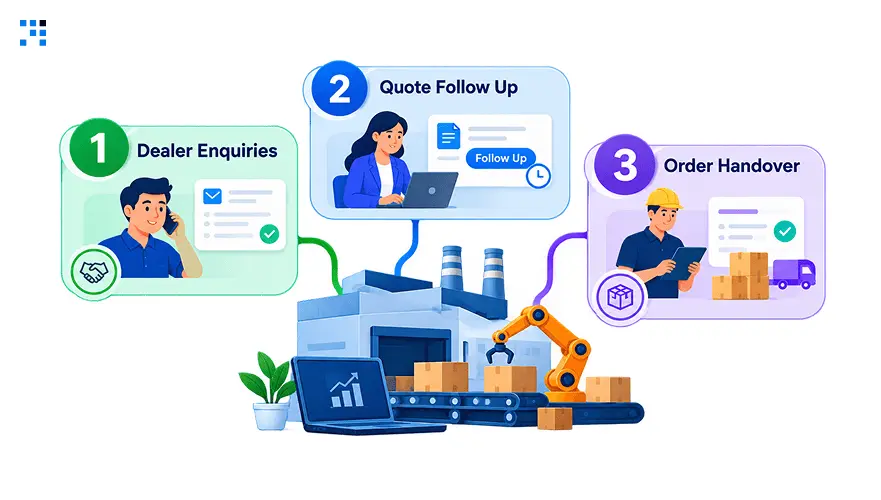
1. Dealer Enquiries
Distributor requests arrive through calls and emails and portals.
One rule captures them all into a single CRM queue.
Territory logic assigns each request to the right area manager.
2. Quote Follow-Up
Machinery proposals need timely nudges after every single submission.
Automatic reminders fire on day three and day seven.
Managers approve discounts through one written and traceable step.
Lost quotes then turn into a rare and visible event.
3. Order Handover
Signed contracts trigger documents for finance and legal automatically.
Production planning receives confirmed specs without a single phone call.
Customer success then onboards the buyer with complete deal context.
Clients never repeat themselves to a second department again.
How We Implement Sales Workflow Automation for Manufacturers
1. Workflow Audit
Shadow your best rep for one full working day first.
Ask each rep which manual tasks eat up their afternoon.
Those repeated tasks then become your first automation targets.
2. Trigger Mapping
Decide which event moves a deal to the next stage.
NDA sign-off creates a demo task for the owner.
Price requests go to manager approval without any chasing.
Write every trigger down before touching the CRM.
3. CRM Integration
ERP and CRM should share data without double entry.
Order and production status then show up inside the CRM.
Old tools connect through APIs so nothing gets replaced.
Dealer portals keep running while the new system goes live.
4. Pilot Rollout
Start with three experienced reps before a wider rollout.
Note today’s response time and deal cycle length first.
Feedback from that group then shapes the wider rollout plan.
Monthly reviews then adjust the rules as your market shifts.
FAQs
Timelines depend on how many stages and approvals need mapping. Pilot groups usually go live well before the full rollout. Early wins like automatic quote reminders tend to appear first. Our mapping sessions with sales heads keep that phase short.
Integration usually runs through APIs so existing systems stay in place. Stock and dispatch data can flow back into the CRM for reps. Custom builds like ours avoid forced replacements and protect what already works.
Adoption improves when reps help write the rules themselves. Short hands on workshops and recorded tutorials that we prepare support the first few weeks. Involving your best sellers early also builds trust among their peers.
Baseline response time and deal cycle length before launch. Compare both against stalled deal counts after three months. Built-in dashboards then show these figures live without spreadsheets. Regular reviews together keep those targets honest as we tune the rules.
Yes, since capture rules can pull enquiries from email, forms, and portals. Calls and WhatsApp messages get logged against the right dealer record. Channel habits stay the same on the dealer side. Since we build around current channels, dealers need no retraining.