A pickleball scoring app needs singles and doubles scoring, serve tracking, undo, and match history first. Flutter with a real-time backend keeps it fast on both iOS and Android. An MVP costs $18,000 to $35,000 and takes 8–12 weeks, while a full product costs $90,000 to $160,000+ and takes 5–8 months.
Would you rather watch pickleball grow from the sidelines,
or build the app every court is missing?

Saturday, 8:15 AM.
A local arena is packed.
Twelve players wait on the bench for a free court.
Court 2 is mid-game.
One side calls 5-3-2.
The other side swears it was 4-3-2.
Nobody wrote it down.
Play stops for six minutes.
Two players give up and walk to the next court.
Down the fence, the club organiser holds a clipboard.
Forty players signed up for the weekend round robin.
Someone on the bench searches “pickleball score” in the app store.
None track who is serving or what the last call was.
They close it and go back to arguing.
Whoever builds the app that settles it first wins these players.
Why Build a Pickleball Scoring App in 2026
1. Player Demand
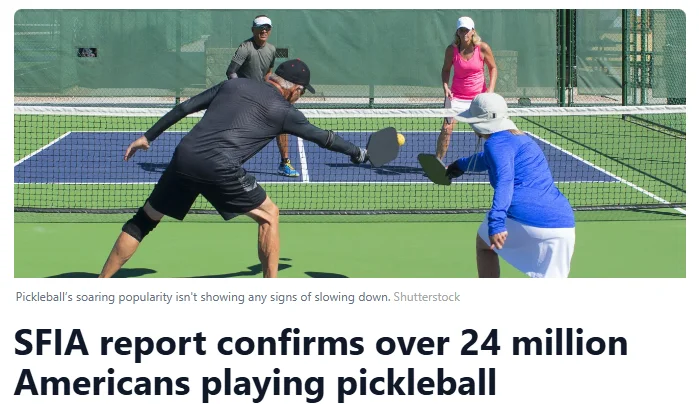
About 24.3 million Americans played pickleball in 2025 alone.
That is a 22.8 percent jump from the year before.
Many casual groups still keep score on paper or memory.
That creates a clear opportunity for a simple digital scoring experience.
2. Global Growth
Players now come from the US, Canada, England, and India.
Asia looks set to be the next big growth market.
A single app can serve all these markets from launch.
3. Market Opportunities
Several pickleball apps either count points or book courts.
Few track serve order, ratings, and tournaments in one place.
Cricket live score apps taught fans to expect instant updates.
Pickleball players want that same speed from the court.
4. Revenue Models
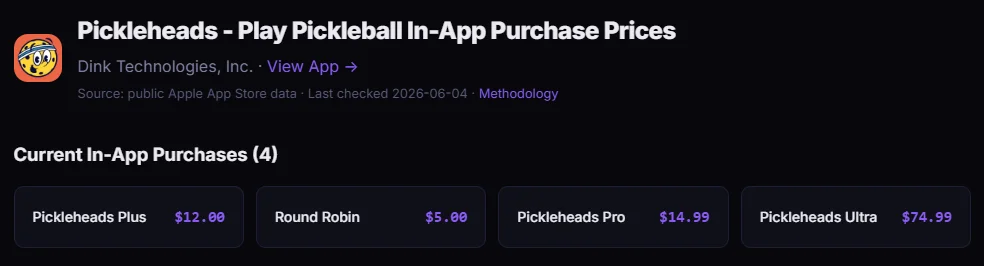
Pickleheads lists in-app purchases between $5 and $75 today.
Premium plans suit serious players who track their ratings.
Clubs pay yearly fees for tournament tools and branded scoreboards.
Sponsors buy banner spots on live scoreboards during events.
What Are the Core Features of a Pickleball Scoring App
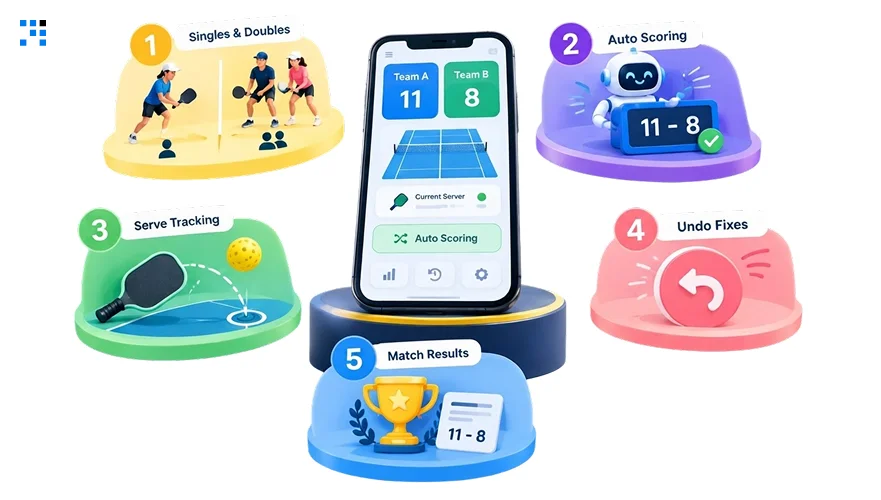
1. Singles & Doubles
Doubles calls use three numbers, such as 4-2-1 per point.
Singles calls only need two numbers and one clear server.
The app should switch rules once players pick a format.
Both traditional and rally scoring should be one tap away.
2. Auto Scoring
Scores should update the moment each rally is over.
Only the serving side wins a point in traditional play.
A side out should pass the serve without extra taps.
Games to 11, win by 2, should end automatically.
3. Serve Tracking
Confusion over who serves next causes many court arguments.
Second server rules often trip up even regular club players.
Your app should show the server and court side clearly.
4. Undo Fixes
Mistakes happen often when hands are tired or sweaty.
One tap should bring back the previous score and server.
Referees can also fix scores during a tournament match.
5. Match Results
Final scores save the moment a pickleball game ends.
Each result shows the winners, points, and total game time.
Every saved result also feeds the history of each player.
What Drives Player Retention in a Pickleball Scoring App
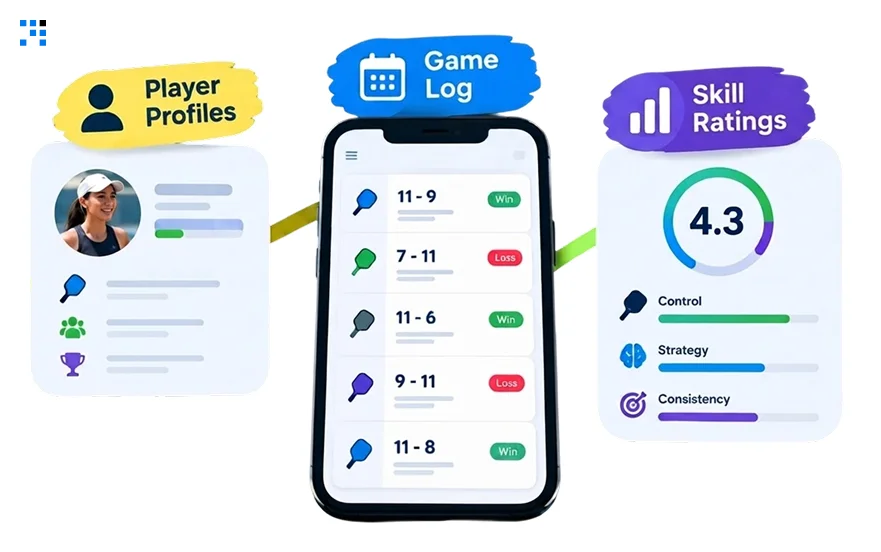
1. Player Profiles
Profiles give every user a home inside your app.
Skill level, home court, and paddle brand are good fields.
Signup should take less than one minute on a phone.
2. Game Log
History turns a one-time scoring tool into a daily habit.
Users revisit old games to compare results against each partner.
Each saved game gives them a reason to return.
3. Skill Ratings
DUPR-style ratings push serious players to log every game.
A simple in-app rating can launch before linking outside ratings.
Rankings by club or city keep competition lively each week.
Rating changes after each game keep players checking back.
How Do Tournament Features Set a Pickleball Scoring App Apart
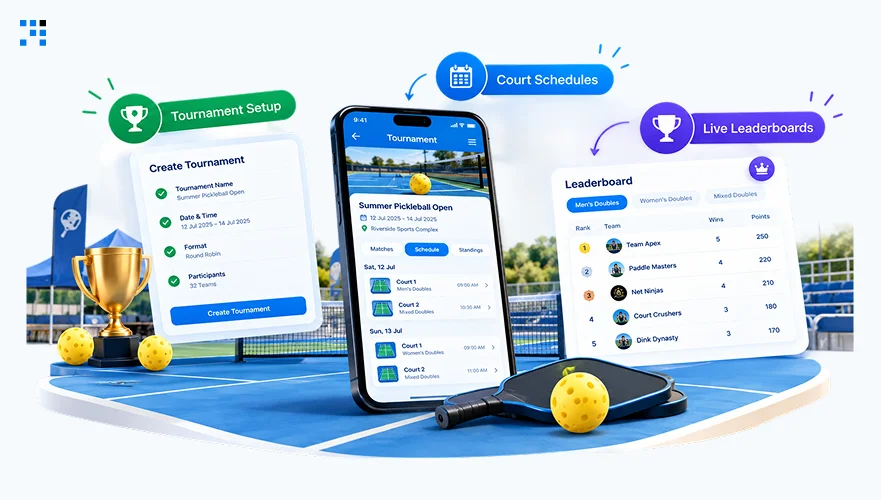
1. Tournament Setup
Organisers should launch an event in under ten minutes.
Round-robin and double-elimination should be ready-made formats.
Divisions by age and skill save hours of manual work.
Entry fees can be collected right inside the same flow.
2. Court Schedules
Court assignments cut the long waiting time between matches.
Fixtures update on their own when a game runs long.
Players get a notification when their court is ready.
3. Live Leaderboards
Spectators can follow scores from home without crowding the court.
Standings refresh after every point or every finished game.
Sponsors love this kind of steady attention on screen.
Where Community Growth Comes From in a Pickleball Scoring App
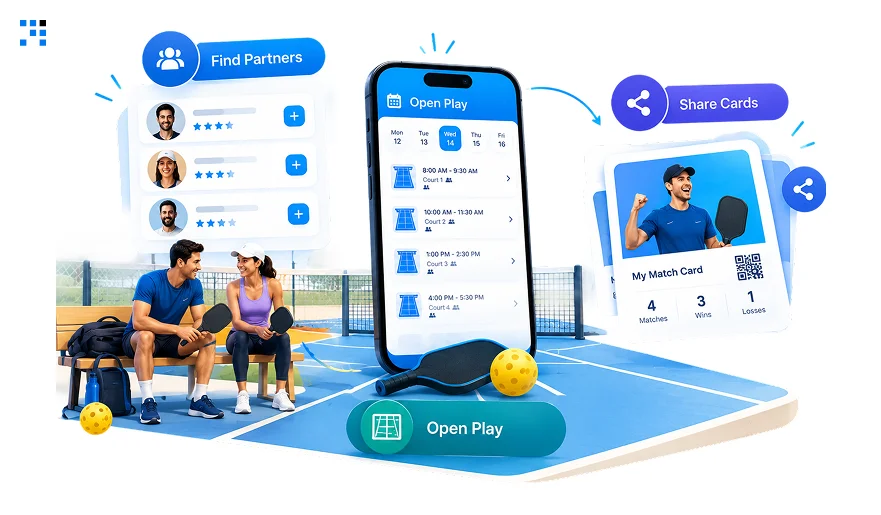
1. Find Partners
Finding a good doubles partner is hard in most towns.
Skill-based matching solves this problem within a few miles.
Every successful match brings another loyal user into your app.
2. Open Play
Nearby games should appear on a simple map view.
Hosts set the court count and the skill range.
Walk-up players then become regular users of your app.
3. Share Cards
Shareable cards post to Instagram and WhatsApp in one tap.
Friends see your app name on every shared image.
Free reach like this beats paid ads at launch.
Which Tech Choices Matter Most for a Pickleball Scoring App
1. Mobile First
Big buttons matter when your hands are sweaty and tired.
Flutter or React Native covers both iOS and Android together.
One codebase keeps your first budget lean and launch quick.
Bright sun means high-contrast screens are a must.
2. Offline Mode
Outdoor courts often have weak or no mobile signal.
Scores should save on the phone and sync later.
No point gets lost when the network drops mid-game.
3. Instant Updates
Live updates run on tools like Firebase or WebSockets.
Push alerts tell players when their match is called.
Cloud hosting handles busy weekends when many tournaments run.
4. Admin Panel
Event owners need a web dashboard for tournaments and disputes.
Role-based access keeps referees and players in their own lanes.
A cloud database stores users, scores, and tournament records safely.
How Much Does It Cost to Build a Pickleball Scoring App in 2026
The cost depends on how much of the game and community the app covers.
Offline sync and real-time updates push costs up the fastest.
| Platform Tier | What Is Included | Cost Range | Timeline |
|---|---|---|---|
| MVP | Singles and doubles scoring, serve tracking, undo, match history, basic profiles | $18,000 – $35,000 | 8 – 12 weeks |
| Mid-Level | Tournaments, brackets, ratings, offline sync, live leaderboards, notifications | $40,000 – $75,000 | 14 – 20 weeks |
| Full Product | Partner matching, club admin, DUPR integration, analytics, subscriptions | $90,000 – $160,000+ | 5 – 8 months |
What Athvolt’s 25% User Growth Teaches About Building a Scoring App
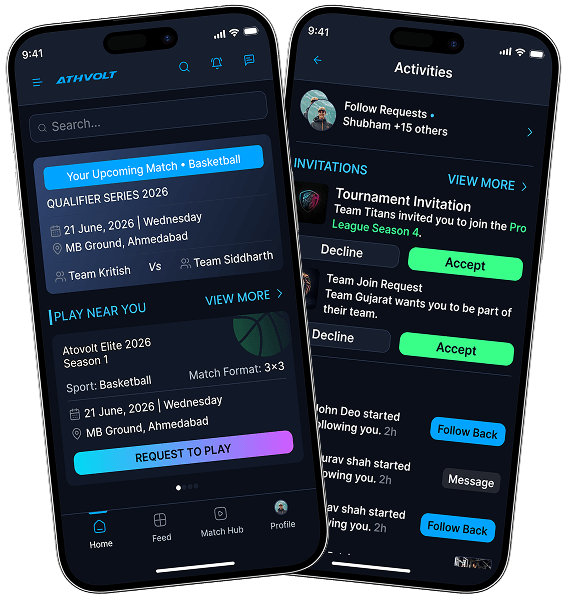
Athvolt is a multisport tournament management platform built for organisers and players in India.
It runs 8+ sports on one app, and pickleball fits right in.
Tournament creation, team invites, live scoring, and standings sit in one app.
Where Their Tournament Operation Was Breaking Down
| Area | What Was Happening |
|---|---|
| Tournament Creation | Spreadsheets, chat groups, and paper ran every event |
| Brackets and Fixtures | Knockout and double elimination were drawn by hand |
| Team Control | Captains, substitutes, and invites lived in message threads |
| Sport Scoring | Pickleball, basketball, and badminton each followed different rules |
| Live Updates | Results trickled out hours after the final point |
Everything depended on manual coordination.
That made it harder for organisers to run more events.
What Changed After We Stepped In
We rebuilt how a tournament runs, from first invite to final score.
Organisers pick the sport and format, and brackets generate on their own.
Scoring adapts to each sport, so a pickleball game to 11 follows its own rules.
Every gap in the table above got a direct fix.
Business Impact After Launch
| Metric | Result |
|---|---|
| Active User Growth | 25% |
| Tournament Creation | 15% rise |
| App Collaboration Requests | 2X |
| Sports Supported | 8+ in one app |
The biggest change was not the feature list, it was clarity.
Players knew who they play next and where they rank.
Organisers stopped redrawing brackets by hand.
Want to see how we built it for them?
How We Build a Pickleball Scoring App
1. Project Planning
Every project begins with player journeys and scoring rules.
Business goals and revenue paths get mapped before design starts.
The feature list is fixed early, so costs stay steady.
2. Rules Building
Traditional scoring and rally scoring each get their own setup.
Side outs and second server turns are tested first.
Odd cases like tiebreaks are checked well before launch.
3. App Screen Testing
Screens are tested outdoors with real players under harsh glare.
Buttons stay large and every flow stays under three taps.
Dark mode and one-hand use are included from day one.
4. Regular Updates
Work moves in two-week rounds, and you test each one.
Feedback from you shapes the next round right away.
Offline mode and live scores are stress tested early.
5. Launch Support
Publishing on App Store and Google Play is fully handled.
Crash alerts and usage reports start working on launch day.
Real player feedback decides which updates get built next.

Your first version is only the start of the game.
The sooner your app hits the court, the sooner players use it.
FAQs
Most free apps only count points. They rarely serve clubs, organisers, or ratings well. Your edge is one clear audience, such as club ladders or paid tournaments. We help you find that gap in a discovery workshop, before you spend anything on development.
Yes. Scoring rules sit in a separate module for each sport, so pickleball, badminton, and cricket can share one app. We built Athvolt this way for 8+ sports. Adding a new sport later costs far less than starting from scratch.
Store only what you need, such as name, email, skill level, and match records. Run payments through trusted providers like Stripe so card details never touch your servers. We build with encrypted storage and role-based access as standard.
Bring a short idea note, your target player, three must-have features, and a budget range. That is enough to begin. We turn it into a scoped plan with a timeline and estimate within 24 hours.