| Client | MakeOverHouse (MOH) |
| Location | India |
| Industry | PropTech |
| Platform | Web Application |
Quick Overview
When interior design decisions are managed across WhatsApp, Pinterest, screenshots, email threads, and PDFs, confusion becomes part of the process. MakeOverHouse wanted to solve this problem for homebuyers, architects, and real estate developers. So we helped them build a centralized interior design platform where users could browse inspirations, organize selections, collaborate with stakeholders, and finalize decisions from one place.
The result:
- 15–20% improvement in buyer conversions
- Decision-making reduced from 3-5 weeks to 7-10 days
- Nearly 30% reduction in physical site visits
- Better visibility into buyer preferences and design trends

The Problem
Interior design decisions are emotional, collaborative, and expensive.
But the process behind them was fragmented.
Homebuyers were discovering inspirations across multiple apps and platforms:
- Pinterest for ideas
- YouTube for exploration
- WhatsApp for sharing
- Email for approvals
- Phone galleries for saving references
Every tool solved a small part of the workflow.
None solved the entire decision-making journey.
As projects scaled, the operational problems became harder for developers and architects to manage.
Homeowners struggled to organize ideas.
Architects struggled to manage feedback.
Developers struggled to maintain a structured selection process across multiple buyers.
The result was slower decisions, scattered communication, and a frustrating buyer experience.
Why the Existing Process Was Failing
The biggest problem was not the lack of inspiration.
It was the lack of structure.
Interior decisions were happening across disconnected apps with no centralized workflow.
| ❌ Existing Workflow | ⚡ BUSINESS IMPACT |
|---|---|
| Designs discovered across multiple platforms | No single source of truth |
| Screenshots stored in phone galleries | Lost references and confusion |
| WhatsApp sharing for feedback | Messy collaboration and unclear approvals |
| PDF mood boards over email | Untracked discussions and inconsistent communication |
| Developers manually coordinating selections | Slower operational workflow |
| Buyers revisiting projects repeatedly | Delayed decision-making and reduced efficiency |
Understanding How Interior Decisions Actually Happen
Before designing the platform, we looked closely at how interior decisions were happening in real projects.
We observed how:
- Homebuyers discover and save inspirations
- Families compare and discuss options
- Architects present recommendations
- Developers manage selections across multiple buyers
- Approvals move from discussion to final decision
What became clear very quickly was that the problem was not a lack of choices.
It was the lack of a structured workflow connecting everyone involved.
Most communication was happening across chats, screenshots, calls, PDFs, and repeated follow-ups.
Instead of forcing people into an entirely new process, the platform was designed around the workflow users already understood.
That approach helped MakeOverHouse feel practical, familiar, and easy to adopt from the beginning.

Building One Platform for the Entire Selection Journey
We built a web-based interior design platform that unified the entire workflow into one structured system.
The goal was simple: Help buyers, architects, and developers make interior decisions faster and with more clarity.

Curated Design Gallery

Smart Filtering System

Personalized Wishlists

Structured Selection Management

One-Link Sharing

Collaborative Feedback System

Buyer Preference Tracking
Instead of switching between apps, users could now manage the full interior selection journey from one place. Built using modern technologies like React, the platform was designed to deliver a fast, scalable, and responsive experience across mobile, tablet, and desktop devices.
How MakeOverHouse Works in Real Life
The platform was designed around the actual flow users follow while making interior decisions.
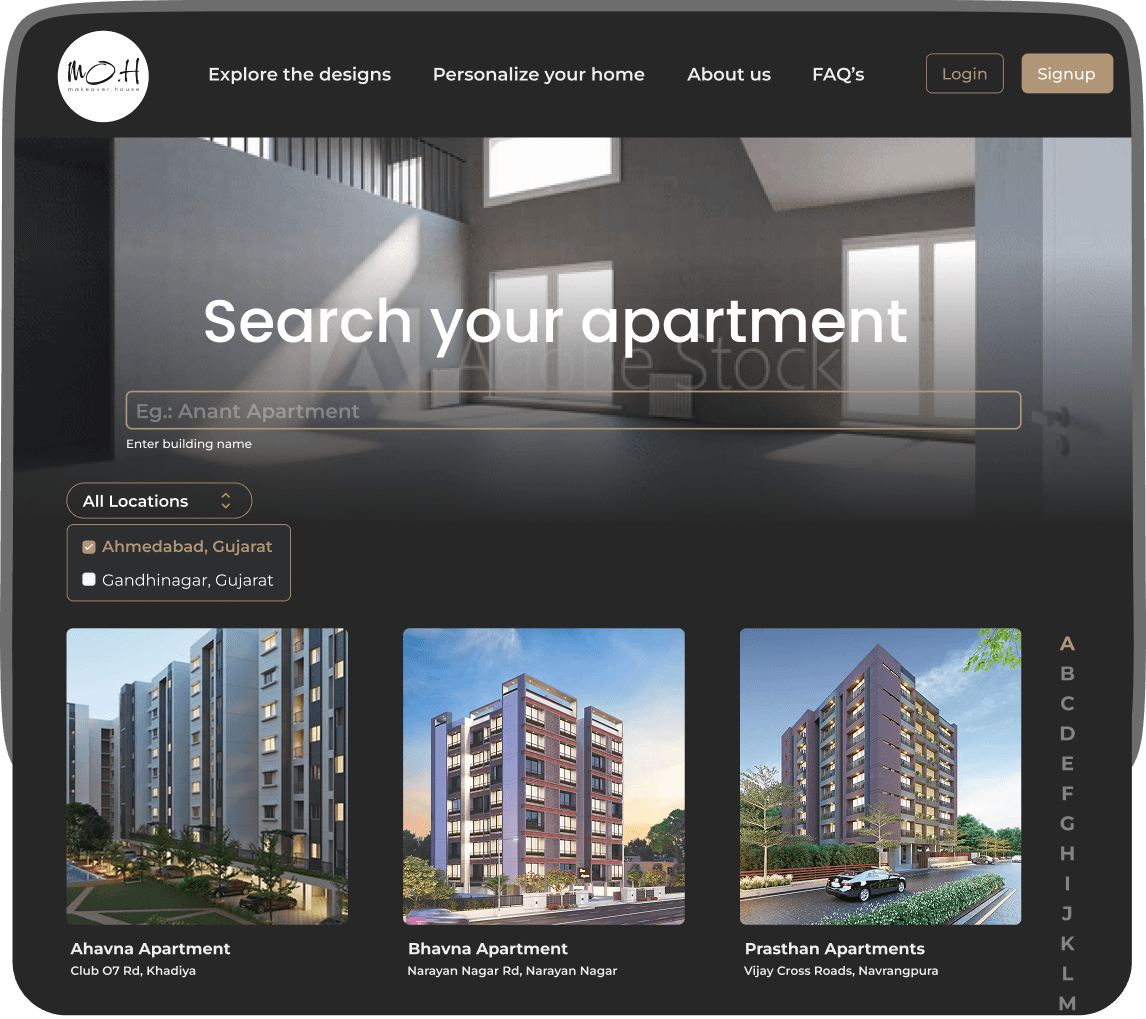
Browse Curated Interior Designs
Users explore organized collections based on:
- room type
- style
- trends
- color preferences
- budget range
Instead of random internet browsing, the experience becomes structured and focused.
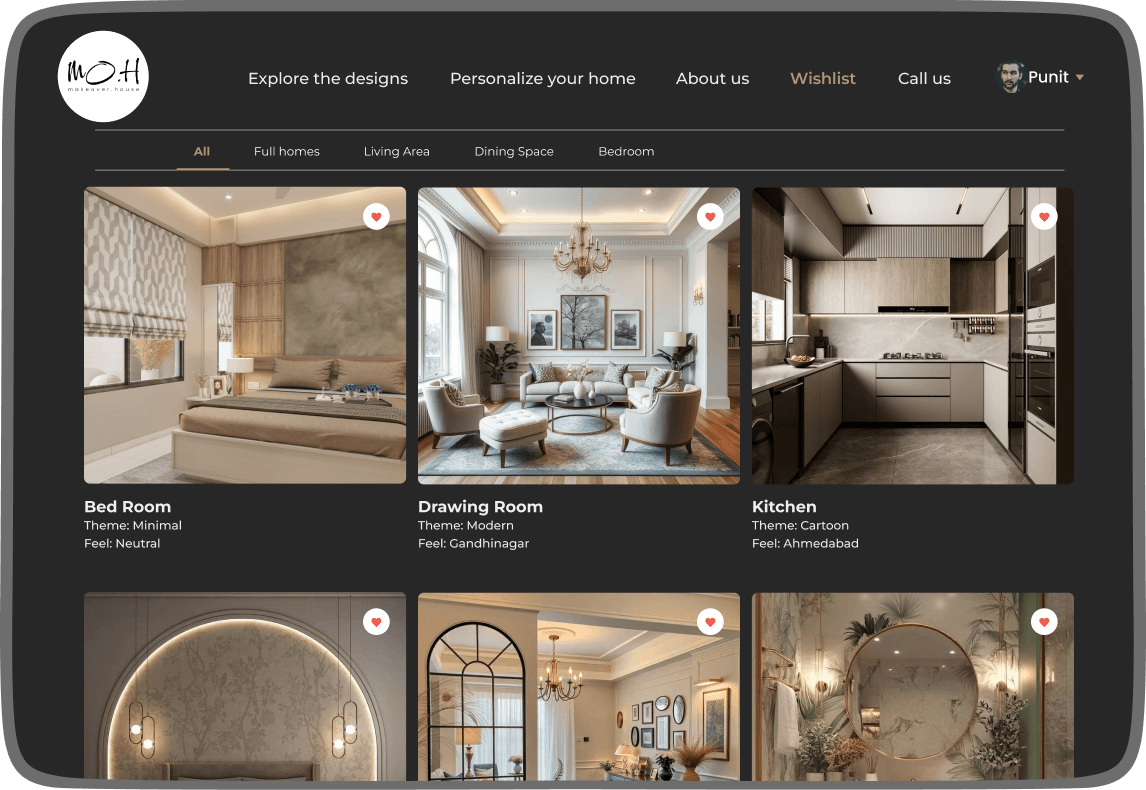
Save and Organize Selections
Designs can be saved into personalized wishlists for:
- bedrooms
- kitchens
- living rooms
- full projects
This eliminates the need for screenshots and scattered references.
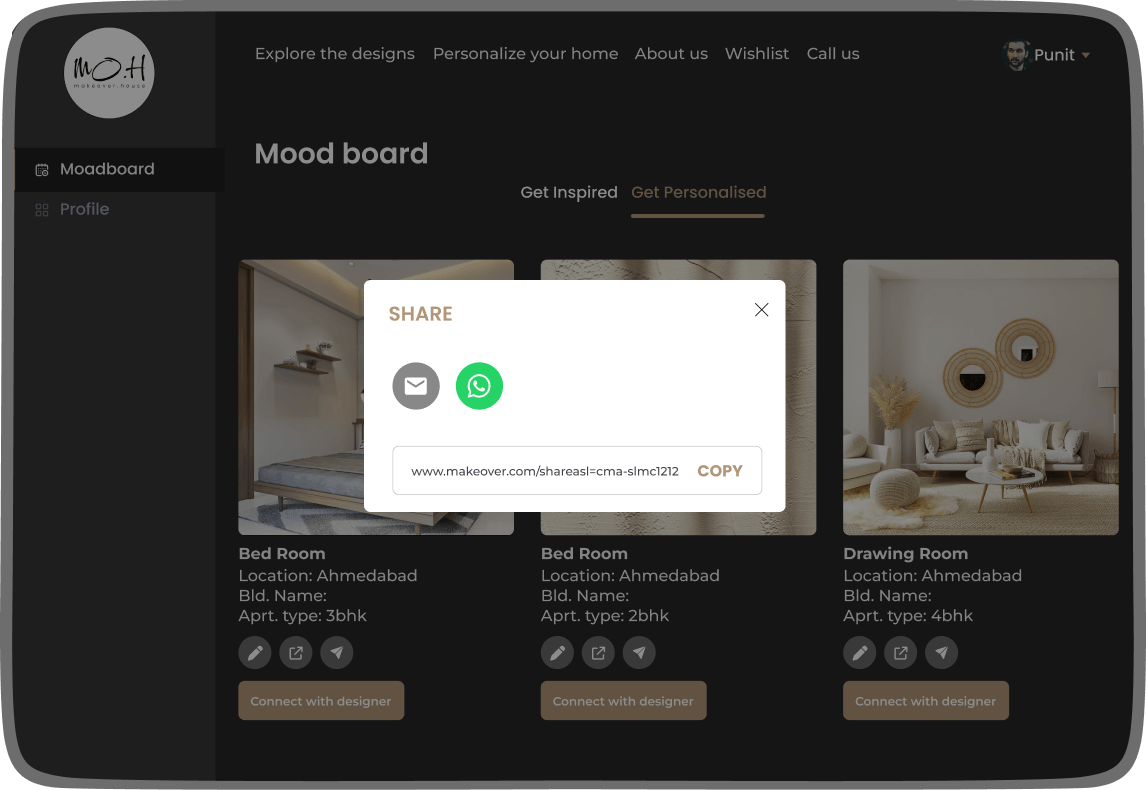
Share With Stakeholders
Users can share curated selections with:
- family members
- architects
- developers
using a single link without complicated workflows or repeated forwards.
Collect Feedback and Finalize Decisions
Stakeholders can review, discuss, and align decisions directly inside the platform.
This creates one centralized workflow for approvals and collaboration.

What Changed After Launch
After MakeOverHouse went live, the workflow became significantly more structured for all stakeholders involved.
Homeowners stopped losing references across apps and screenshots.
Architects reduced repeated coordination through calls and emails.
Developers gained a centralized system for managing buyer selections at scale.
Most importantly, the platform improved decision-making speed and buyer clarity.

| Previous Situation | What Changed | Business Impact |
|---|---|---|
| 5 disconnected apps for one workflow | 1 unified platform | 15–20% improvement in buyer conversions |
| Unstructured decision-making | Structured browse-to-approval journey | Decision cycle reduced from 3–5 weeks to 7–10 days |
| Repeated physical project visits | Better digital visualization and collaboration | Nearly 30% reduction in site visits |
| No visibility into buyer preferences | Built-in selection tracking | Better insights into preferred layouts and styles |
The platform did more than simplify collaboration.
It gave developers better visibility into buyer behavior while helping customers make faster and more confident decisions.

“Before, the interior selection process was frustrating for everyone involved. After MOH, homeowners, architects, and developers finally had one professional place to do it right.”
MOH TeamIs Your Business Growing Faster Than Your Process?
Interior design selection is only one example.
Many businesses still run important operations through WhatsApp chats, spreadsheets, emails, PDFs, and manual follow-ups.
At first, it worked.
But as customers, projects, and teams grow, the process becomes harder to manage.
Simple things start taking more time:
- Approvals get delayed
- Communication gets scattered
- Teams repeat the same follow-ups
- Customers get confused
- Decisions slow down
Most of the time, the real problem is not the people.
It is the lack of a proper system built around the workflow.
That is exactly what MakeOverHouse set out to solve.
If your business is facing similar operational challenges, we would love to understand your workflow and explore what a better digital system could look like.
Got a project? Let’s talk.
We’re a team of creative tech-enthus who are always ready to help business to unlock their digital potential. Contact us for more information.