An ecommerce platform gives clothing brands their own storefront to sell directly online. It handles product listings, inventory, and checkout without depending on social media. Buyers can browse, choose, and pay in one place instead of messaging back and forth.
If your social channels went offline today,
would you still have a store?

It’s Saturday evening.
A woman is shopping for a weekend party.
She finds a dress on a brand’s Instagram page.
She wants to check if her size is in stock.
There’s no size chart or stock count.
She scrolls through fifty comments hoping someone asked already.
She DMs the brand and waits.
Meanwhile, she opens another brand’s website instead.
Size, stock, and price show up instantly.
She checks out in under two minutes.
The first brand replies the next morning.
By then she has already worn a different dress.
They lost an order because they never had a storefront of their own.
Why Clothing Brands Need an Ecommerce Platform
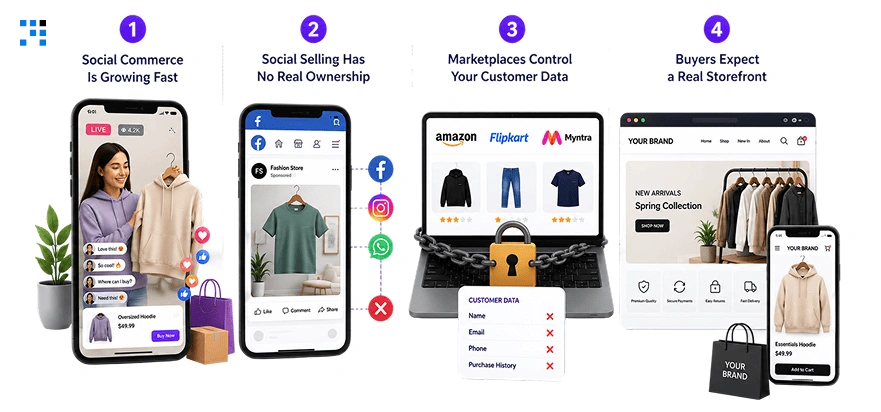
1. Social Commerce Is Growing Fast
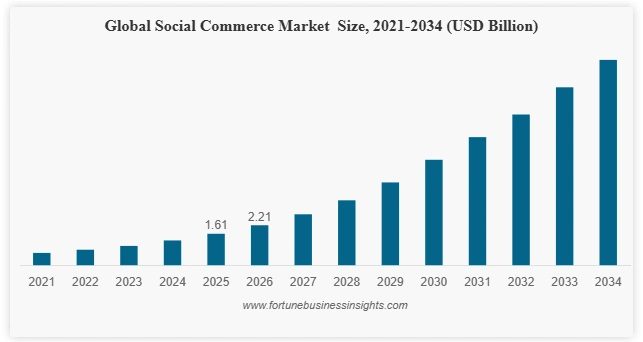
Apparel is 22% of the global social commerce market.
That’s the largest category on these platforms.
The market grows from $2.21B to $27.52B by 2034.
Brands selling only through social media never own their storefront.
That ownership gap is where the real opportunity sits.
2. Social Selling Has No Real Ownership
Instagram and WhatsApp are rented spaces, not stores.
Algorithm changes can bury your posts overnight.
A banned account erases years of customer trust.
An ecommerce platform belongs to your brand alone.
3. Marketplaces Control Your Customer Data
Marketplace listings hide your buyers behind their platform.
You never learn who bought what or why.
Repeat customers stay loyal to the marketplace, not you.
Your own platform keeps every customer relationship yours.
4. Buyers Expect a Real Storefront
Shoppers now compare brands against full online stores.
A DM-only process feels outdated and untrustworthy.
Slow replies push buyers toward competitors instantly.
A proper storefront signals a serious, reliable brand.
How an Ecommerce Platform Helps Clothing Brands Sell Online
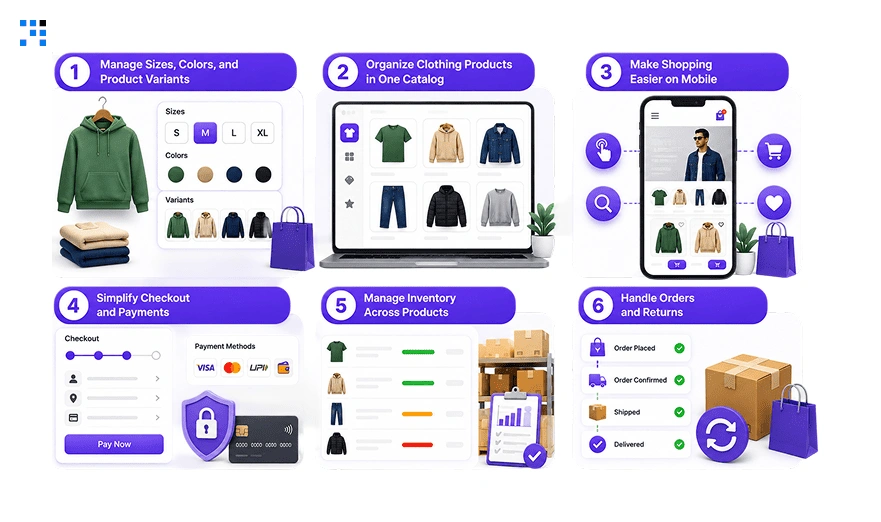
1. Manage Sizes, Colors, and Product Variants
Clothing rarely sells as one single option.
Every product needs size, color, and fabric choices.
An ecommerce platform organizes variants without manual tracking.
Buyers pick exactly what fits without messaging you first.
2. Organize Clothing Products in One Catalog
A structured catalog replaces scattered Instagram posts.
Categories like dresses, jackets, and denim group naturally.
Buyers filter by price, fabric, or occasion instantly.
A messy catalog quietly costs you real sales
3. Make Shopping Easier on Mobile
Most clothing buyers shop entirely on their phones.
A slow mobile site loses buyers within seconds.
Mobile-first design keeps browsing fast and simple.
Fashion ecommerce platforms are judged on mobile speed first.
4. Simplify Checkout and Payments
Manual UPI transfers create confusion and lost trust.
One-click ecommerce checkout removes that entire friction point.
Cards, UPI, and EMI options widen who can buy.
A faster checkout directly reduces cart abandonment.
5. Manage Inventory Across Products
Selling a sold-out piece damages buyer trust fast.
Clothing inventory management syncs stock across every channel.
Managers see exact stock without checking spreadsheets.
Real-time sync prevents orders you cannot fulfill.
6. Handle Orders and Returns
Clothing has one of the highest return rates online.
A clear returns flow keeps that process organized.
Buyers track their return status without calling support.
Smooth returns quietly build long-term buyer loyalty.
How an Ecommerce Platform Helps Brands Reach More Customers
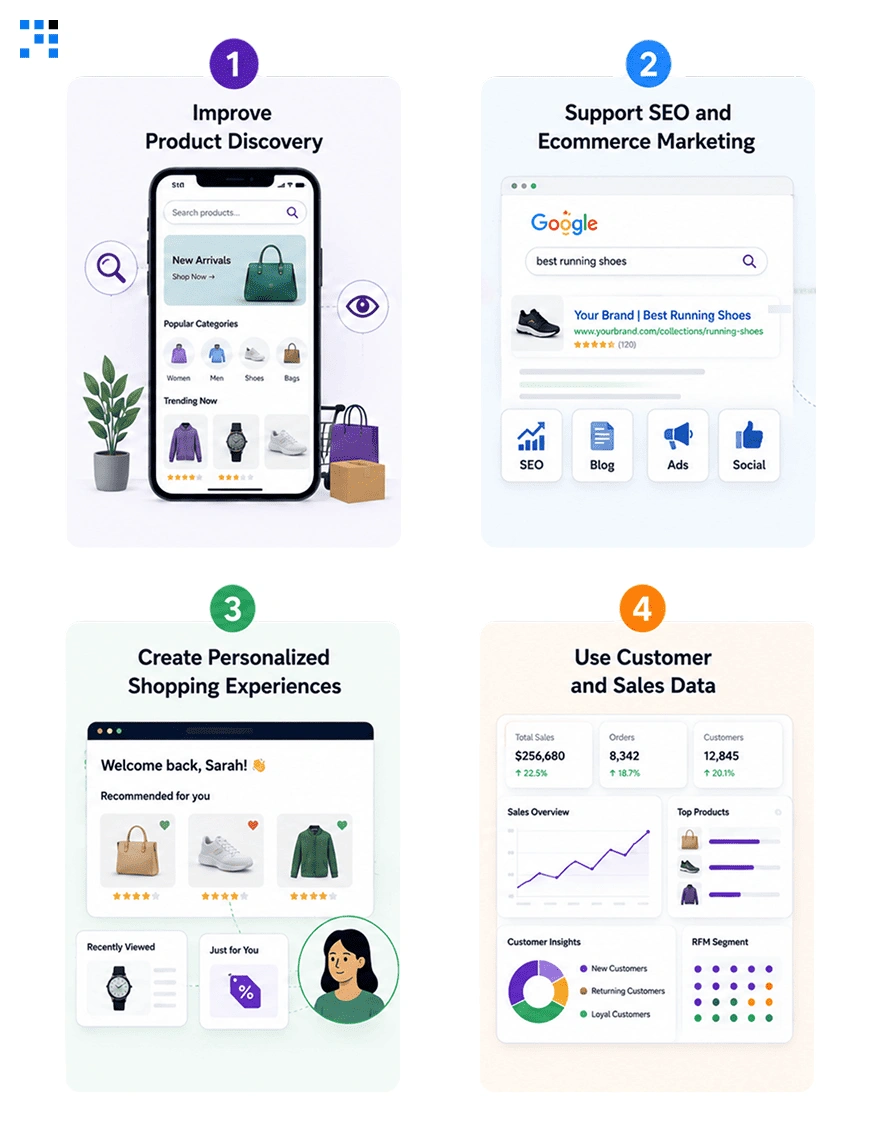
1. Improve Product Discovery
Buyers should find products without endless scrolling.
Smart filters narrow results by fabric, price, or color.
Better discovery shortens the path from browsing to buying.
Weak discovery loses sales you never notice.
2. Support SEO and Ecommerce Marketing
An online clothing store ranks on Google, unlike Instagram posts.
Product pages capture buyers searching outside social media.
SEO brings in buyers who never followed your page.
Search traffic compounds in a way social reach never does
3. Create Personalized Shopping Experiences
Returning buyers expect relevant product suggestions.
Browsing history shapes what they see next.
Personalization increases repeat purchases without extra ad spend.
Generic storefronts feel impersonal compared to tailored ones.
4. Use Customer and Sales Data
WhatsApp selling leaves no usable sales data.
A platform tracks what sells, when, and to whom.
That data guides restocking and new collection decisions.
Brands without this data are guessing, not planning.
What to Look for in an Ecommerce Platform for Clothing Brands
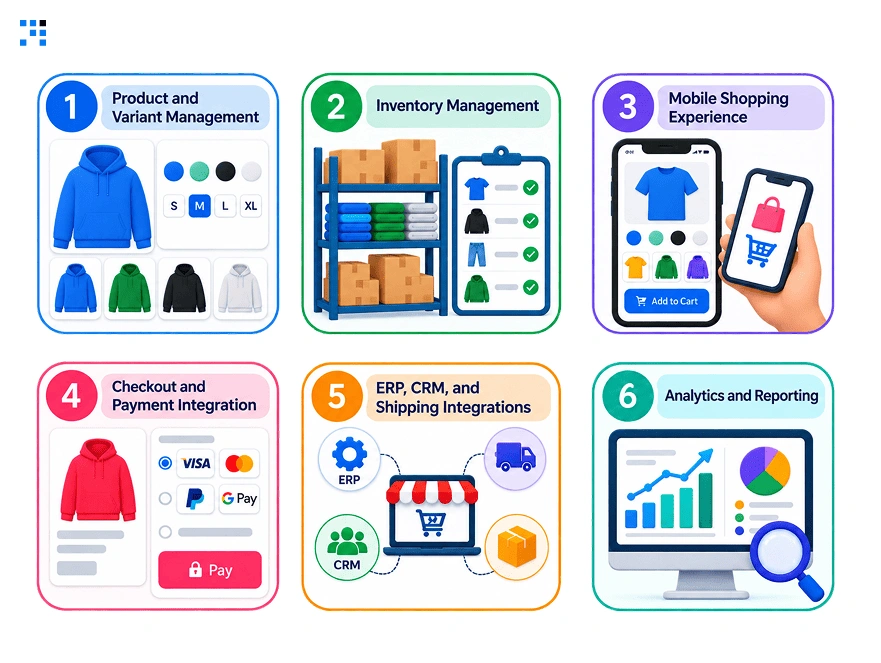
1. Product and Variant Management
Look for flexible size, color, and fabric fields.
Weak variant handling creates messy product pages fast.
Every combination should show accurate stock on its own.
This is where most generic platforms fall short first.
2. Inventory Management
Stock should sync automatically across every sales channel.
Manual stock updates always fall behind real orders.
A single dashboard should show what is left in real time.
This alone prevents most overselling complaints.
3. Mobile Shopping Experience
Test the platform on a phone before deciding.
Most clothing buyers will never open it on desktop.
Product images and size charts must load instantly.
A slow mobile experience quietly drives buyers away.
4. Checkout and Payment Integration
Confirm support for UPI, cards, and EMI options.
Every extra checkout step increases cart abandonment.
Guest checkout should be available for first-time buyers.
Fewer fields at checkout means more completed orders.
5. ERP, CRM, and Shipping Integrations
Your platform should connect to existing business tools.
Disconnected systems recreate the same manual chaos.
Shipping partners need to sync without manual entry.
This keeps your team out of spreadsheets entirely.
6. Analytics and Reporting
Choose a platform with clear sales dashboards.
Without data, you cannot improve what is underperforming.
Reports should break down sales by product and size.
This shows exactly what to restock and when.
How SOUL Ethnics Got a 55% Spike in Online Inquiries
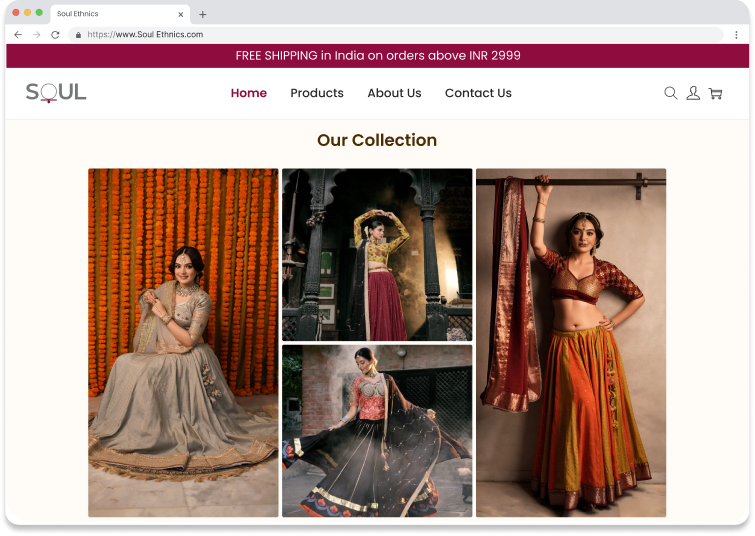
SOUL Ethnics sells women’s ethnic wear across India.
Sarees, lehengas, kurtis, and dupattas were their core catalog.
Their entire sales process ran through WhatsApp chats
Where Their Sales Process Was Breaking Down
| Area | What Was Happening |
|---|---|
| Product Catalogue | No storefront, orders stuck inside WhatsApp chats |
| Product Customization | Size, color, and fabric requests handled manually and messily |
| Order Tracking | No live updates, constant “where’s my order” messages |
| Payments | UPI IDs shared manually, untracked |
| Trust Signals | No reviews or ratings, new buyers had no reason to trust |
Everything depended on manual WhatsApp coordination.
And that dependence was limiting how much SOUL Ethnics could actually sell.
What Changed After We Stepped In
We built a complete e-commerce platform on WordPress and WooCommerce.
From product discovery to checkout to live order tracking.
Every gap area in the table above got a direct fix.
Business Impact After Implementation
| Metric | Result |
|---|---|
| Online Inquiries | 55% jump in two months |
| Order Handling Speed | 50% faster processing |
| Checkout Flow | 45% quicker |
| Mobile Experience | 350% higher mobile purchases |
| Support Queries | 30% drop in status checks |
The biggest change was not just sales, it was trust.
SOUL Ethnics finally had a storefront buyers could rely on.
Want to know exactly how we built it for them?
Why We Are the Right Partner to Build Your Ecommerce Platform
1. Auditing Your Current Sales Process
We map exactly how orders move today.
Every step and manual handoff gets documented.
Track where buyers wait longest for replies.
That audit becomes the blueprint for your platform.
2. Build Around Your Product Catalog
Fabrics, sizes, and variants shape the structure.
No generic template gets forced onto your brand.
Categories get built around how you actually sell.
The platform fits your catalog, not the other way around.
Every field matches how your team already works.
3. Testing Every Flow With Real Buyers
Working prototypes go in front of real buyers.
Flows get refined based on where they hesitate.
Checkout, sizing, and search get tested separately.
Every friction point gets fixed before launch, not after.
Nothing goes live untested.
4. You Go Live With Zero Guesswork
Catalog, checkout, and tracking are configured before launch.
Roles, access, and workflows are set on day one.
Your team runs the store, the system runs itself.
No manual setup is left for you to figure out.
Support stays close during the first weeks live.

Every month, brands without a storefront lose buyers who were ready to pay.
Good products can’t make up for a missing way to sell them.
FAQ
Instagram proves demand exists for your products. But that demand depends on a platform you don’t control. We build the platform that captures it without the algorithm risk. You keep the reach, we make sure you own the storefront.
We build variant management for frequent catalog changes. New sizes, colors, or collections need no rebuild. Your team updates the catalog directly, no developer wait. We design it to move at your season’s pace.
Returns are one of the highest cost points in clothing ecommerce. Buyers should see clear return windows and status automatically. This cuts disputes and repeated support calls. We help you set return rules that protect your margins.
WhatsApp stays a channel, not the entire system. Customers can still message you like before. We just route those orders through the platform instead. The switch stays invisible to buyers who already trust you.
A focused MVP typically takes 8 to 12 weeks from brief to launch. Timelines depend on catalog size and integrations needed. We scope around your current sales volume, not a template. Nothing moves without your sign-off.