Kotlin Android development is Google’s recommended way to build native Android apps that stay stable as they scale. For startups, this means fewer crashes, faster feature rollouts, and room to grow without rebuilding later.
How Kotlin Android Development Helps Startups Grow

1. Time to Market
Kotlin for Android app development means writing working features in far less code.
For a startup racing toward launch, that translates directly into shorter development cycles.
Every sprint saved is runway saved.
2. Long-Term Backing
Google made Kotlin its official Android language back in 2019 and hasn’t looked back since.
This means every new tool and update arrives Kotlin-first,
so an app built today won’t feel outdated in two years.
That’s one less rebuild a growing business has to plan for.
3. Fewer Crash Costs
Kotlin catches a large class of common errors before the app ever reaches a user’s phone.
For a business, that means fewer emergency fixes, fewer refunds,
and a support team that isn’t buried in crash reports.
That stability protects revenue while the business is still finding its footing.
4. Room to Grow
An app built right on Kotlin doesn’t need to be torn down as user numbers climb.
Its structure supports adding features and handling more traffic without constant rework.
This keeps growth focused on the business instead of on fixing the foundation.
5. Proven at Scale
From early-stage startups to major banks, Kotlin already powers apps at every level of scale.
That track record means a founder isn’t betting on something unproven,
they’re choosing what already works when the pressure is on.
Why Kotlin Android Development Beats Java

1. Cleaner Code Syntax
Kotlin requires noticeably less code to accomplish the same task as Java.
Less code directly means fewer places for bugs to hide.
It also makes onboarding new developers onto your project considerably faster.
2. Fewer Runtime Crashes
Null safety alone eliminates a huge percentage of common app crashes.
Your app stays stable across updates instead of degrading over time.
This directly protects your app store rating and user retention.
3. Faster Dev Cycles
Features ship quicker thanks to Kotlin’s more expressive, modern syntax.
Which helps teams move through sprints without getting stuck on basic code.
Over months, this speed compounds into real competitive advantage.
4. Official Google Support
Google prioritizes Kotlin first in every new Android API release.
Java still receives support, but Kotlin gets the newest features immediately.
Building in Kotlin means you’re never waiting on delayed tooling.
Kotlin Android Development Best Practices for Coroutines
1. Right Coroutine Scope
Using viewModelScope for UI-related work is one of the
simplest Kotlin best practices to follow early.
Using the wrong scope causes memory leaks that surface only under load.
This is one of the most common early-stage mistakes we catch during audits.
2. Smart Background Tasks
Dispatchers.IO should be reserved specifically for background, IO-heavy work.
Dumping every task there without thought overloads the thread pool unnecessarily.
Careful dispatcher selection keeps the app responsive even during heavy usage.
3. Handling Exceptions Right
Every coroutine should be wrapped with a proper CoroutineExceptionHandler.
Unhandled exceptions inside coroutines can silently crash the entire app.
This is a small addition that prevents disproportionately large production headaches.
4. Avoiding Job Leaks
Coroutine jobs need to be cancelled when their screen or component closes.
Leaked jobs continue running in the background, draining battery and memory.
Over time, this is what causes apps to feel sluggish without an obvious cause.
How Kotlin Android Development Powers Clean Architecture
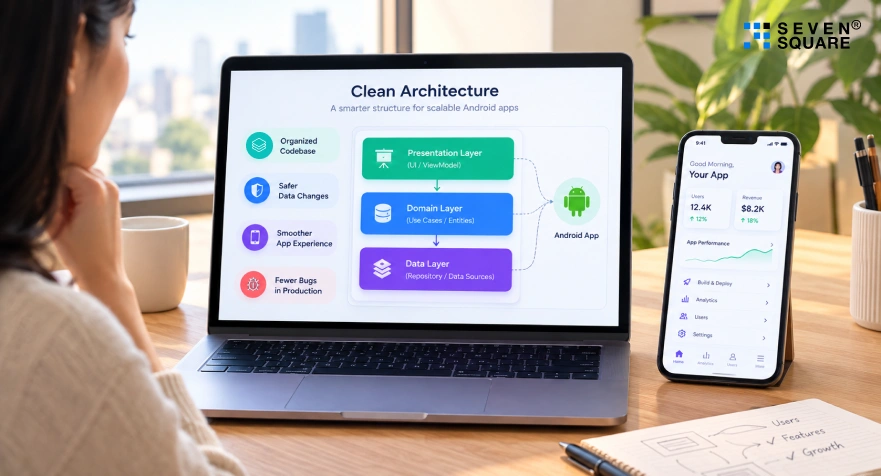
1. Organized Codebase
A well-organized app is faster and cheaper to build on later.
New features get added without breaking what already works.
This keeps development costs predictable as the product grows.
2. Safer Data Changes
Switching a data provider or database later becomes low-risk instead of a rebuild.
This means the business stays flexible if a vendor or backend needs to change.
Users never notice the switch happening.
3. Smoother App Experience
Reactive updates make the app feel instant and responsive to users.
Data changes reflect on screen without lag or glitches.
That responsiveness directly shapes how premium the app feels to use.
4. Fewer Bugs in Production
Clean architecture means issues get caught before users ever see them.
This protects app store ratings and reduces support complaints.
Over time, it saves real money on emergency fixes.
Kotlin Android Development Across Platforms
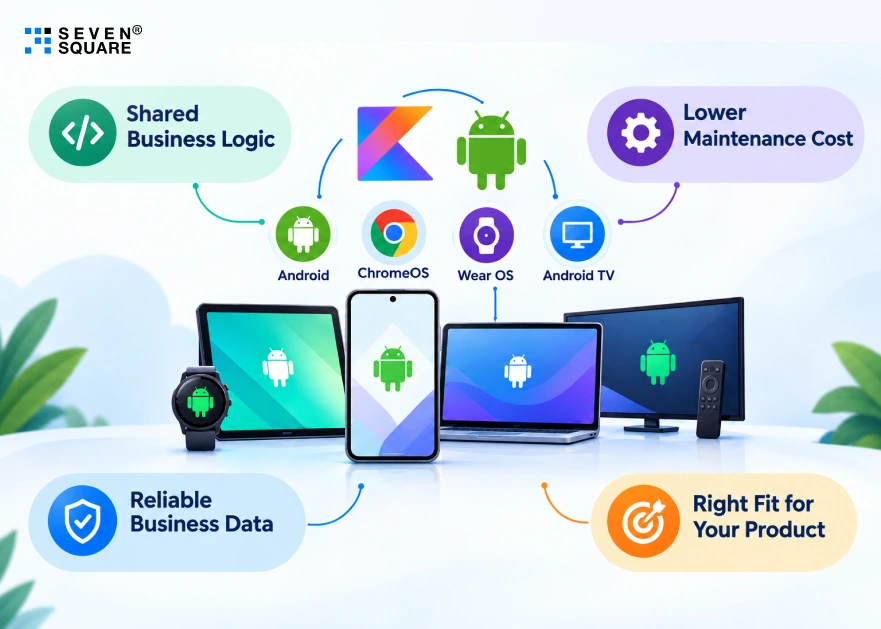
1. Shared Business Logic
Core app logic gets built once and works on both Android and iOS.
Which means a faster path to reaching users on both platforms.
It also keeps the experience consistent no matter which phone someone uses.
2. Lower Maintenance Cost
Fixing a bug or updating a feature happens in one place instead of two separate codebases.
As a result, it cuts ongoing development cost as the app grows.
It also means smaller teams can support both platforms without stretching thin.
3. Reliable Business Data
Tracking user behavior the same way across platforms gives cleaner, trustworthy data.
This means better decisions about what to build next.
Mismatched data across platforms often leads businesses in the wrong direction.
4. Right Fit for Your Product
Building once for multiple platforms isn’t right for every app.
Products with very different experiences per platform may need separate builds.
Knowing this early avoids wasted budget on the wrong approach.
Why We’re the Right Team for Your Kotlin Android Development
1. Proven Project Experience
We’ve shipped over 220 custom solutions across startups, eCommerce, and fintech products.
That volume of experience means fewer surprises show up mid-project.
Patterns that cause problems get caught before they ever reach your users.
2. Real Scaling Lessons
We’ve directly seen what breaks Android apps once real usage kicks in post-launch.
That hands-on experience is exactly why we build clean architecture from day one.
Cutting corners early always costs more to fix later.
3. Right Tech Fit
Sometimes Kotlin isn’t actually the right answer for a given product.
We’ll tell founders honestly when something like Flutter better fits their budget or timeline.
Our goal is the right outcome for your app, not a specific tech stack.
4. Honest Tech Advice
We don’t push a stack because it’s trending or easy to sell.
Every recommendation is based on what your product actually needs to succeed.
That honesty is what turns a one-time build into a long-term partnership.
FAQs
It depends on how deep your app needs to go with Android-specific features like camera access, background processing, or hardware integration. We usually walk founders through this trade-off early, since picking wrong here gets expensive to fix later.
Kotlin projects can take slightly longer to set up properly because good architecture takes real planning. We’ve found that this upfront investment saves significant rework and debugging cost once the app is live and scaling.
Yes, Kotlin is fully interoperable with Java, so migration can happen gradually rather than all at once. We typically help teams migrate module by module so the app keeps shipping while the underlying code improves.
Timelines vary based on features, but a focused MVP with clean Kotlin architecture can go live in a matter of weeks. We prioritize shipping something real fast, then building on top of it rather than over-engineering the first version.
Not if it’s structured well from the start. We often build core business logic in a way that’s ready for Kotlin Multiplatform, so expanding to iOS later doesn’t mean throwing away what’s already built.