A multi-tenant SaaS boilerplate is a pre-built foundation with tenant isolation, authentication, and role-based access already built in. This lets one application securely serve multiple customers while cutting months off development time. Founders and enterprises launch faster without having to rebuild the same login systems every time.
Why a Multi-Tenant SaaS Boilerplate Saves Real Money
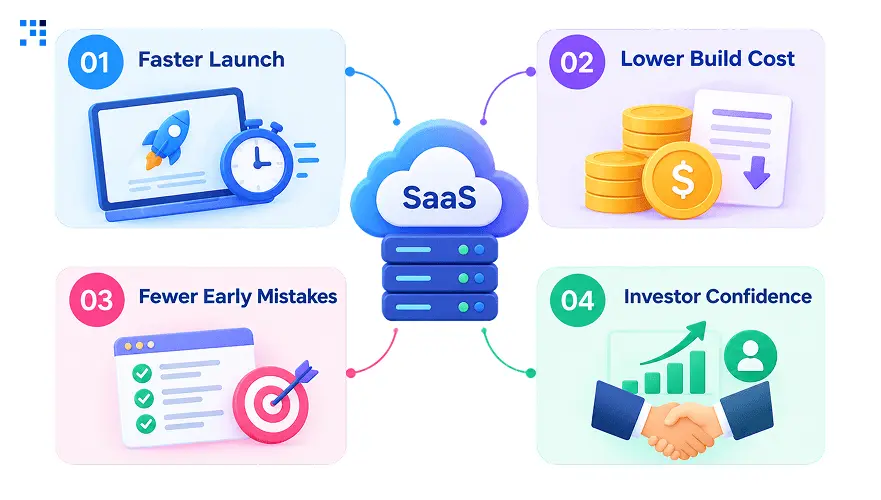
1. Faster Launch
Development time drops significantly when core infrastructure already exists.
Founders reach paying customers weeks sooner.
Speed here often decides who wins a market first.
A slower competitor rarely catches up once that gap opens.
2. Lower Build Cost
Engineering hours spent on repetitive setup add up fast.
A ready foundation cuts that spend dramatically.
Budget shifts toward features customers actually want.
Every dollar saved on setup becomes a dollar spent on differentiation.
3. Fewer Early Mistakes
Custom-built tenant systems often hide security gaps early on.
Proven architecture avoids common, costly errors.
Founders skip the painful lessons others already learned.
Fixing these mistakes post-launch usually costs far more than preventing them.
4. Investor Confidence
A working, secure product demo builds credibility fast.
Investors notice when infrastructure feels solid, not improvised.
Strong technical foundations support stronger funding conversations.
Diligence questions get answered smoothly instead of raising red flags.
What a Multi-Tenant SaaS Boilerplate Actually Solves
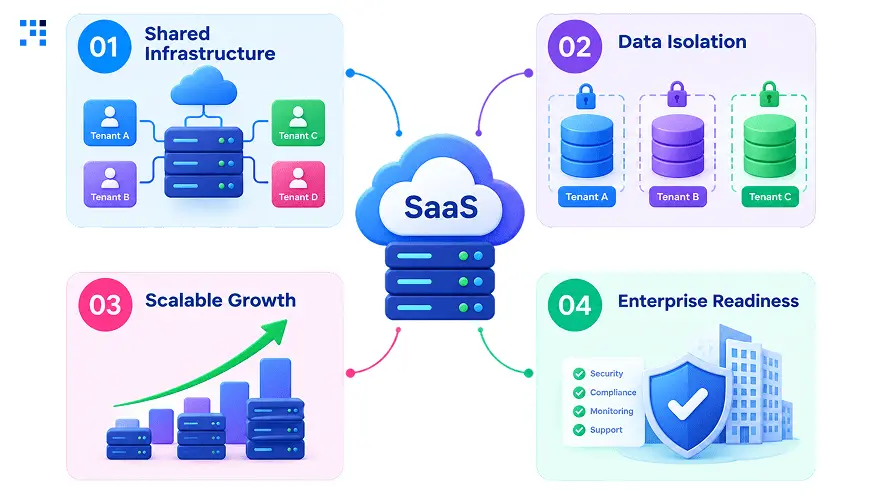
1. Shared Infrastructure
One codebase serves every customer without duplicating servers.
Costs stay lower as customer count grows.
Platforms like Shopify run entirely on this model.
That efficiency compounds significantly at scale.
2. Data Isolation
Every customer’s data stays completely separate and protected.
Isolation prevents one client from seeing another’s information.
Trust depends heavily on getting this right.
A single lapse here can end a client relationship instantly.
3. Scalable Growth
Adding new customers doesn’t require new infrastructure each time.
Growth becomes smoother and considerably cheaper.
Businesses avoid rebuilding systems as demand increases.
Momentum stays with the product instead of the setup behind it.
4. Enterprise Readiness
Larger clients expect strict data separation and reliable uptime.
A solid multi-tenant foundation meets those expectations directly.
Enterprise deals often hinge on this trust.
Winning that first enterprise client frequently opens doors to more.
Common Risks Without Proper Multi-Tenant Architecture
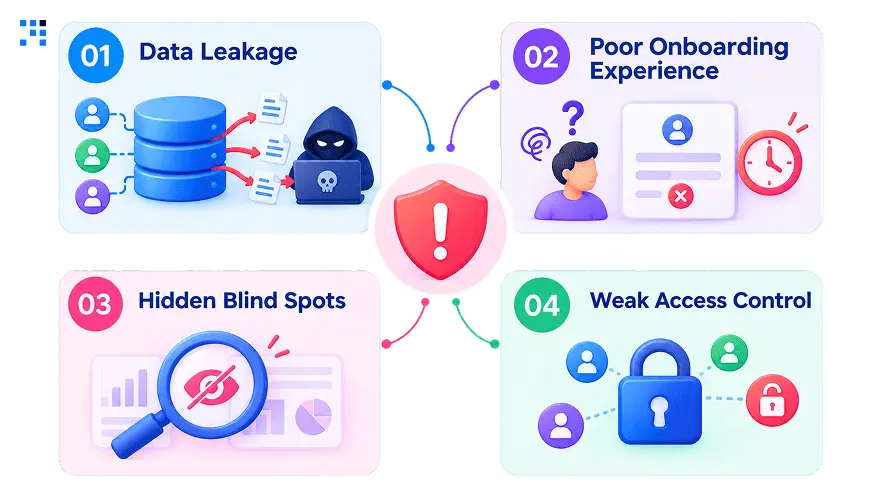
1. Data Leakage
Mixing customer data between accounts destroys trust instantly.
One incident can end enterprise relationships permanently.
Proper tenant validation prevents this from happening.
Recovery from a breach like this often takes years, not months.
2. Poor Onboarding Experience
Confusing signup flows push potential customers away immediately.
First impressions shape whether users ever return.
Smooth onboarding directly protects conversion rates.
A frustrating first five minutes rarely gets a second chance.
3. Hidden Blind Spots
Systems built without growth in mind break under real demand.
Fixing this later costs far more than planning ahead.
Rebuilding mid-growth also damages customer trust.
Downtime during a growth surge is often the worst possible timing.
4. Weak Access Control
Without proper role management, sensitive actions become accessible to everyone.
This creates both security and compliance risks.
Enterprise clients audit this closely before signing.
Failing that audit can eliminate an entire sales pipeline.
Inside a Production-Ready Multi-Tenant SaaS Boilerplate
For technical teams checking feasibility, here’s how this actually gets built.
Project Setup
            mkdir multi-tenant-saas
            npm install express prisma @prisma/client jsonwebtoken bcrypt
            npx prisma ini
Folder Structure
├── controllers/
├── middleware/
├── routes/
├── services/
└── app.js
Tenant Middleware
            module.exports = (req, res, next) => {
            const tenantId = req.headers['x-tenant-id'];
            if (!tenantId) return res.status(400).json({ error: 'Tenant ID missing' });
            req.tenantId = tenantId;
            next();
            };
Each new signup creates an isolated tenant automatically, and that tenant gets its own admin user right away.
Role-based access control then manages who can do what.
Deployment typically runs through Railway or Render for the backend.
Vercel usually handles the frontend in this setup.
Want the Working Codebase?
How We Build a Multi-Tenant SaaS Boilerplate for Your Business
1. Business Goals First
Every build starts with understanding your actual customer needs.
Technical decisions follow business priorities, not trends.
Recommendations stay grounded in real product goals.
The roadmap stays focused on revenue, not novelty.
2. Secure Foundation
Tenant isolation gets built in from the earliest development stage.
Security reviews happen before launch, not after.
Enterprise-grade protection becomes standard.
Security stops slowing down later sales conversations.
3. Future Focused
Infrastructure decisions account for future growth immediately.
Adding customers later doesn’t require painful rework.
Businesses scale without hitting unexpected technical walls.
Growth stays a milestone to celebrate, not a crisis to manage.
4. Ongoing Partnership
Support continues well past the initial launch date.
New features and scaling needs get addressed as they arise.
Long-term reliability matters more than a quick handoff.
Continuity protects the product as the business itself evolves.
FAQs
Timelines vary by feature complexity, but a focused MVP can often launch in a matter of weeks. We prioritize getting a working, secure version live before adding advanced features.
Yes, proper tenant isolation and role-based access are exactly what enterprise buyers evaluate closely. We build with those compliance and security expectations in mind from the start.
Rarely, since custom builds usually mean rebuilding common systems like authentication and tenant management from scratch. A proven foundation typically saves significant time and budget.
Yes, when architected correctly from the beginning with scaling in mind. We plan for growth early so a sudden increase in customers doesn’t force a rebuild.
A well-built multi-tenant foundation supports adding features without disrupting existing customers. We continue supporting the product as your business and customer needs evolve.