Start with one focused audience when you build a professional networking platform. Profiles, search, connections, messaging, and moderation are the right features for a first version. They keep an MVP near $25,000 to $50,000 and leave room to add jobs, events, and paid plans later.
Why Build a Professional Networking Platform in 2026
1. Market Growth
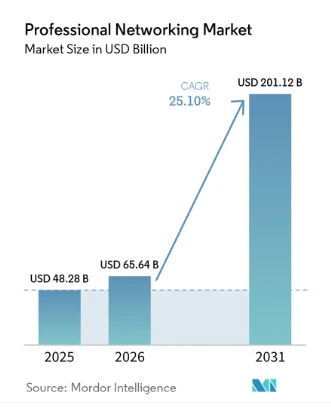
Analysts estimate the market at $65.64 billion in 2026.
Mordor Intelligence projects $201.12 billion by 2031 at 25.1% CAGR.
Treat it as a signal, not your addressable market.
Check how each report defines the market first.
2. LinkedIn Effect
LinkedIn reported 1.2 billion members in July 2025.
Its $17.8B fiscal 2025 revenue shows networks can earn.
Several revenue streams sit behind that number.
3. Niche Gaps
Industry networks serve healthcare, legal, and engineering professionals.
Specialist credentials and shared knowledge keep members returning.
Generic feeds rarely deliver that depth.
What Are the Features of a Professional Networking Platform
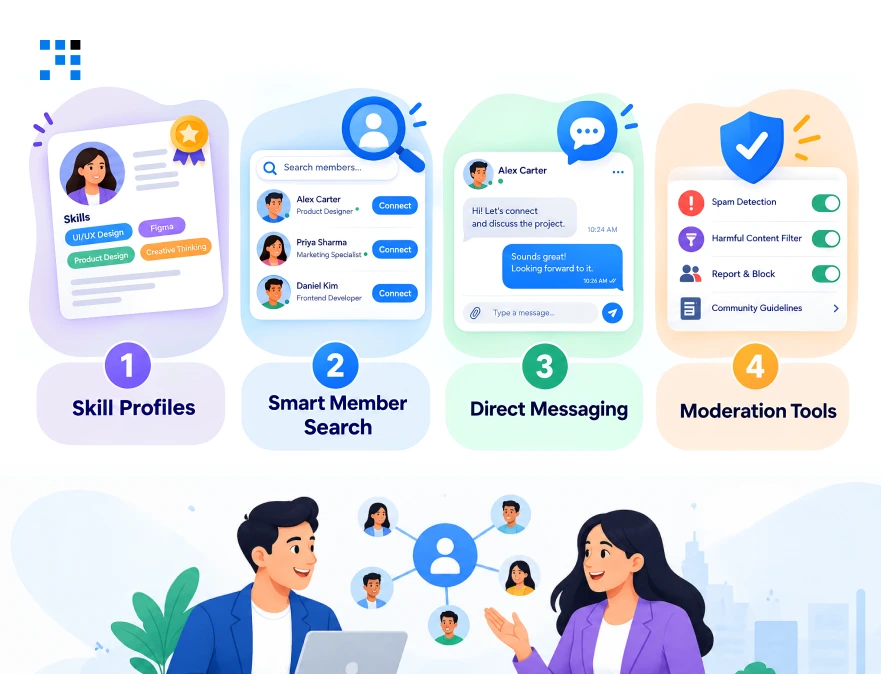
1. Skill Profiles
Profiles should work like a CV people never retype.
Add skills, experience, and a portfolio in one place.
Verified badges make strangers trust each other faster.
Keep signup short so people finish their profile.
2. Smart Member Search
People join to find someone, so search comes first.
Filter by role, location, and skill, nothing fancy.
Weak search makes an empty network feel emptier.
3. Direct Messaging
Members send a request, get accepted, and start talking.
Messages should link to the job or inquiry behind them.
Alerts bring people back when someone replies.
Without chat, a network is just a directory.
4. Moderation Tools
Fake profiles and spam kill professional networks quickly.
Reporting, moderation, and privacy settings belong in version one.
Admins need one screen to approve, flag, and remove.
Feeds, stories, and ads can wait until people show up.
Where to Focus Design in a Professional Networking Platform
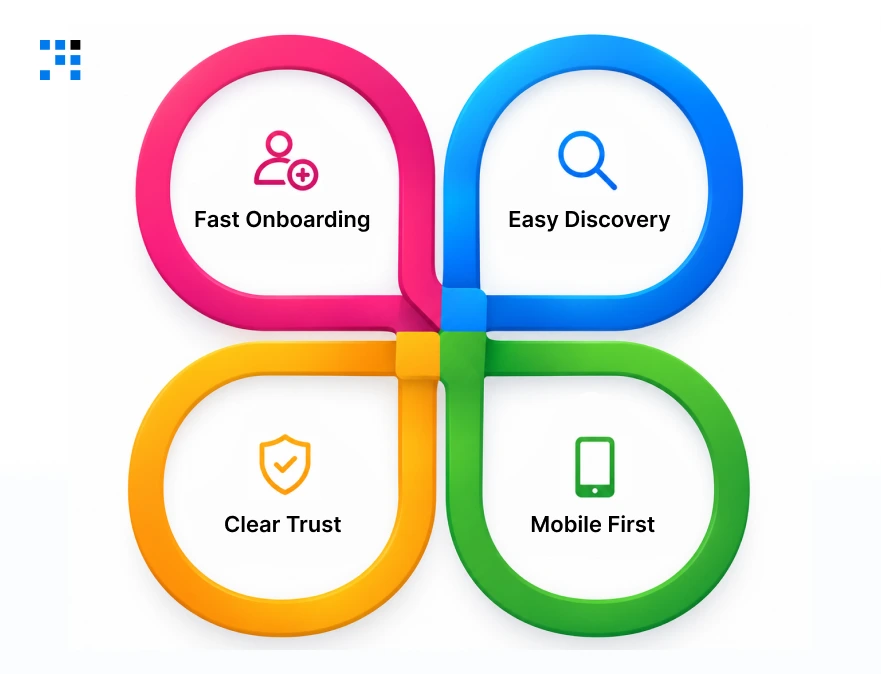
1. Fast Onboarding
New members should finish their profile in minutes, not hours.
Let them import details instead of typing everything again.
Show a progress bar so they see what’s missing.
2. Easy Discovery
A new member should see someone worth meeting immediately.
Suggestions based on role and skill beat random lists.
Each profile needs one clear button to connect.
3. Mobile First
Most professionals check networks on their phone between meetings.
Thumb-friendly buttons and short forms matter more than extras.
Web and mobile should feel like one product.
4. Clear Trust
Visible verification badges tell members who is real.
Privacy settings should be simple enough to find unaided.
Report buttons belong where people already see content.
How Much Does a Professional Networking Platform Cost in 2026
The cost depends on how deep the networking goes.
Every added workflow raises complexity and timelines.
| Platform Tier | What Is Included | Cost Range | Timeline |
|---|---|---|---|
| MVP | Profiles, search, connections, messaging, notifications, basic admin panel | $25,000 – $50,000 | 10 – 14 weeks |
| Mid-Level | Job board, network feed, groups, verification, analytics, web and mobile apps | $60,000 – $120,000 | 4 – 6 months |
| Full Product | AI matching, recruiter tools, events, marketplace, ad management, subscriptions | $150,000 – $300,000+ | 8 – 12 months |
Which Revenue Models Work for a Professional Networking Platform
1. Income Streams
Recruiters will pay for subscriptions and job listings first.
Premium plans work well for private professional communities.
Ads and sponsors come later, once members trust you.
Pick one main revenue source before you build.
2. Pricing Fit
Charge the group that gets the most value.
Ask five target customers what they’d happily pay.
Customer acquisition cost should stay below lifetime revenue.
3. Attract Members
Start with one tight group, like one profession.
Partner with existing communities to borrow their trust.
Invite your first fifty members personally.
Early introductions that lead somewhere get people to return.
4. Network Quality
Signups look good but prove little.
Watch replies, repeat visits, and connections that lead to something.
Grow into new audiences only after this group sticks.
How Assoxiate Increased Professional Networking Engagement by 45%
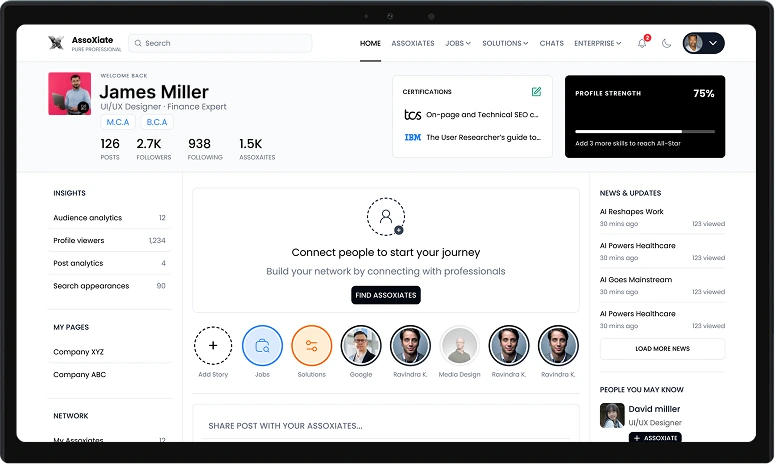
Assoxiate is a UAE-based networking platform for professionals and businesses.
It connects job seekers, recruiters, and businesses on web and mobile.
Where Their Networking Experience Was Breaking Down
| Area | What Was Happening |
|---|---|
| Profiles | Same details retyped on every app |
| Job Discovery | Hundreds of listings, none relevant |
| Hiring Workflow | Applicants scattered across chats and sheets |
| Business Visibility | Services listed with no buyers in sight |
| Events | Great contacts met but never followed up |
| Admin Control | Moderation and revenue tracked in separate tools |
Everything depended on separate tools.
And that was weakening every connection.
What We Fixed
We rebuilt networking, hiring, and business discovery as one product.
From first profile to final hire, one connected flow.
Every gap in the table above got a direct fix.
Impact After Launch
| Metric | Result |
|---|---|
| Networking Engagement | 45% higher, all in one app |
| Job Discovery | 40% faster with AI matching |
| Hiring Cycles | 35% shorter on one board |
| Admin Efficiency | 60% gain from one dashboard |
| Manual Admin Work | 50% cut by automation |
The real improvement came from bringing the experience together.
Professionals could now manage their profiles, connections, and opportunities in one place.
Want to see how we built it for them?
Our Process for Building a Professional Networking Platform
1. Project Planning
Before any design, a workshop maps who joins and why.
Business goals and revenue paths get decided at this stage.
Competitor gaps turn into a one-line value statement.
Out comes a ranked list of what to build first.
2. Sprint Demos
Work moves in two-week rounds, and each ends with a demo.
Real screens beat status reports, so nobody guesses progress.
Feedback from every demo shapes the very next round.
Decisions stay with you because you see everything.
3. Security Checks
Permissions, encryption, and consent get built in, not added later.
GDPR and India’s DPDP Act guide how data is stored.
Load tests hit search, chat, and alerts before launch.
4. Launch Support
App Store and Google Play publishing is fully handled.
Crash alerts and usage reports start working on launch day.
User input decides which update gets built next.
Support continues after go-live, not just until handover.
FAQs
Not head-on, and it does not need to. Niche platforms win by serving one profession, region, or community better than a generic network can. We help you find that gap in a discovery workshop, before you spend anything on development.
Start with profiles, search, connections, messaging, and basic moderation. Jobs, events, and feeds can follow once real usage shows what members want. We plan the architecture so these additions come later without a rebuild.
Launch where your members already are. Recruiters and admins prefer the web, while daily networking suits a phone. One Flutter app plus a web dashboard keeps the budget lean. We help you choose based on your audience, so you never pay for a platform nobody asked for.
Collect only what you need, and protect it with encrypted storage and role-based access. Consent flows should follow GDPR and local laws such as India’s DPDP Act. We build these protections in as standard, then test them before launch.