Manufacturers can sell directly online with Shopify by running a blended store that shares one catalog and inventory across both wholesale and retail buyers, using company accounts and gated B2B catalogs to keep distributor pricing separate from public storefront pricing, and layering in net payment terms, subscriptions, and ERP sync forrepeat B2B orders.
When buyers search for your products,
do they find you or competitors?

Imagine you run a valve manufacturing plant.
Distributors have carried your brand for years.
Buyers still call your office directly.
But you have no online store.
Every order goes through calls or emails.
A buyer in another state wants six units.
He cannot find your products online and finds a competitor’s instead.
Same spec. One click. Payment done in minutes.
You never knew he was looking.
Buyers research online before they call anyone.
Without a storefront, you are invisible during that search.
Now imagine you had a Shopify store live.
The same buyer finds you in seconds with clear pricing & organized categories.
He orders direct while your distributor still gets their cut.
That is what Shopify enables for manufacturers like you.
What Causes Manufacturer D2C Launches to Fail

1. Shopify Was Never the Actual Problem
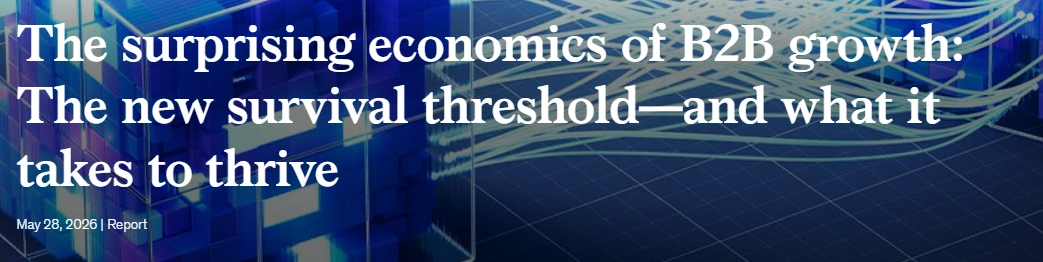
71% of B2B companies now offer ecommerce,
yet roughly one in three still don’t provide online purchasing at all.
The choice of platform rarely causes launches to fail.
Execution gaps around governance cause it instead.
Removing the middleman does not remove the work.
2. Manufacturers Are Racing Into D2C Ecommerce
A growing share of manufacturers now rank ecommerce as a top strategic priority.
Manufacturing executives are increasing technology spend to keep pace.
This shift is happening to stay ahead of competitors.
Waiting means competitors capture the buyers you already have.
3. D2C Work Moves to Your Contact Center
Pricing gaps do not vanish when distributors leave.
They surface in your support inbox instead.
Customer service returns and fulfillment become your problem overnight.
Nobody plans for this shift before launch.
4. Disconnected ERP and CRM Systems Drain D2C Budgets
Disconnected ERP, CRM, and ecommerce tools cost real money.
Managing these integrations consumes a growing share of the IT budget.
That cost climbs fast without a unified architecture.
Channel Conflict Is the Real D2C Blocker

1. Undercutting Distributors Breaks Trust Fast
Channel conflict starts when direct prices undercut partners.
Distributors notice before your team does.
That price gap becomes the whole relationship’s story.
2. Price Parity Removes the Argument
Matching MSRP on your public storefront works.
Gated B2B pricing stays visible only to approved buyers.
No customer ever sees a lower direct price.
Channel conflict has no foothold left to grow.
3. Shopify Markets Protects Distributor Territories
Shopify Markets applies different pricing by region.
This protects exclusive distributor territories automatically.
No manual override or awkward customer conversation needed.
Territory protection becomes a setting, not a fight.
4. Communication Beats Any Pricing Fix
Relationship damage almost always starts with silence.
Not with the actual pricing structure itself.
A conversation with distributors before launch changes the outcome completely.
Tell them before launch, never after.
Shopify B2B for All Plans Ends the Plus Requirement
1. Shopify Extended B2B to Every Paid Plan

Shopify extended native B2B features to every paid plan in April 2026.
Basic Grow and Advanced merchants gained real B2B tools.
Company accounts and net terms are no longer Plus exclusive.
2. Blended Stores Run B2B and D2C Together
One catalog, one inventory & one admin runs everything.
Wholesale buyers see gated pricing after login.
Retail customers see the standard public storefront.
Two experiences, zero duplicate platform cost.
3. Shopify Plus Still Wins on Deposits
Partial payments and milestone billing stay Plus exclusive.
Advanced checkout customization also requires the Plus tier.
Most manufacturers do not need this on day one.
Start smaller, upgrade when the volume demands it.
Shopify Subscriptions Turn Buyers Into Repeat Revenue

1. Recurring Orders Remove the Reordering Step
Shopify processes recurring orders on a fixed schedule.
Buyers never manually reorder consumable products again.
This works for both DTC and B2B accounts.
2. Subscription Orders Improve Inventory Forecasting
Subscription orders follow a known repeating cadence.
That predictability lets you plan inventory with confidence.
Guesswork about next month’s demand disappears completely.
3. B2B Buyers Want Rep-Free Self-Serve Ordering
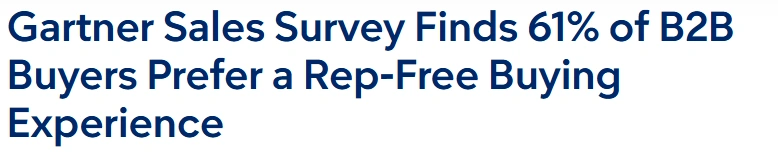
61% of B2B buyers prefer an overall rep-free buying experience.
Standing orders remove the rep from routine reorders.
Reps get freed up to grow accounts instead.
4. Subscriptions Push LTV Past the Healthy Ratio
A 3:1 LTV to CAC ratio marks healthy growth.
Subscriptions push repeat purchase rates higher without extra effort.
That ratio becomes far easier to hit with automation.
Shopify B2B Features Built for Distributor Support

1. Net Payment Terms Increase Order Size

Net 30 and Net 60 terms are native Shopify B2B features.
Businesses that offer net terms report a 40% increase in average order value.
Average order value also rises against prepay-only accounts.
2. Custom Catalogs Keep Every Account Separate
Each company account gets an assigned price list.
Wholesale buyers see only their negotiated pricing tier.
DTC products stay hidden from distributor-facing catalogs.
3. Multi-Buyer Roles Match Distributor Procurement
A purchasing manager places the order directly.
An approver reviews it before it is submitted.
A finance contact accesses invoices with no ordering rights.
This mirrors how real distributor teams actually operate.
4. Lead Routing Keeps Distributor Relationships Intact
Direct inquiries near a distributor’s territory get flagged.
Those leads route straight to the local distributor.
Nobody at the distributor loses a sale to you.
What Selling Directly Online With Shopify Costs
| Tier | What’s Included | Development Cost | Timeline |
|---|---|---|---|
| MVP | Blended store, basic B2B catalog, standard checkout | $40,000-$70,000 | 12-14 weeks |
| Mid-Level | Subscriptions, net terms, multi-buyer roles, ERP sync | $75,000-$120,000 | 16-18 weeks |
| Full Platform | Shopify Plus, deposits, advanced ERP | $130,000-$150,000+ | 18-20 weeks |
ERP sync complexity decides your tier, not the storefront theme.
Custom software development closes the gap between Shopify’s defaults and your actual distributor rules.
Skip that layer now and rebuild it after distributors already noticed the pricing gap.
How a Custom Shopify Store Increased Engagement by 40%
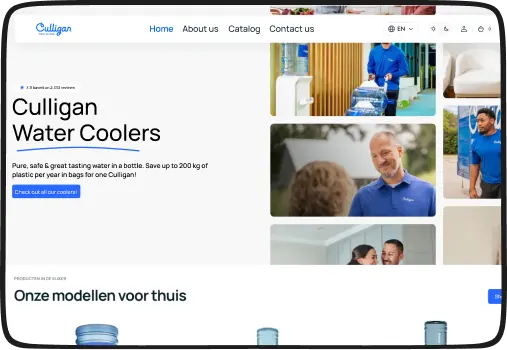
Culligan is a Belgium-headquartered water treatment brand
with a trusted name across its markets.
Softeners, filters, and dispensers were all products people knew and wanted.
But none of it could be bought directly from their website.
Where Their Online Sales Were Breaking Down
| Area | What Was Happening |
|---|---|
| Website Purpose | Purely informational with no purchase path |
| Product Categorization | Softener filters and dispensers had no clear categories |
| Payment Infrastructure | No payment gateway existed for direct purchases |
| Customer Journey | Endless unstructured scrolling with no way to buy |
Moving From Information to Online Purchases
We built a complete Shopify store from zero.
Category browsing replaced endless unstructured product scrolling.
One-time purchase and subscription checkout ran side by side.
Returning customers manage their own subscriptions independently now.
Performance After Implementation
| Store Upgrade | Result |
|---|---|
| Custom Shopify store | 40% higher customer engagement |
| Faster product browsing | 35% faster product discovery |
| Centralized product managemen | 50% less manual work |
| Subscription-ready Shopify setup | 45% stronger website performance |
See how we turned an informational site into a sales channel
How We Build Shopify Stores for Manufacturers
1. Channel Conflict Gets Mapped Before Code
Every distributor territory and pricing tier gets documented first.
We audit pricing gaps and overlap zones before a single feature ships.
That audit becomes the blueprint for gated access and catalog rules.
Distributor governance is built in from day one, not patched in after.
2. Subscriptions and Distributor Access Ship as One System
Recurring orders and net terms get built as a single connected flow.
Reorder logic and account permissions get configured together.
We never add one feature onto another as an afterthought.
Both pieces launch working as one system.
3. Top Distributors Test the Portal First
A pilot cohort of real distributor accounts tests before full rollout.
They place actual orders through the live portal under real conditions.
Configuration issues surface here, not after your full base is live.
Fixes happen quietly before every distributor ever sees a problem.
4. The Sales Team Never Touches the Architecture
ERP sync pricing rules and account roles get configured before launch.
Every catalog and net term is live before go-live day arrives.
Your team sells. Nobody on it debugs a broken subscription flow.
Selling and system maintenance stay two completely separate jobs.

FAQ
Only if pricing and communication go wrong first. Price consistency on your public storefront removes the conflict entirely. We build gated wholesale pricing so distributors never see undercutting. Most damage comes from silence, not from the platform itself.
No. Basic, Grow, and Advanced plans now include core B2B features. Company accounts, net terms, and custom catalogs work without Plus. Upgrade to Plus later when deposits or advanced ERP access become necessary.
Recurring orders fit any consumable or replenishment product cleanly. Buyers set a schedule once and never manually reorder again. This works for individual consumers and standing distributor orders alike. Forecasting improves because your order volume becomes predictable.
Your ERP stays the system of record for inventory and pricing. Shopify becomes the customer-facing commerce layer on top. We build the sync so both systems stay accurate in real time. Nothing about your operational backend gets replaced.
Most accounts adopt within the first 30 days post-launch. Speed matters more than pricing for initial portal adoption. We test with your top accounts before full rollout begins. That pilot catches friction before it affects your entire distributor base.