The top 10 automation testing tools in 2026 are Microsoft Playwright, Selenium WebDriver, Cypress, Appium, Katalon Studio, Postman Automated Suite, LambdaTest, BrowserStack, Tricentis Tosca, and ACCELQ.
What’s New in Automation Testing Tools
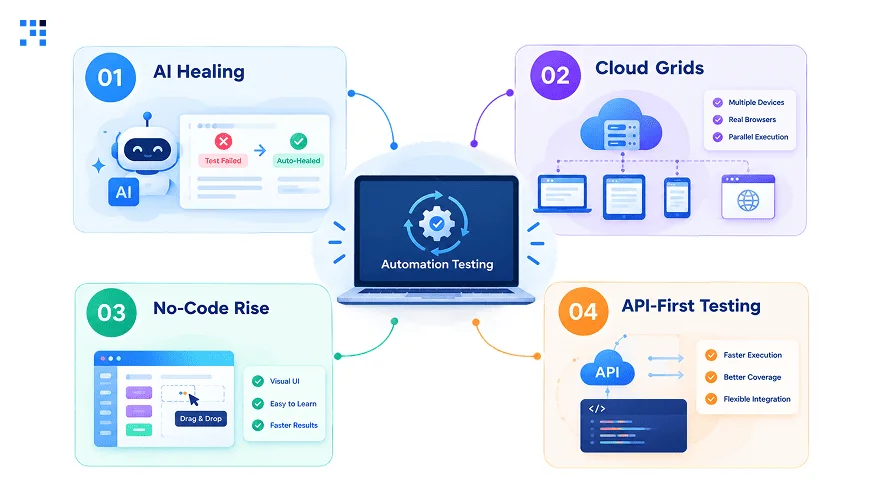
1. AI Healing
Broken tests now fix themselves without manual rewrites.
Element changes get detected and patched mid-run automatically.
Maintenance hours drop sharply across large regression suites.
Teams spend less time babysitting scripts after every UI update.
2. Cloud Grids
Massive device and browser combinations run entirely in the cloud.
Local infrastructure costs shrink as parallel execution scales instantly.
Remote teams test across real devices without owning physical hardware.
Release cycles speed up once execution stops bottlenecking on local machines.
3. No-Code Rise
Drag-and-drop test creation keeps expanding beyond just QA teams.
Business analysts and product managers now build test flows directly.
Development teams get freed from writing every single test case.
Coverage grows faster when non-engineers can contribute meaningfully too.
4. API-First Testing
Backend validation now happens earlier in every development cycle.
Contract testing catches integration issues before UI work even starts.
Microservice architectures demand this shift as systems grow more distributed.
Shifting left here prevents expensive bugs from reaching production later.
What Makes a Great Automation Testing Tool
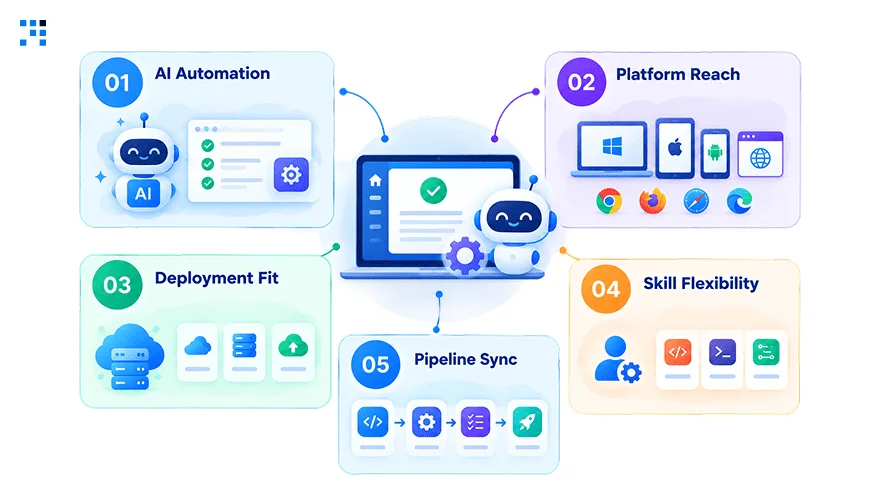
1. AI Automation
Self-healing capabilities reduce the constant burden of script maintenance.
Predictive failure detection flags risky tests before they actually break.
Workflow optimization happens automatically as the tool learns usage patterns.
Accuracy improves steadily without requiring constant manual tuning from testers.
2. Platform Reach
Strong automation testing tools cover web, mobile, and desktop consistently.
Cross-platform support prevents teams from juggling multiple disconnected tools.
Consistent behavior across environments builds real confidence in release quality.
Fragmented toolchains slow teams down far more than most realize.
3. Deployment Fit
Cloud-based options suit distributed teams needing flexible, remote access.
On-premise setups fit organizations prioritizing strict data control instead.
Choosing between the two shapes long-term security and compliance posture.
Neither option works universally, so context always drives the right choice.
4. Skill Flexibility
Codeless interfaces open automation up to non-programmers entirely.
Script-based options still give experienced testers deeper, granular control.
Supporting both skill levels keeps teams productive regardless of background.
Rigid, single-mode tools often exclude valuable non-technical contributors unnecessarily.
5. Pipeline Sync
Strong CI/CD integration keeps tests running with every single commit.
Automatic triggers remove the need for manual test execution entirely.
DevOps pipelines stay fast when testing never becomes a bottleneck.
Continuous feedback loops catch regressions before they reach real users.
Top 10 Automation Testing Tools in 2026
1. Microsoft Playwright
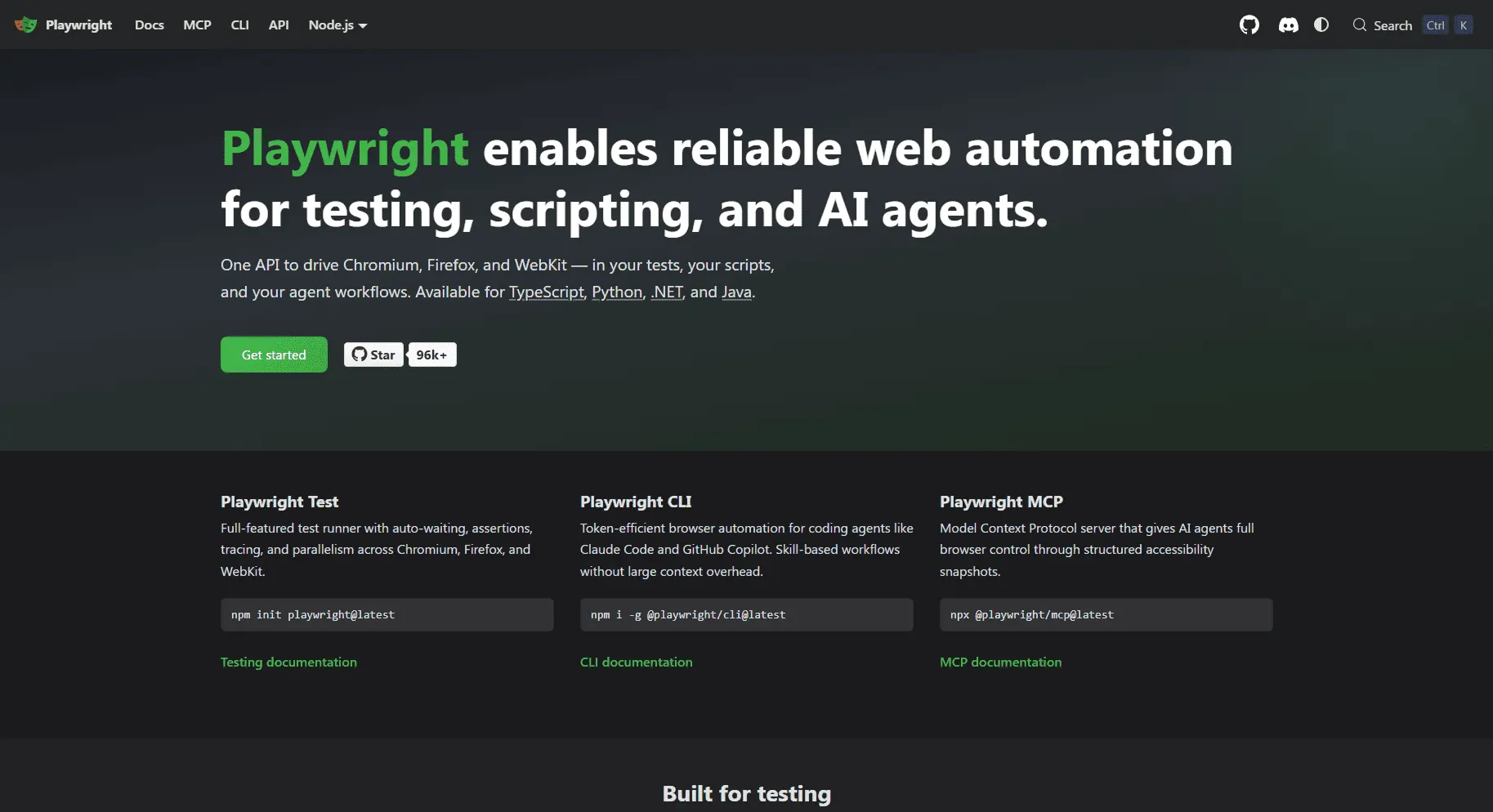
Playwright has grown into the default choice for modern web automation.
Microsoft built it specifically to handle today’s complex, JavaScript-heavy applications.
Multiple languages including JavaScript, Python, and C# work natively within it.
Teams needing reliable, fast cross-browser coverage increasingly choose Playwright first.
Key Features:
- Cross-Browser Testing: Automates tests across Chromium, Firefox, and WebKit consistently.
- Auto-Wait Mechanism: Waits automatically for elements, reducing test flakiness significantly.
- Headless Execution: Runs without a GUI, ideal for CI/CD pipelines.
- Trace Viewer: Offers detailed execution insights for faster debugging.
Speed and reliability make Playwright hard to beat for teams prioritizing modern, JavaScript-first web applications.
2. Selenium WebDriver
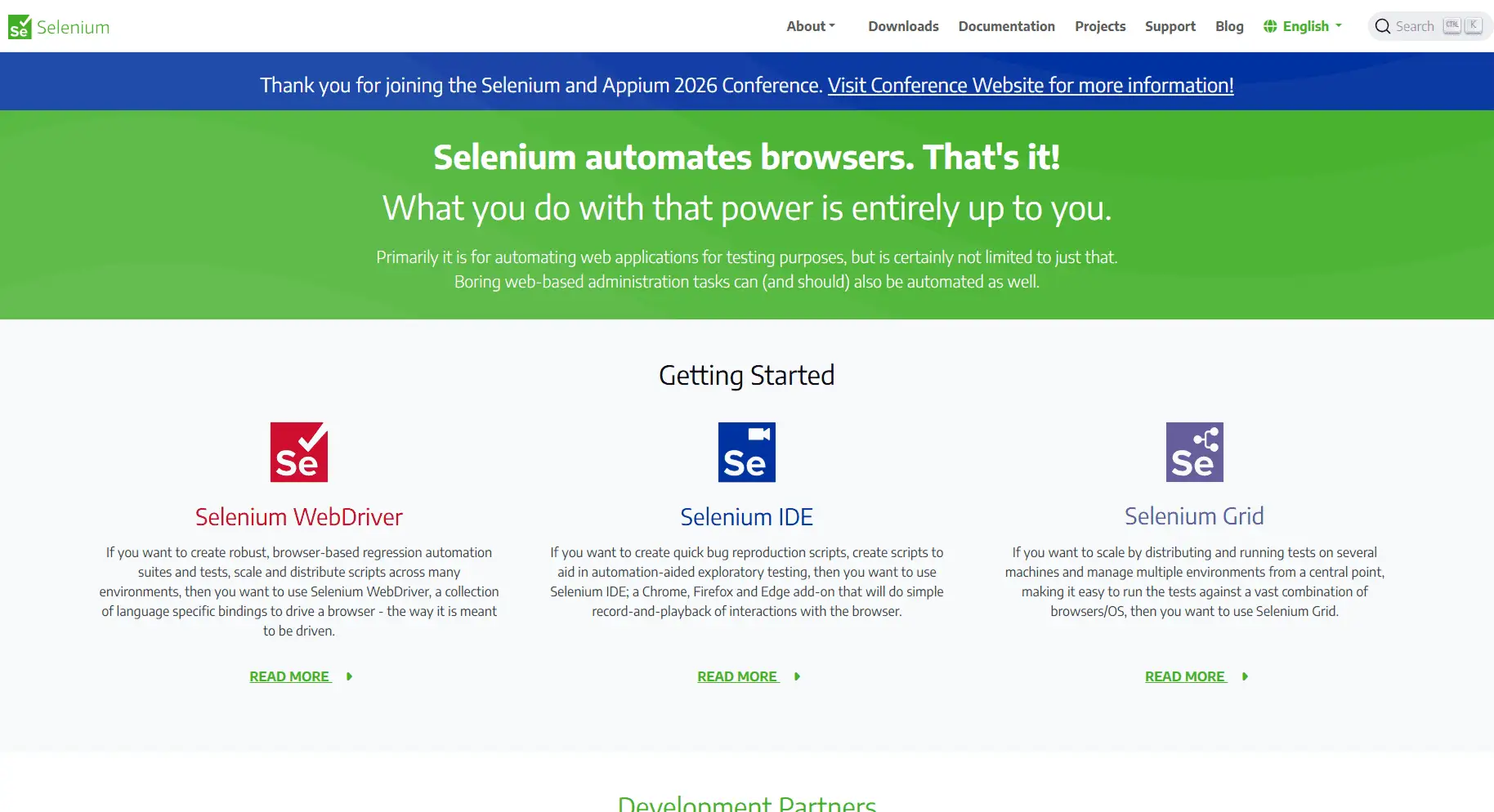
Selenium remains the foundational name in open-source browser automation.
Decades of community support back every major language and framework.
Enterprise teams managing massive, multi-browser test suites still rely heavily here.
Flexibility across languages keeps it relevant despite newer competitors emerging constantly.
Key Features:
- Language Flexibility: Supports Python, Java, JavaScript, Ruby, and C# fully.
- Cross-Platform Coverage: Runs smoothly across Windows, macOS, and Linux.
- Massive Community: Decades of documentation and troubleshooting resources exist freely.
- CI/CD Compatibility: Integrates cleanly with Jenkins, GitHub Actions, and CircleCI.
Scale and language freedom explain why legacy and enterprise teams keep choosing Selenium despite newer alternatives.
3. Cypress
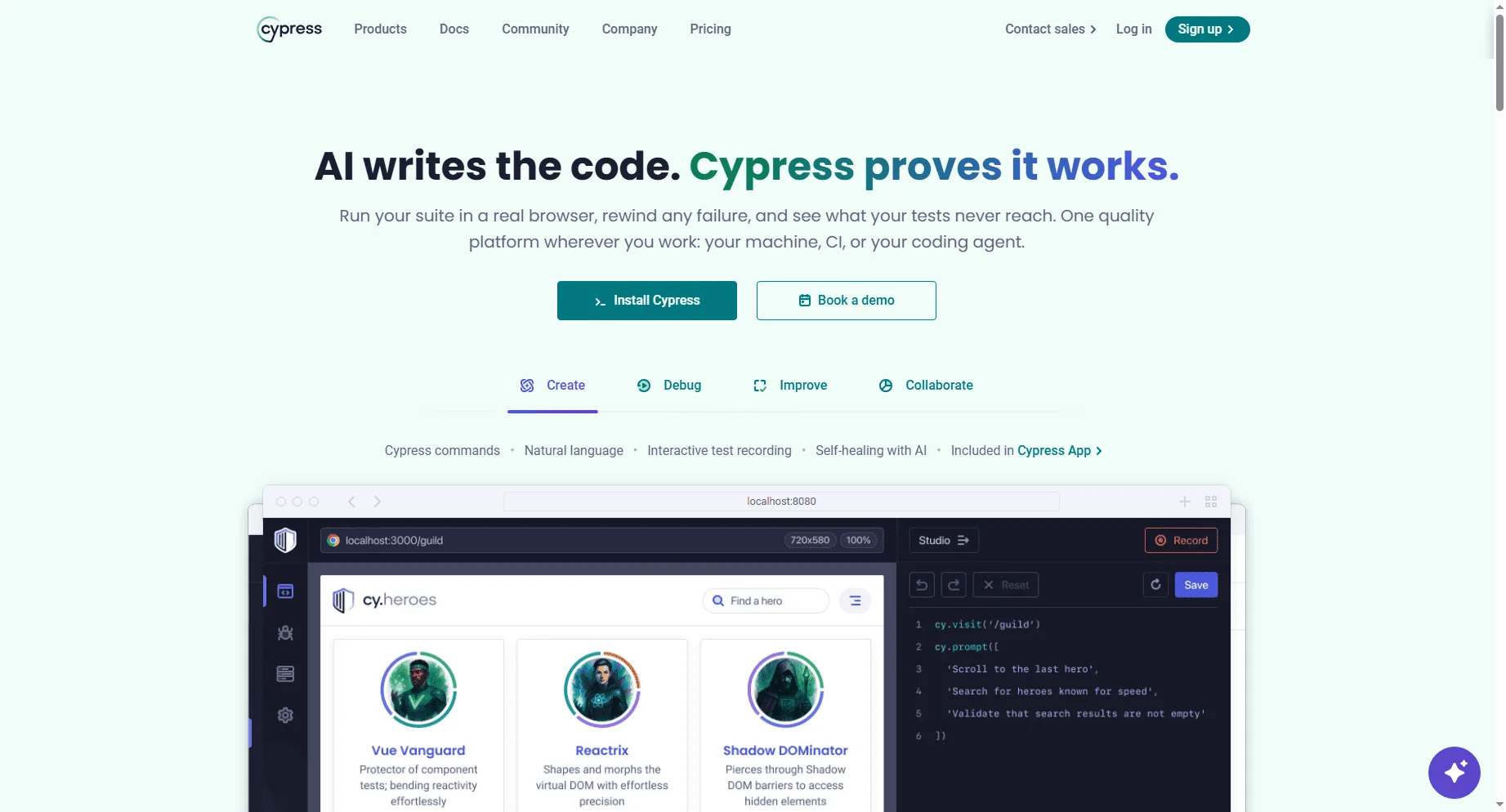
Cypress operates directly inside the browser, unlike most traditional tools.
Developers get faster feedback loops thanks to real-time code reloads.
Frontend-heavy teams particularly favor its time-travel debugging capabilities.
JavaScript-native design makes it a natural fit for modern web stacks.
Key Features:
- Time-Travel Debugging: Visualizes every test step for easier troubleshooting.
- Automatic Waiting: Eliminates manual waits, cutting down on test flakiness.
- Network Control: Stubs and intercepts API calls during test runs.
- Real-Time Reloads: Reflects code changes instantly during active development.
Developer experience sets Cypress apart for frontend teams wanting rapid, reliable feedback during active development.
4. Appium
Appium continues leading as the standard for mobile app automation.
Both Android and iOS get covered through a single, unified framework.
Real devices, emulators, and simulators all work seamlessly within one setup.
Mobile-first product teams consistently default to Appium for this flexibilit
Key Features:
- Cross-Platform Mobile: Supports Android and iOS through one framework.
- Language Variety: Allows tests written in Java, Python, or Ruby.
- Real Device Testing: Works directly with physical devices, not just simulators.
- CI/CD Friendly: Integrates smoothly into existing automation pipelines.
Mobile teams rely on Appium precisely because it unifies Android and iOS testing without fragmenting workflows.
5. Katalon Studio
Katalon blends low-code simplicity with genuine scripting flexibility underneath.
Web, API, mobile, and desktop testing all live within one platform.
Beginners and experienced testers both find a comfortable entry point here.
Comprehensive reporting rounds out a genuinely all-in-one testing experience.
Key Features:
- All-in-One Platform: Covers functional, regression, and performance testing together.
- Low-Code Interface: Offers record-and-playback alongside full scripting options.
- Data-Driven Testing: Supports multiple data sets for broader test coverage.
- Detailed Reporting: Generates analytics that support faster, informed decisions.
The balance between accessibility and depth makes Katalon a strong fit for teams with mixed experience level
6. Postman Automated Suite
Postman has evolved well beyond manual API exploration into full automation.
Collection-based test scripts now run automatically within CI/CD pipelines directly.
API-first teams use it to validate contracts before UI work begins.
Backend-heavy products particularly benefit from this early, automated validation layer.
Key Features:
- Automated Collections: Runs scripted API test suites on a schedule.
- Contract Testing: Validates API responses against expected data structures.
- CI/CD Triggers: Executes test runs automatically with every deployment.
- Monitoring Dashboards: Tracks API health and performance over time.
Backend validation happens earliest when Postman’s automation suite catches integration issues before UI testing even starts.
7. LambdaTest
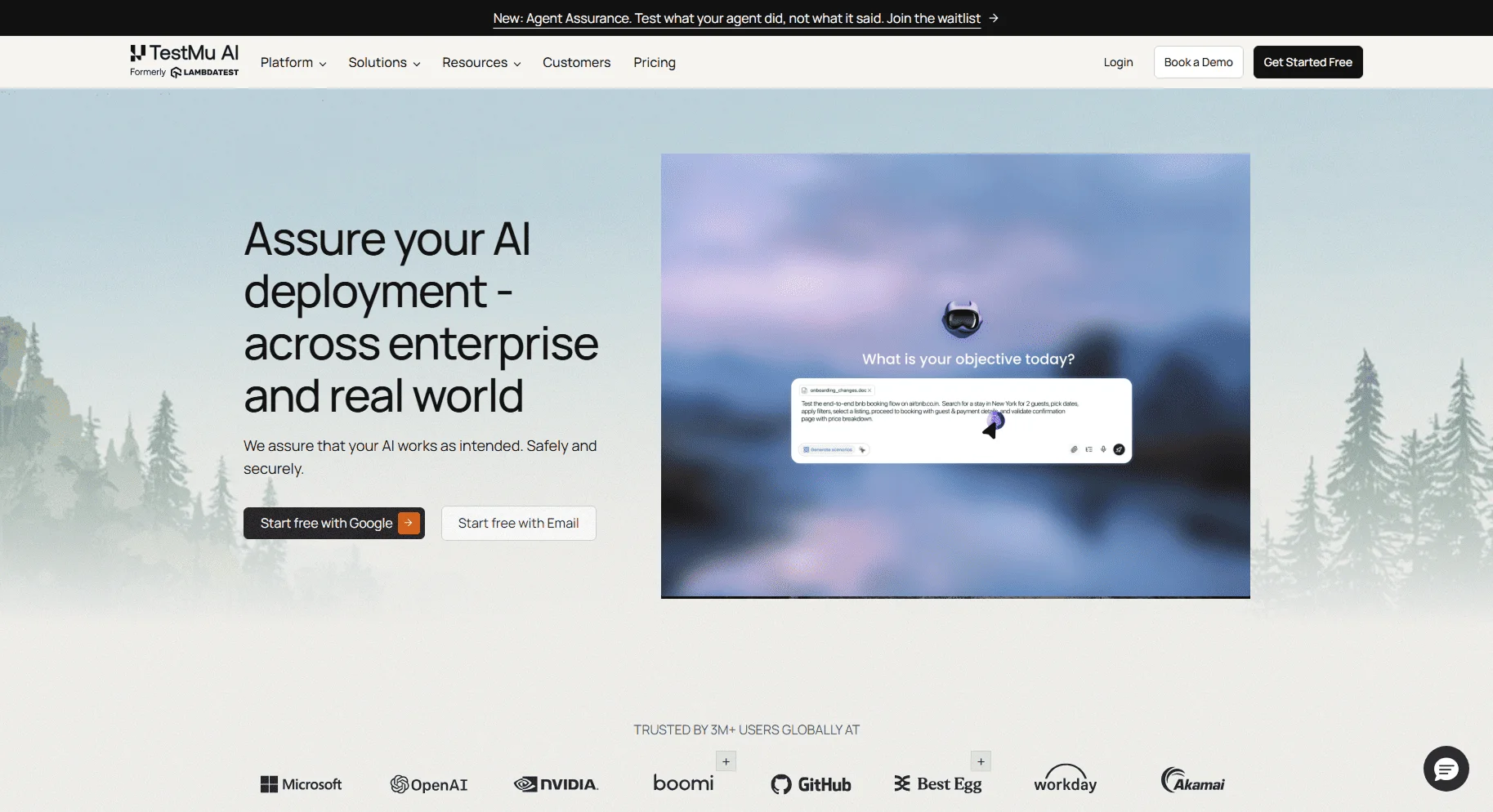
LambdaTest delivers cloud-based cross-browser and cross-device testing at real scale.
Thousands of browser and OS combinations run entirely without local infrastructure.
AI-powered test orchestration helps teams prioritize what actually needs attention.
Remote and distributed teams increasingly depend on this cloud-first approach.
Key Features:
- Massive Device Grid: Offers thousands of browser and OS combinations.
- AI Test Orchestration: Prioritizes test execution based on risk and impact.
- Parallel Execution: Runs tests simultaneously to cut total execution time.
- Framework Compatibility: Works with Selenium, Playwright, Cypress, and Appium directly.
Scale without infrastructure overhead is exactly why distributed teams lean on LambdaTest for cross-platform coverage.
8. BrowserStack
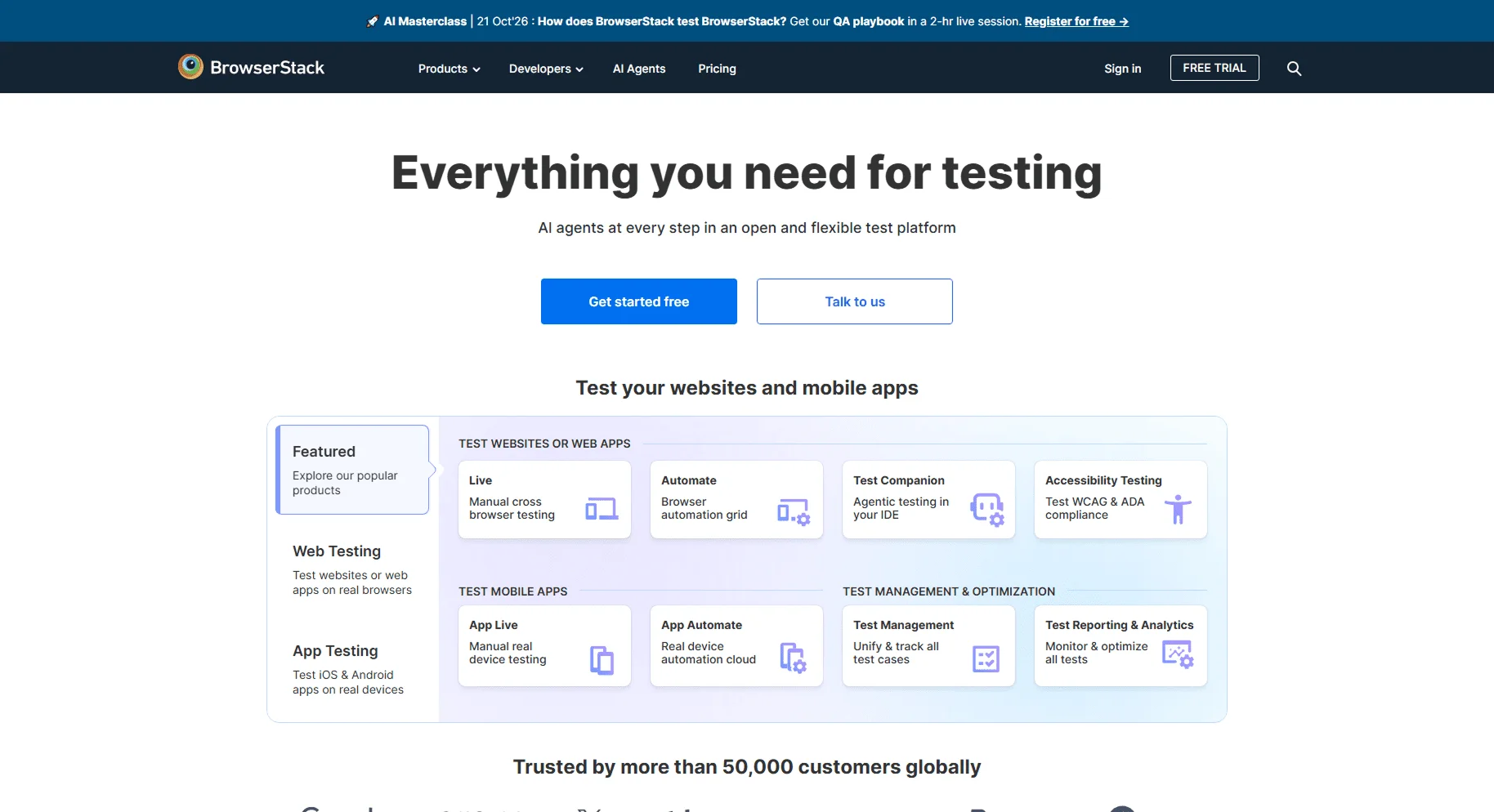
BrowserStack remains a leading name for real-device, cloud-based testing coverage.
Physical devices, not just emulators, power every test execution here.
Visual testing and debugging tools help teams catch subtle rendering issues.
Enterprise QA teams trust it for genuinely realistic testing conditions
Key Features:
- Real Device Cloud: Tests run on actual physical devices, not emulators.
- Visual Testing: Detects UI regressions through automated screenshot comparisons.
- Live Debugging: Allows interactive debugging sessions on real devices.
- Broad Integrations: Connects with Jira, Slack, and major CI/CD tools.
Realistic testing conditions make BrowserStack a trusted choice when emulator-based results simply aren’t reliable enough.
9. Tricentis Tosca
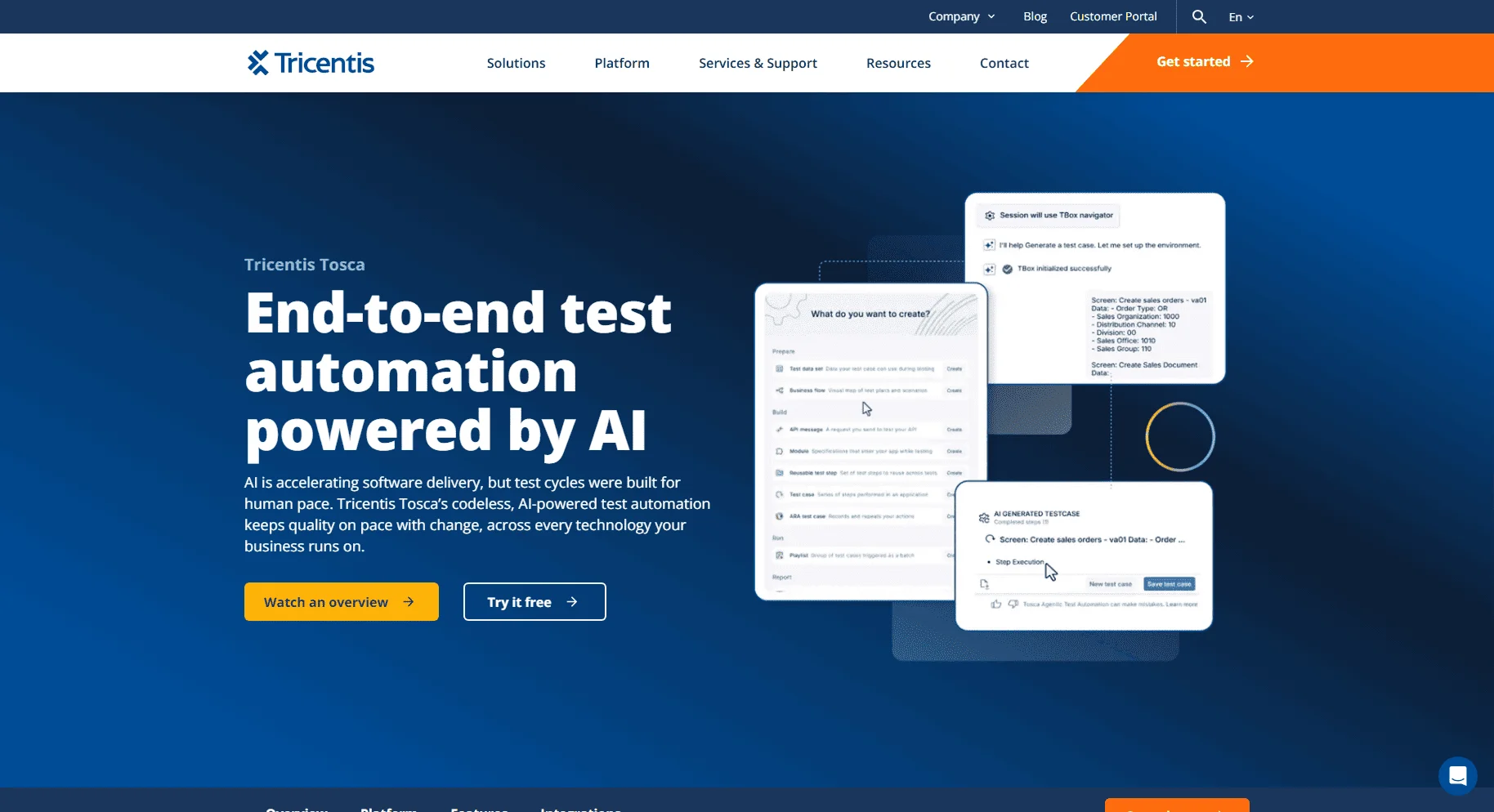
Tosca leads enterprise-scale automation for SAP, Salesforce, and complex legacy systems.
Model-based testing replaces traditional scripting with visual application logic maps.
Risk-based prioritization uses AI to focus effort where it matters most.
Large organizations managing sprawling systems rely on Tosca’s enterprise-grade scale.
Key Features:
- Model-Based Automation: Builds application models instead of traditional scripts.
- Risk-Based Testing: Prioritizes test cases using AI-driven risk analysis.
- Broad Tech Coverage: Supports both legacy systems and modern cloud apps.
- Enterprise Scale: Includes versioning, distributed execution, and DevOps integration.
Complex, business-critical systems are exactly where Tosca’s model-based approach reduces long-term maintenance burden significantly.
10. ACCELQ
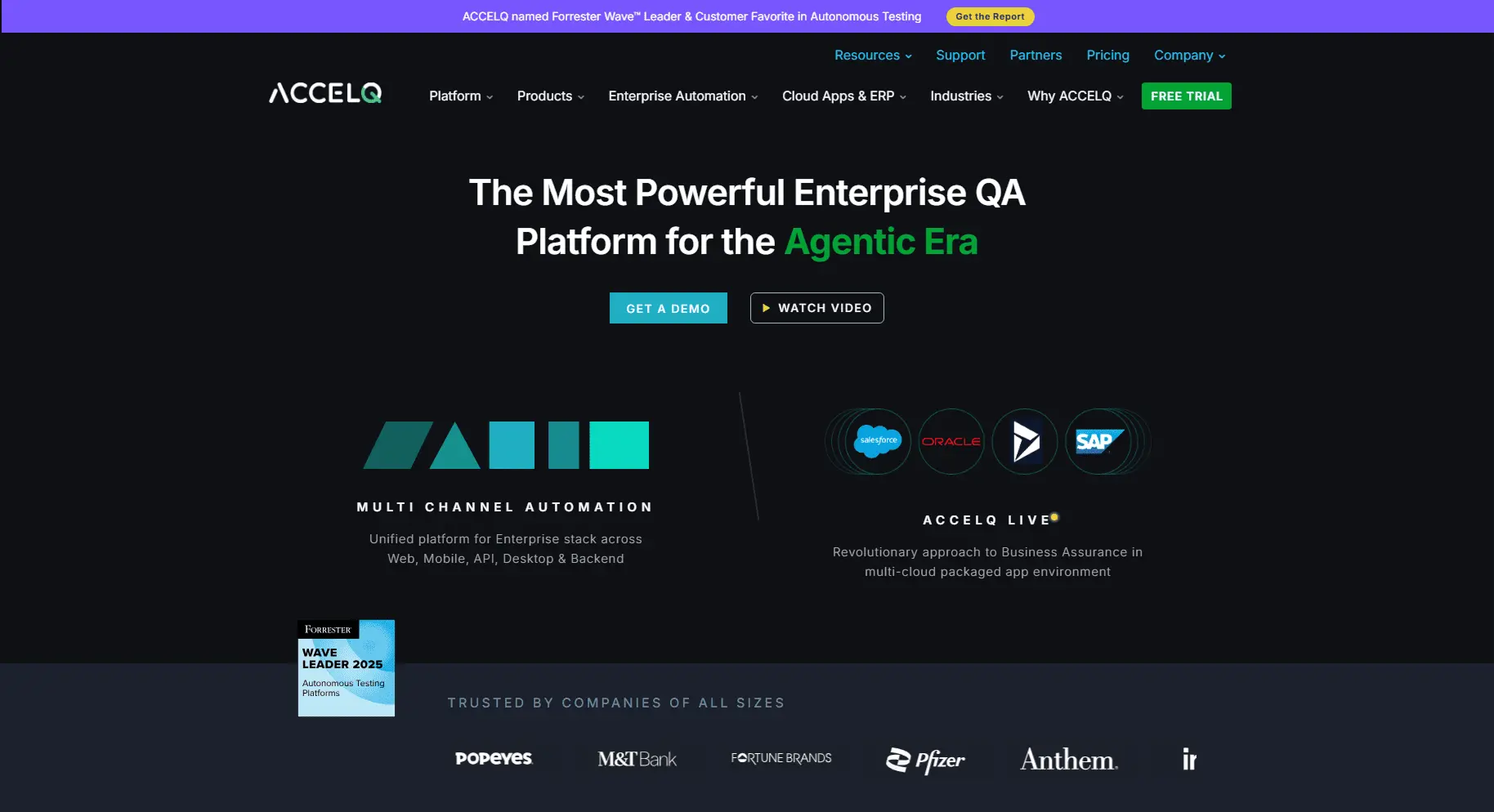
ACCELQ removes code entirely from the test creation process for teams.
Business users write tests using plain, natural language logic directly.
Web, API, and database validations all happen within one unified platform.
AI-driven change detection keeps test cases current as applications evolve.
Key Features:
- No-Code Testing: Lets business users automate tests without programming knowledge.
- End-to-End Coverage: Validates UI, API, and database layers together.
- AI Change Detection: Adapts test cases automatically as applications change.
- DevOps Integration: Connects seamlessly with Jira, Jenkins, and similar tools.
Agile, fast-moving release cycles benefit most from ACCELQ’s no-code approach and automatic test adaptation.
Automation Testing Tools Comparison for 2026
| Tool Name | Best For | Pricing | AI Features | Ease of Use | Integrations |
|---|---|---|---|---|---|
| Microsoft Playwright | Modern web testing | Free | No | Moderate | Yes |
| Selenium WebDriver | Open-source web UI testing | Free | No | Moderate | Yes |
| Cypress | End-to-end web testing | Free/Paid | No | High | Yes |
| Appium | Mobile app testing | Free | No | Moderate | Yes |
| Katalon Studio | All-in-one automation | Free/Paid | Yes | High | Yes |
| Postman Automated Suite | API testing | Free/Paid | No | High | Yes |
| LambdaTest | Cloud cross-browser testing | Paid | Yes | High | Yes |
| BrowserStack | Real-device cloud testing | Paid | No | High | Yes |
| Tricentis Tosca | Enterprise-level automation | Paid | Yes | Moderate | Yes |
| ACCELQ | AI-powered no-code testing | Paid | Yes | High | Yes |
How We Build Bug-Free Software With Automation Testing Tools
1. Automation Expertise
Our team works daily with automation testing tools like Playwright and Selenium.
Bugs get detected well before they ever reach real users.
Experience across frameworks means the right tool gets chosen correctly.
Years of hands-on use translate directly into fewer production surprises.
2. AI Integration
Self-healing test scripts get built directly into our automation approach.
Errors reduce significantly once AI-driven detection catches issues proactively.
Delivery speeds up as maintenance overhead drops across growing test suites.
Modern automation testing tools make this level of efficiency genuinely achievable.
3. Full QA Coverage
Web, mobile, and enterprise software all get thorough automated coverage.
Appium and BrowserStack handle UI testing across every target platform.
Nothing ships without passing through genuinely comprehensive quality checks first.
End-to-end coverage protects product quality across every release cycle.
4. Pipeline Integration
Testing solutions get built directly into your existing DevOps pipeline.
Continuous testing happens automatically with every single code commit.
Faster releases become possible once testing stops creating bottlenecks.
Smooth CI/CD integration keeps development velocity high without sacrificing quality.
5. Flexible Approach
No-code tools like ACCELQ suit teams without deep technical resources.
Advanced scripting with Playwright fits teams wanting granular, precise control.
Every engagement gets customized around actual team skill and project needs.
Flexibility here means no client gets forced into an ill-fitting process.
6. Cross-Platform Reliability
Cloud-based platforms ensure software performs consistently across devices and browsers.
Testing environments mirror real-world usage conditions as closely as possible.
Confidence grows once software gets validated across every realistic combination.
Automation testing tools make this breadth of coverage genuinely scalable.
FAQs
Playwright, Cypress, and Appium are strong starting points since they’re free, well-documented, and don’t require a large QA team. We usually recommend starting lean here and adding enterprise tools only once testing needs genuinely outgrow them.
It depends on how fast your UI changes and how large your regression suite has grown. Smaller, stable products often don’t need AI self-healing yet, while fast-moving products benefit from it quickly.
No, automation handles repetitive regression work well, but exploratory and usability testing still benefit from human judgment. We typically combine both approaches rather than eliminating manual testing entirely.
Most modern automation testing tools, including Playwright, Selenium, and Postman, integrate cleanly with Jenkins, GitHub Actions, and similar platforms. We handle this setup directly so testing becomes part of every deployment automatically.
Usually not, tools like Tosca and ACCELQ are built for complex, large-scale systems and come with pricing to match. We help teams avoid overpaying for capability they won’t actually use at their current stage.