Can Vibe Coding and Agentic Coding work together?
This blog explains their differences, compares real-world use cases, and shows how developers combine both approaches to build scalable AI systems.
Before modern AI-driven development, building AI systems was slow and complicated. Developers had to write every rule, workflow, and decision step manually.
This became a bigger challenge when companies started building autonomous AI systems.
Traditional coding methods were not designed for systems that needed to analyze data, make decisions, and perform tasks automatically.
Developers wanted to test ideas and build AI products quickly, but traditional development made AI agent development time-consuming and difficult to scale.
Because of these challenges, new approaches started emerging.
Developers are exploring Agentic coding vs vibe coding to simplify development, improve productivity, and build smarter AI-powered applications faster.
Why Are People Rethinking How AI Systems Are Built?
Software development is changing faster than ever. With the rise of AI-driven development, developers are no longer just writing static code.
This change has led to the emergence of autonomous AI systems that can perform complex tasks without constant human supervision.
Modern AI systems behave differently. Instead of following fixed instructions, they rely on models, data, and intelligent workflows.
Developers now focus more on designing AI behaviors and workflows rather than just writing code line by line.
Another major change is the growing importance of AI agent development.
- AI agents are software entities that can analyze information, plan actions, and execute tasks automatically.
- From AI assistants & automation tools to enterprise AI platforms, these systems require new development approaches that go beyond traditional coding.
Developers are exploring new ways to build intelligent systems efficiently. Two approaches gaining attention are agentic coding and vibe coding.
Both represent different philosophies of building AI-powered software, and each has its own strengths.
Everyone is discussing Agentic coding vs vibe coding: What is the best way to build scalable and reliable autonomous AI systems?
Understanding these approaches can help developers choose the right method for modern AI development.
Build Autonomous AI Systems with the Right Architecture
Understanding agentic coding vs vibe coding is just the first step. The real challenge is building scalable AI-powered software and autonomous AI systems that work reliably in production.
If you’re planning to develop AI agents, workflow automation platforms, or intelligent SaaS tools, our team can help you design the right AI development architecture from day one.
Want to Turn Your AI Idea into a Real Product?
What Is Agentic Coding in AI Development?
Agentic coding is an approach to software development where developers build systems composed of AI agents that can think, plan, and act independently.
Instead of writing every action explicitly, developers design an AI agent architecture that allows agents to decide how to accomplish tasks.
In simple terms, agentic coding focuses on building intelligent agents rather than writing rigid programs.
This approach plays a major role in autonomous AI development, where systems operate with minimal human intervention.
A typical AI agent architecture built using agentic coding may include:
- A reasoning engine that understands goals and context.
- Memory systems that store past interactions and knowledge.
- Tool integrations such as APIs, databases, or external services.
- Decision-making logic that determines the next action.
Imagine an AI customer support assistant built using agentic coding. When a user asks a question, the AI agent can:
- Understand the request using natural language processing.
- Search internal knowledge bases for relevant information.
- Decide whether to respond directly or fetch external data.
- Generate a response or perform an action such as creating a ticket.
In this workflow, the developer doesn’t manually define every step. Instead, the AI agents make decisions dynamically, making the system more flexible and intelligent.
Because of this capability, agentic coding is becoming a key approach for building autonomous AI systems, multi-agent platforms, and complex AI automation tools.
See How Multi-Agent Systems in Artificial Intelligence Works.
What Is Vibe Coding and Why Is It Trending Among Developers?
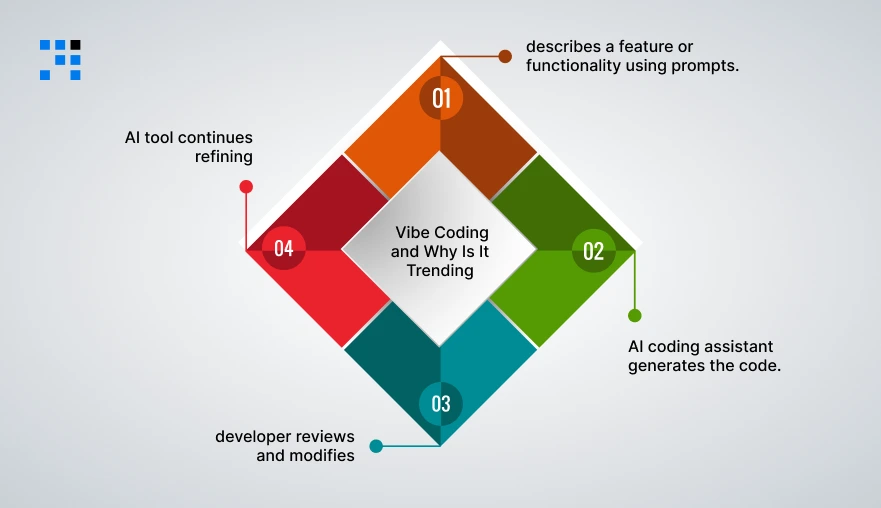
While agentic coding focuses on designing intelligent systems, vibe coding represents a very different way of building software.
It is a more dynamic and AI-assisted coding approach where developers rely heavily on AI tools to generate and refine code through prompts and suggestions.
Vibe coding means coding with the help of AI while focusing on the “intent” of the application rather than writing every detail manually.
This approach has become popular because modern AI tools can significantly speed up development. A typical AI coding workflow in Vibe coding may look like this:
- The developer describes a feature or functionality using prompts.
- An AI coding assistant generates the code.
- The developer reviews and modifies the generated output.
- The AI tool continues refining the implementation.
Because of this process, vibe coding is widely used for rapid prototyping and AI-powered software development.
Another reason for its popularity is the rise of AI coding assistants that can generate entire modules, debug errors, and optimize functions in seconds.
Despite these limitations, vibe coding has become a powerful tool for building prototypes, MVPs, and small AI automation projects quickly.
Agentic Coding vs Vibe Coding: Key Differences Developers Should Know
When comparing Agentic coding vs vibe coding, it is important to understand that both approaches serve different purposes in modern AI development.
Agentic coding focuses on building intelligent autonomous systems, while vibe coding emphasizes speed and AI-assisted development.
Here is a clear comparison of vibe coding vs agentic coding across several important factors.
| Feature | Agentic Coding | Vibe Coding |
| Development Philosophy | Focuses on designing AI agents that can reason, plan, and execute tasks independently. | Focuses on rapid development using AI-generated code and prompt-based instructions. |
| Control vs Automation | Developers design structured AI agent architecture with controlled decision-making workflows. | AI tools generate much of the code automatically, reducing manual coding effort. |
| Scalability | Ideal for building large-scale autonomous AI systems and multi-agent platforms. | Better suited for smaller projects, prototypes, and rapid development. |
| Debugging Complexity | Debugging can be complex because AI agents make dynamic decisions. | Debugging is easier since most logic is generated and reviewed by developers. |
| Use Cases | AI assistants, enterprise automation, autonomous AI systems, and AI orchestration platforms. | MVPs, experimental projects, simple AI applications, and productivity tools. |
| AI Orchestration Capabilities | Supports complex workflows where multiple AI agents collaborate. | Limited orchestration capabilities since focus is on code generation rather than system architecture. |
In the agentic coding vs vibe coding discussion, it’s not about choosing one approach for everything. Instead, the best method depends on the type of AI system being built.
- Developers building autonomous AI platforms or intelligent agents often prefer agentic coding.
- Developers creating rapid prototypes or simple AI-powered tools may find vibe coding more efficient.
How Agentic Coding Dominates Autonomous AI Systems?
One of the biggest advantages of agentic coding is its ability to support the development of autonomous AI systems.
This approach is particularly powerful when building AI agents that must handle complex workflows.
With agentic coding, developers create an AI agent architecture that allows the system to perform these steps without manual intervention.
In many advanced AI applications, multiple AI agents work together as multi-agent systems to complete complex tasks.
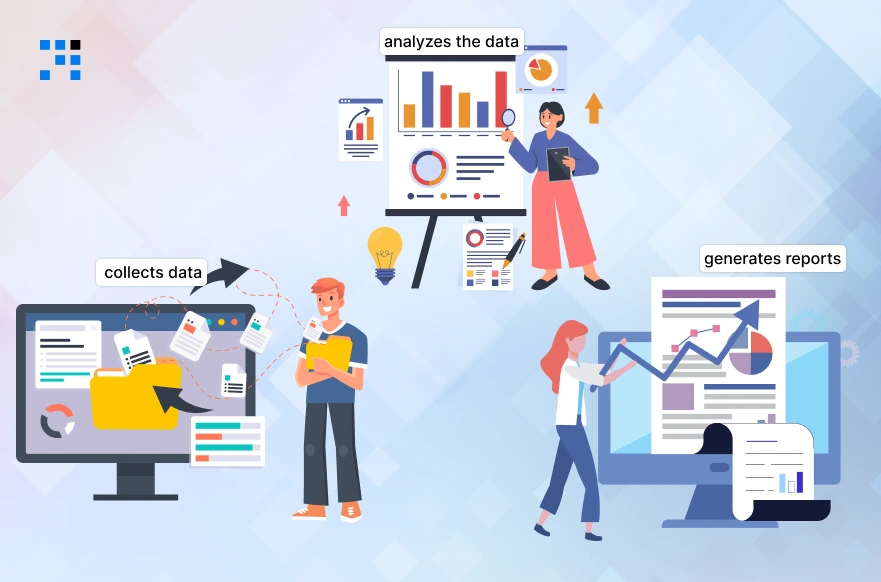
Each agent may specialize in a specific function such as research, analysis, or decision-making. For example, in an autonomous business analytics platform:
- One agent collects data from various sources.
- Another agent analyzes the data for patterns.
- A third agent generates reports and recommendations.
Together, these agents form an AI orchestration workflow where tasks are coordinated automatically.
This orchestration allows developers to build scalable autonomous AI systems that can manage large amounts of data and automate complex processes.
Go Through Enterprise Agentic RAG System Architecture.
As AI technology grows, building AI agents through agentic coding is becoming a core strategy for creating intelligent automation platforms and enterprise AI solutions.
Where Vibe Coding Works Best in AI Development?
While agentic coding focuses on building intelligent systems, vibe coding shines when speed and experimentation are the top priorities.
This vibe coding workflow allows developers to move from concept to prototype much faster than traditional coding methods.
One of the most common uses of vibe coding is rapid prototyping. Startups & developers need to test ideas quickly before investing significant time & resources.
Another area where vibe coding works well is MVP development. When launching a new product, teams often prioritize speed over perfection.
Go through Top Replit Alternatives to build apps faster.
Vibe coding helps create basic features quickly, allowing teams to gather user feedback and iterate on the product.
Vibe coding is also ideal for building small AI automation tools.
In short, vibe coding is an excellent approach for rapid development, experimentation, and lightweight AI projects, making it a valuable part of modern AI-powered development workflows.
The Future of AI Development: Will Agentic Coding Replace Vibe Coding?
As artificial intelligence continues to evolve, developers are constantly exploring new ways to improve AI-driven development workflows.
This has sparked an important discussion about the future of AI coding approaches and whether one method will eventually replace the other.
In reality, it is unlikely that agentic coding will completely replace vibe coding.
Instead, the future of AI development will likely involve hybrid AI coding workflows that combine the strengths of both approaches.
Agentic coding will continue to grow in importance as organizations build more advanced AI agents and autonomous systems.
- These systems require structured architectures, AI orchestration, and scalable decision-making frameworks.
At the same time, vibe coding will remain valuable for rapid development and experimentation.
- Developers can use AI tools to generate code quickly, test new ideas, and prototype applications before implementing more advanced agent-based architectures.
From a long-term perspective, the best AI development strategy may involve using vibe coding during early development stages and transitioning to agentic coding as the system becomes more complex and scalable.
This hybrid approach allows developers to balance speed, creativity, and scalability, shaping the next generation of AI-powered software.
Explore Our AI Development Work in a Project Called Summary AI.
Which Approach Is Better for Autonomous AI Development?
After comparing Agentic coding vs vibe coding, it becomes clear that both approaches play important roles in modern AI development.
However, the right choice depends on the type of system being built. For AI startups, vibe coding can be extremely useful during the early stages.
It allows teams to build prototypes quickly, test ideas, and launch MVPs without spending too much time on complex architecture.
For enterprise AI systems, agentic coding is usually the better option. Get AI Agent Development Services Now.
Large-scale platforms require structured AI agent architecture, orchestration workflows, and scalable automation capabilities.
These requirements make agentic coding more suitable for long-term development.
FAQs
- Agentic coding is a development approach where developers design intelligent AI agents that can plan, reason, & perform tasks independently.
- It focuses on building a structured AI agent architecture for creating scalable autonomous AI systems.
- Vibe coding is an AI-assisted development method where developers use AI coding tools to generate and refine code using prompts.
- It focuses on speed and creativity, making it useful for prototyping and rapid application development.
- Agentic coding focuses on designing intelligent agents and structured AI workflows, while vibe coding focuses on rapid code generation using AI tools to speed up development.
- Multi-agent systems are AI architectures where multiple intelligent agents work together to complete tasks.
- Each agent performs a specific function, and together they create powerful automated workflows.