What makes an ERP mobile app scalable?
Our team tried to showcase the technology and architecture choices to keep ERP systems responsive and dependable, even as manufacturing data and users increase.
Many businesses invest in an ERP mobile app for manufacturing, expecting better efficiency & real-time visibility. Most ERP apps start failing as factory operations grow.
The most common issues include:
- Slow performance in production environments occurs when multiple users access the system.
- Poor real-time tracking leads to outdated inventory and production data.
- System crashes with growing data, especially in high-volume factory operations.
These problems are a direct result of poor planning in ERP mobile app architecture.
The truth is simple: The problem is not the ERP idea, it’s the wrong tech stack & architecture.
Choosing the wrong ERP software tech stack can limit scalability, reduce performance, and increase long-term costs.
That’s why selecting the best tech stack for ERP mobile app development is important from day one.
What Is the Best Tech Stack for ERP Mobile App Development?
Ideal ERP Mobile App Tech Stack
The best tech stack for ERP mobile app development includes:
- Frontend: React Native / Flutter
- Backend: Node.js / Java Spring Boot
- Database: PostgreSQL / MongoDB
- Cloud: AWS / Azure
This combination ensures scalability, performance, and real-time data handling for manufacturing ERP systems.
Why Does This Tech Stack Works for Scalable ERP Systems?
This combination is widely used in enterprise mobile app tech stack design because it supports:
- High scalability for growing factory operations.
- Real-time data processing for inventory and production tracking.
- Cross-platform development, reducing cost and time.
- Cloud-based ERP mobile app deployment, ensuring flexibility and uptime.
For businesses building a scalable ERP mobile app for manufacturing, this stack provides the perfect balance between performance, cost, and long-term growth.
Learn How Inventory Management Software Improves Stock Accuracy and Profit.
How Do We Help to Build a Scalable ERP Mobile App for Manufacturing?
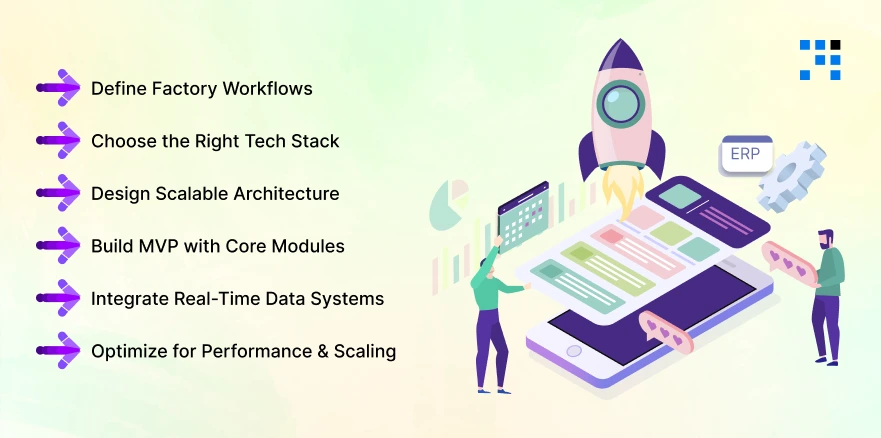
Building a scalable ERP mobile app for manufacturing requires a structured approach.
- Define Factory Workflows: Understand processes like inventory, production, and dispatch. This ensures your ERP system matches real business needs.
- Choose the Right Tech Stack: Select the best tech stack for ERP mobile app development based on scalability and performance.
- Design Scalable Architecture: Use a microservices architecture and cloud infrastructure for flexibility.
- Build MVP with Core Modules: Start with important features like Inventory management, Production tracking, & User management.
- Integrate Real-Time Data Systems: Provide live updates using APIs and real-time processing tools.
- Optimize for Performance & Scaling: Use caching, load balancing, and cloud scaling to handle growth.
Have an Idea for a Custom ERP Mobile App?
Key Features Your ERP Mobile App Must Support
Before selecting the ERP mobile app development tech stack, it’s important to understand the features your system must support.
Must-Have ERP Mobile App Features for Factories
- Real-time data sync: Ensures all departments work with up-to-date information.
- Role-based dashboards: Provide customized views for managers, operators, and admins.
- Inventory & warehouse management: Tracks stock levels, movement, and storage in real time.
- Production planning & tracking: Monitors manufacturing processes and output.
- Offline support: Important for factory environments with unstable internet.
- Notifications & alerts: Instant updates for delays, stock issues, or approvals.
These ERP mobile app features for factories directly impact your choice of backend technologies for ERP systems and overall scalability.
If your tech stack cannot support these features efficiently, your ERP system will struggle as your business grows.
Core Components of a Scalable ERP Mobile App Architecture
To build a scalable ERP system design, you need a strong architectural foundation. Every high-performing ERP mobile app is built on these core components:
1. Frontend Layer
- This is the user interface of your ERP mobile app, built using technologies like React Native or Flutter.
- It ensures smooth interaction and usability across devices.
2. Backend Services
- The backend handles business logic, data processing, and system operations.
- Technologies like Node.js or Java Spring Boot are commonly used for ERP app backend technologies.
3. Database Layer
- This layer stores and manages structured and unstructured data.
- Choosing between PostgreSQL and MongoDB depends on your data complexity and scalability needs.
4. API Layer
- APIs connect the frontend with backend services & enable integrations with third-party systems like CRM, IoT devices, and analytics tools.
5. Cloud Infrastructure
- Cloud platforms like AWS or Azure provide scalability, security, and high availability for cloud-based ERP mobile apps.
Best Tech Stack for ERP Mobile App Development (Layer-by-Layer)
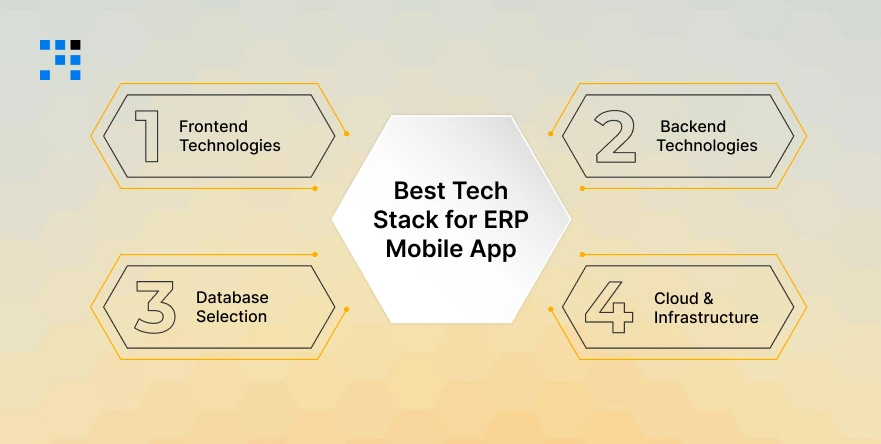
Choosing the best tech stack for ERP mobile app development is about selecting the right technologies for each layer of your system.
A well-planned ERP mobile app architecture ensures performance, scalability, and long-term stability.
1. Frontend Technologies (Mobile ERP Interface)
The frontend defines how users interact with your ERP system. For a mobile ERP solution for factories, speed and usability are critical.
React Native vs Flutter
React Native
- Strong ecosystem.
- Faster development with JavaScript.
- Ideal for scalable enterprise apps.
Flutter
- High-performance UI.
- Consistent design across platforms.
- Great for custom interfaces.
Why Cross-Platform Wins for ERP?
Building separate apps for Android and iOS increases cost and time. That’s why most businesses choose cross-platform frameworks for ERP mobile app development.
Benefits include:
- Faster development cycles.
- Lower development cost.
- Easier maintenance.
- Consistent user experience.
For most enterprise mobile app tech stack decisions, React Native is often preferred due to flexibility and community support.
2. Backend Technologies (Processing Engine)
The backend is the brain of your ERP system. It handles data processing, workflows, and integrations.
Node.js vs Java Spring Boot
Node.js
- Fast and lightweight.
- Handles real-time data efficiently.
- Best for scalable ERP systems.
Java Spring Boot
- Highly secure and stable.
- Suitable for large enterprise systems.
- Strong performance for complex workflows.
Handling High Concurrency in ERP Systems
Factories often have multiple users accessing the system at the same time, from inventory teams to production managers.
A strong ERP app backend technology should support:
- High concurrency (100+ users).
- Real-time updates.
- Fast API response times.
Node.js works well for real-time ERP mobile app architecture, while Java is ideal for complex enterprise-grade systems.
3. Database Selection (Structured + Real-Time Data)
ERP systems deal with both structured and dynamic data, making database selection critical.
PostgreSQL vs MongoDB
PostgreSQL
- Best for structured data.
- Strong consistency and reliability.
- Ideal for financial and transactional data.
MongoDB
- Flexible schema.
- Great for real-time and dynamic data.
- Handles large datasets efficiently.
When to Use a Hybrid Database Approach?
For a scalable ERP mobile app for manufacturing, many businesses use both:
- PostgreSQL: Transactions, orders, & accounting.
- MongoDB: Logs, real-time tracking, & analytics.
This hybrid approach improves performance and scalability in ERP system design.
4. Cloud & Infrastructure (Scalability Backbone)
Cloud infrastructure is the foundation of any cloud-based ERP mobile app.
AWS vs Azure vs GCP
AWS
- Most widely used.
- Highly scalable.
- Strong ecosystem.
Azure
- Great for enterprise integration.
- Works well with Microsoft tools.
GCP
- Strong in data analytics.
- Cost-effective for startups.
Benefits of Cloud-Based ERP Mobile Apps
- On-demand scalability.
- High availability.
- Secure data storage.
- Easy integration with other systems.
For a modern ERP mobile app development tech stack, the cloud is necessary.
Monolithic vs Microservices: Which Architecture Works Best for ERP?
Choosing the right architecture is a key part of scalable ERP system design.
Monolithic vs Microservices Comparison
| Feature | Monolithic Architecture | Microservices Architecture |
| Structure | Single codebase | Multiple independent services |
| Scalability | Limited | Highly scalable |
| Flexibility | Low | High |
| Deployment | Complex | Easier and faster |
| Failure Impact | Entire system affected | Isolated failures |
Planning to build an ERP mobile app for your factory?
Build a Scalable ERP Mobile App That Grows With You
Building a successful ERP system is about choosing the right ERP mobile app development tech stack and architecture.
A well-designed system ensures:
- Scalability for growing factory operations.
- Real-time visibility across departments.
- Long-term cost efficiency.
Right tech stack = scalable ERP success
FAQs
- The best tech stack includes React Native or Flutter for frontend, Node.js or Java Spring Boot for backend, PostgreSQL or MongoDB for database, and AWS or Azure for cloud.
- It usually takes around 1 to 6 months, depending on features, complexity, and team size.
- PostgreSQL is ideal for structured data, while MongoDB is better for real-time and flexible data. Many ERP systems use both.
- Microservices improve scalability, flexibility, and system reliability by dividing the ERP system into independent modules.
- Key features include real-time data sync, inventory management, production tracking, role-based dashboards, and notifications.