Confused between Angular vs React?
This blog shows the difference between Angular and React, performance & architecture to help you choose the right framework for your project.
Before understanding the Angular vs React comparison, businesses face one common problem: Choosing the right frontend framework.
Both Angular and React are powerful technologies, and on the surface, they may seem similar.
This makes the difference between Angular and React hard to understand, especially for beginners or non-technical decision-makers.
Many businesses end up making decisions based on trends instead of real requirements.
Some choose React because it is popular, while others go with Angular because it is a complete framework. But without proper understanding, this means:
- Choosing the wrong technology for the project.
- Facing scalability issues later.
- Increased development time and cost.
- Difficulty managing large development teams.
Why Does This Debate Still Matters in Modern Web Development?
In web development, choosing the right frontend technology can directly impact how fast, scalable, and maintainable your application becomes.
- This is why the Angular vs React debate continues to be one of the most searched topics among developers, startups, and enterprises.
- Businesses are creating complex web platforms, SaaS products, dashboards, and enterprise tools.
- To support these advanced applications, developers rely on powerful frontend technologies like Angular and React.
- Businesses often compare React vs Angular before starting a new project to determine which technology best fits their product requirements.
- Startups often ask whether Angular or React will help them build faster products & enterprises evaluate which framework provides better scalability.
- This is why understanding the difference between Angular and React is important before making a technology decision.
In this blog, we will explain the Angular vs React comparison in a clear and practical way.
You will learn how these frameworks difference in architecture & performance so you can confidently decide which one is right for your next web development project.
Angular and React: Understand the Core Difference
Before comparing React and Angular, it is important to understand what each technology actually is and how it is used in frontend development.
What is Angular?

Angular is a full-featured frontend framework used for building dynamic and scalable web applications.
- It was developed and maintained by Google, making it one of the most reliable and enterprise-ready frameworks in the JavaScript ecosystem.
- Angular includes built-in features such as routing, dependency injection, form handling, and state management.
- Angular uses TypeScript, which helps teams write more structured and maintainable code.
This makes Angular especially popular for large enterprise applications where code organization and scalability are important.
What is React?
React is a JavaScript library designed for building user interfaces.
- It is created & maintained by Meta Platforms (formerly Facebook) & has become one of the most widely used technologies for web development.
- React focuses only on the UI layer of an application.
- Developers use React to build interactive components that manage their own state and render efficiently on the screen.
- React is known for its component-based architecture and the use of a Virtual DOM, which helps update the interface without reloading the entire page.
When comparing Angular JS vs React JS, the key difference between Angular and React is that Angular is a complete framework.
React is a flexible UI library that developers can combine with other tools to build full applications.
Build Scalable Web Apps with Our Angular and React Experts
Our experienced developers understand the difference between Angular and React and help companies select the best solution for building scalable web applications.
- Our experts analyze your project requirements and guide businesses in choosing Angular or React for scalable and high-performance web applications.
- We build enterprise platforms using Angular and React to ensure strong architecture & secure development for growing businesses.
- Our team helps companies understand the difference between Angular and React before selecting the best technology for their product goals.
- We develop high-performance web applications by carefully evaluating Angular vs React performance and long-term development strategy.
Still Confused Between Angular vs React?
Angular vs React: Key Differences You Should Know
While comparing Angular vs React, you need to look at how the two technologies differ in terms of architecture, performance, and development experience.
Angular offers an all-in-one framework, while React provides flexibility and focuses mainly on the user interface.
Below is a simple React vs Angular comparison table that highlights the key differences.
| Feature | Angular | React |
|---|---|---|
| Type | Full Frontend Framework | JavaScript UI Library |
| Language | TypeScript | JavaScript |
| Architecture | MVC / MVVM | Component-based |
| Learning Curve | Steeper | Easier |
| DOM Handling | Real DOM with change detection | Virtual DOM |
| Performance | Strong and stable | Highly optimized rendering |
From this Angular and React comparison, it becomes clear that both technologies are designed for different development styles.
Angular provides a structured environment for building large applications, while React offers flexibility and faster UI development.
Understanding the difference between Angular and React helps teams decide which framework aligns better with their project goals.
Angular vs React Architecture Comparison
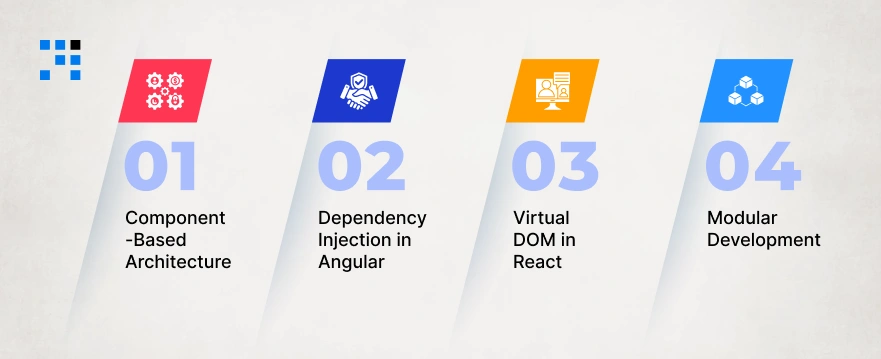
The architecture of a framework determines how developers structure and organize their applications.
This is one of the most important aspects of the Angular vs React architecture comparison.
1. Component-Based Architecture
- Both Angular and React use component-based architecture.
- This means applications are built using small reusable components that manage their own logic and UI.
- This approach improves code maintainability and makes large applications easier to scale.
- However, the way components work within the Angular and React framework structures is different.
2. Dependency Injection in Angular
- Angular includes a built-in dependency injection system.
- This allows developers to easily manage services and share functionality across components without creating tightly coupled code.
- Dependency injection helps large teams organize complex applications efficiently, which is why Angular is preferred for enterprise platforms.
3. Virtual DOM in React
- React introduces the concept of a Virtual DOM, which improves performance by updating only the parts of the UI that change.
- Instead of updating the entire webpage, React compares the virtual DOM with the real DOM and applies minimal updates.
- This efficient rendering system is one reason why React is widely used for highly interactive web applications.
4. Modular Development
- Angular encourages a modular architecture, where applications are divided into modules that contain related components and services.
- This structure helps maintain large codebases.
- React also supports modular development, but gives developers more flexibility in choosing how they structure their projects.
When comparing Angular vs React architecture, Angular provides a more structured framework, & React offers flexibility and freedom in how applications are designed.
Angular vs React Performance: Which Framework Is Faster?
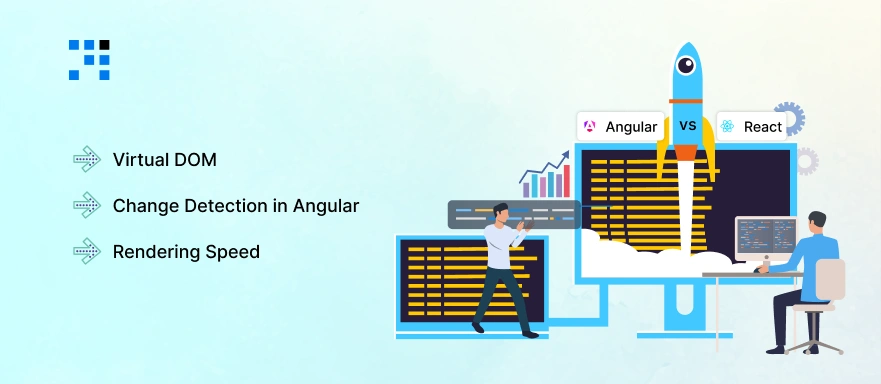
Performance is one of the most common factors developers consider when comparing Angular vs React performance.
Both frameworks are optimized for modern web applications, but they achieve performance improvements using different techniques.
1. Virtual DOM
- React’s biggest performance advantage comes from its Virtual DOM.
- Instead of directly updating the browser’s DOM, React first creates a virtual representation of the UI.
- It then compares the new version with the previous one and updates only the changed elements.
- This process reduces unnecessary rendering and significantly improves performance for dynamic applications.
2. Change Detection in Angular
- Angular uses a change detection mechanism to track and update changes in application data.
- While this system ensures data consistency across the application, it may sometimes perform more updates than necessary.
- Angular has introduced performance optimizations like Ahead-of-Time (AOT) compilation & improved change detection strategies, which help boost application speed.
3. Rendering Speed
- In React vs Angular performance comparisons, React often performs slightly better in applications with frequent UI updates because of its efficient rendering system.
- Angular, on the other hand, performs very well in large enterprise applications where structured architecture and built-in tools help maintain consistent performance.
Ultimately, the choice between React vs Angular performance should be based on project complexity & application requirements rather than raw speed alone.
Angular or React: Which One Should You Choose?
After comparing the technologies, still wondering: Angular or React: Which one should you choose?
The answer depends on your project goals & the type of application you want to build.
Both frameworks are powerful and widely used, but they serve slightly different purposes.
Choose Angular if:
- You are building large enterprise applications that require strong architecture.
- Your team prefers a complete framework with built-in tools.
- You want structured development with TypeScript support.
- You need long-term maintainability for complex systems.
Choose React if:
- You want more flexibility in choosing tools and libraries.
- Your focus is on building fast and highly interactive user interfaces.
- Your team prefers a lightweight and component-based approach.
- You want faster development for dynamic web applications.
Ultimately, when asking Angular vs React which is better, the answer depends on your development requirements.
- If you need a full framework, Angular may be the better option.
- If flexibility and UI performance are your priorities, React may be the right choice.
Want to Build High-Performance Web Apps with the Right Technology?
React vs Angular: The Best Framework Depends on Your Project
After analyzing the full Angular vs React comparison, it is clear that both technologies are powerful solutions for modern web development.
Angular provides a structured and complete framework that works well for large enterprise systems and long-term projects.
React offers flexibility, fast UI rendering, and a massive ecosystem that makes it ideal for dynamic and interactive applications.
When evaluating React vs Angular, the best choice depends on several factors:
- The size and complexity of the project.
- The experience of the development team.
- The long-term business goals of the application.
FAQs
- Angular is better for projects that require a structured framework and enterprise-level architecture.
- React is better for flexible UI development and highly interactive applications.
- The right choice depends on project requirements.
- In most cases, React is considered easier to learn because it focuses mainly on building user interfaces.
- Angular has more built-in features and concepts, which can make the learning curve slightly steeper.
- Many startups prefer React because it allows faster development and flexibility.
- However, startups building complex enterprise platforms may still benefit from Angular’s structured architecture.
- Angular and React serve different purposes. Angular is a complete framework, while React focuses on the UI layer.
- Instead of replacing each other, both technologies continue to coexist in modern web development.