A private messenger for Bluesky is changing how users think about security and online conversations.
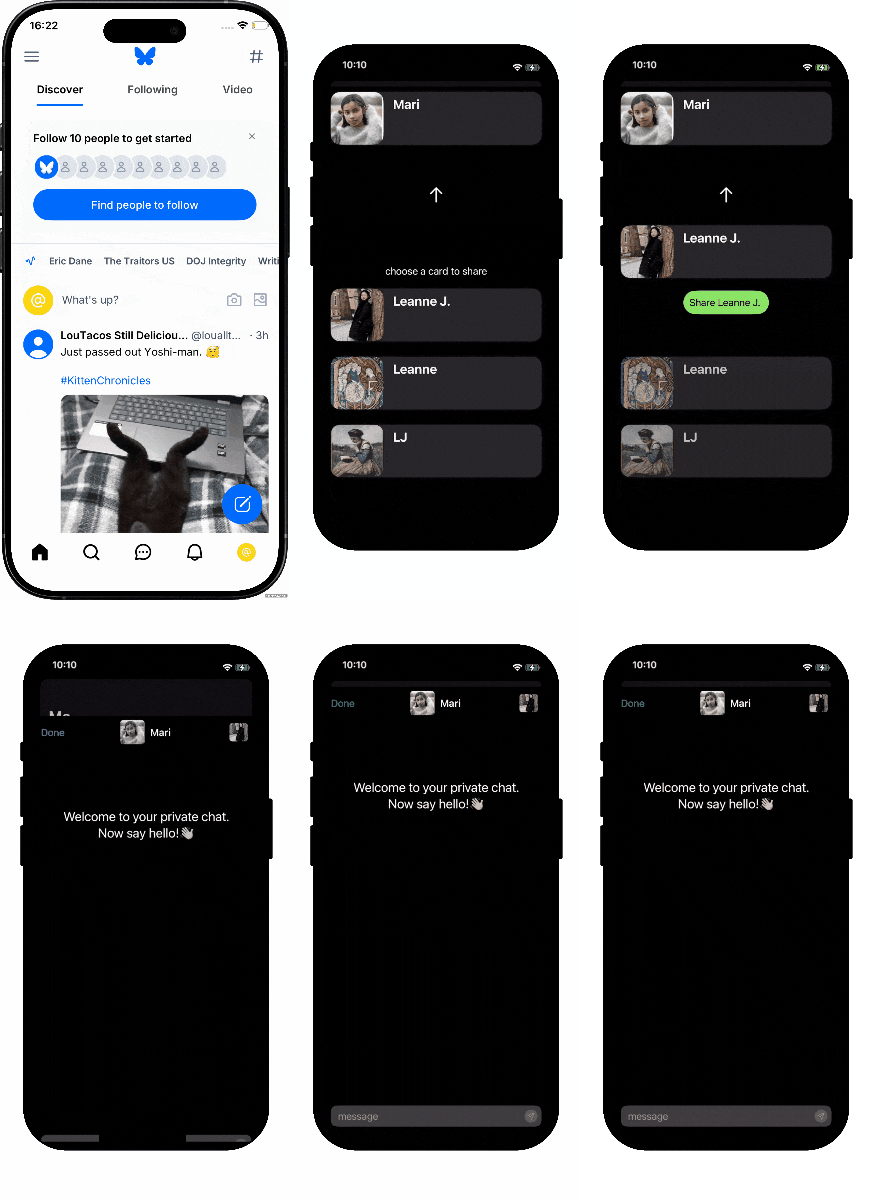
Bluesky offered private messaging earlier, but without true end-to-end encryption.
That meant users could post publicly in a decentralized way, but their private chats didn’t offer the same level of privacy.
Users today demand privacy-first experiences. Germ startup understood that and grabbed the opportunity.
Instead of building just another messaging app, Germ introduced a decentralized messaging app designed specifically to work inside Bluesky.
Germ messenger launched directly within the app & offers encrypted messaging on Bluesky for the first time at a deeper level.
This Bluesky integration with Germ DM ensures that privacy becomes part of the architecture.
Why Bluesky Needed a Private Messenger in the First Place?
Bluesky is built on decentralized technology. It runs on the AT Protocol, which allows users to move their identity and data more freely than traditional platforms.
While public posts were decentralized, Bluesky private messaging did not initially offer the same level of end-to-end encrypted protection that users expect today.
Limitations of Native DMs

Traditional native DMs often:
- Store messages on central servers.
- Allow metadata visibility.
- Lack of full encryption transparency.
That creates privacy gaps, especially for privacy-focused communities.
Demand for Encrypted Messaging on Bluesky
Users started asking important questions:
- Is Bluesky’s private messaging encrypted?
- Who can see my messages?
- Can my conversations be accessed?
This demand created space for a private messenger for Bluesky that could offer stronger protection.
What Is Germ Startup & Why Does It Matter?
The Germ startup recognized this end-to-end encryption opportunity early.
Instead of competing as another standalone chat app, Germ built a decentralized messaging app designed specifically for the Bluesky ecosystem.
Plus, the Germ messenger can be integrated with other social media platforms that want to provide end-to-end encryption in the app.
Vision Behind Germ
Germ’s goal was simple:
- Enable encrypted messaging on Bluesky.
- Work directly with AT Protocol.
- Preserve user identity.
- Keep conversations private.
This is different from apps like Signal or Telegram. Germ is different because it integrates directly inside Bluesky & can be launched from it.
Why Launching Inside Bluesky Is a Breakthrough?
Launching directly within the Bluesky app means:
- No separate account creation.
- No platform switching.
- Identity remains linked.
- Messaging feels native.
This is true Bluesky integration. From a product perspective, this is a smart move. From a technical perspective, it’s even more powerful.
Are You Serious About Integrating Germ Messenger?
Build the Future of Private Messaging with Us
- We can design and develop a scalable private messenger for your app with an advanced end-to-end encrypted messaging architecture.
- Our team helps startups to replicate the Germ startup model with powerful decentralized messaging app development strategies.
- We build modern decentralized messaging app infrastructure designed for performance, security, and future scalability.
How Bluesky Integration With Germ Messenger Works?
Bluesky runs on AT Protocol. That means identity, social graphs, and content are protocol-based rather than server-controlled.
The private messenger for Bluesky, built by Germ, connects to this protocol layer instead of replacing it.
How Germ Connects Through AT Protocol?
- It uses the same decentralized identity system.
- User handles are mapped securely.
- No duplicate identity creation required.
This makes the Bluesky integration smooth.
Identity Mapping Between Bluesky & Messenger
When a user taps to start a chat:
- The identity is verified via AT Protocol.
- A secure session is created.
- Encryption keys are generated.
- The chat begins.
All without leaving the app environment.
App-Level Integration vs External Redirection
Traditional messaging integrations redirect users outside the app. Germ’s approach is different:
- It launches directly within Bluesky.
- Sometimes triggered through native features or iOS App Clip.
- Keeps the user experience smooth.
This reduces friction and increases adoption. From our technical analysis, this is a forward-thinking design that aligns with privacy-first systems.
How Encrypted Messaging on Bluesky Is Implemented?
Here’s how encrypted messaging on Bluesky actually works.
Encryption Model Used (MLS Simplified)

Germ reportedly uses a modern encryption framework similar to MLS (Messaging Layer Security). In simple terms:
- Each user has encryption keys.
- When a chat starts, secure keys are exchanged.
- Messages are locked with cryptography.
- Only the intended person can unlock them.
This ensures strong, encrypted messaging on Bluesky.
Key Exchange Mechanism
- Secure key generation.
- Device-level encryption.
- Automatic key rotation for safety.
This reduces risk if one device is compromised.
Message Storage & Relay Model
Even though messages travel through servers:
- They remain encrypted.
- Servers act only as delivery channels.
- Content remains unreadable to intermediaries.
This architecture is the future of secure communication.
What Makes This Private Messenger for Bluesky Different?
We can say this private messenger for Bluesky is fundamentally different from traditional DMs.
Most platforms offer messaging as an add-on feature. Germ, as a decentralized messaging app, builds messaging as a core privacy layer.
| Feature | Traditional DMs | Germ on Bluesky |
| Encryption | Partial / Server-visible | End-to-End |
| Architecture | Centralized | Decentralized |
| Identity | Platform-bound | Protocol-based |
| Portability | Limited | AT Protocol native |
From our technical perspective, this is the real innovation: Messaging built as infrastructure.
How to Build a Private Messenger for Bluesky? (Step-by-Step)
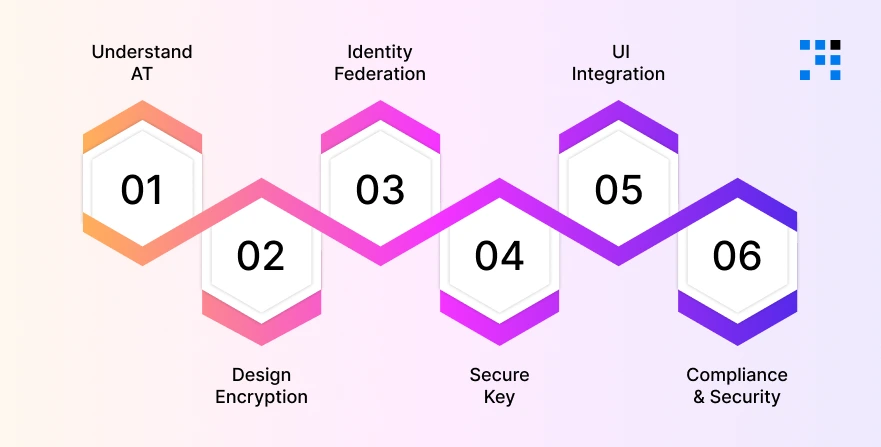
Here’s the simplified roadmap for you to understand the importance of Bluesky private messaging.
Step 1: Understand AT Protocol
You must understand:
- Decentralized identity.
- Data portability.
- Protocol-level integration.
This is the foundation of any private messenger for Bluesky.
Step 2: Design Encryption Architecture
To build encrypted messaging on Bluesky:
- Implement end-to-end encryption.
- Use secure key exchange systems.
- Apply modern cryptographic standards.
Security must be built from day one.
Step 3: Identity Federation
Map messaging identity with Bluesky accounts. This ensures seamless Bluesky integration without forcing new registrations.
Step 4: Secure Key Management
- Device-based key storage.
- Key rotation.
- Backup strategies.
This protects encrypted messaging from compromise.
Step 5: UI Integration Inside Bluesky
User experience matters.
- Native-style message triggers.
- Smooth onboarding.
- Minimal friction.
The success of the Germ startup shows how powerful in-app integration can be.
Step 6: Compliance & Security Testing
- Data privacy compliance.
- Encryption audits.
- Infrastructure scalability tests.
This is where we help businesses move from concept to secure production deployment.
Is This the Beginning of Modular Messaging?
The integration of Germ is not just about adding chat functionality. It represents:
- A shift toward protocol-driven communication.
- A stronger model for encrypted messaging on Bluesky.
- The evolution of decentralized messaging app ecosystems.
- A new standard for secure Bluesky integration.
The future of social platforms will be modular:
- Identity layer.
- Content layer.
- Messaging layer.
And businesses that move early into private messenger for Bluesky development will gain a powerful advantage.
FAQs
- Bluesky private messaging alone may not always guarantee full encryption.
- With messengers like Germ, encrypted messaging on Bluesky becomes end-to-end secure.
- The Germ startup uses AT Protocol to connect identity and messaging systems directly within the app, enabling smooth Bluesky integration.
- End-to-end encryption, secure key exchange, and decentralized architecture ensure only participants can read messages.
- A decentralized messaging app reduces single-point failure risks and increases transparency, making it more resilient and privacy-focused than traditional centralized systems.