How much does it cost to build an app like Urban Company in 2026?
On average, an app like Urban Company takes 2 to 10 weeks to build and costs $3,000 to $10,000+, using NodeJs, MongoDB, and React Native for performance and scalability for on-demand home service platforms.
If you run a service business or are planning a startup, you’ve probably thought about digitizing your operations.
Customers today expect easy booking, fast service, and trusted professionals, and that’s exactly why apps like Urban Company are growing so fast.
But then comes the part nobody talks about clearly: What does it actually take to build an on demand home services app that works? Not a prototype. Not a clone.
Something that real customers use, that real service providers trust, and that your business can actually make money from.
That’s what this blog is about. Just the things you need to understand before you spend on development.
Whether you’re a business owner or just exploring a startup idea, you’ll get a clear understanding of how a home service booking app is built.
The home services market size is expected to reach $336.8 Billion by 2030.
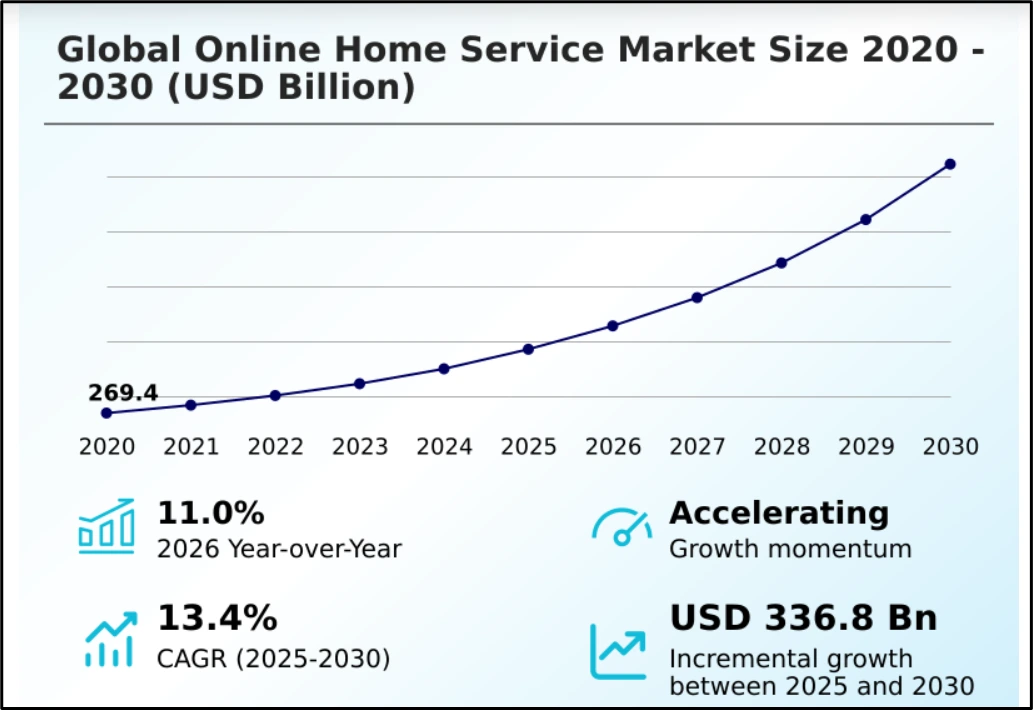
Source: Technavio
With this big market size you should think about capitalizing it. The easiest way is to start with a Clone and switch to Custom Build for scaling.
Here we’ve explained how both work, time it takes to build, how much it costs, & scalability.
Urban Company Clone Script or Custom Build: What Should You Choose?
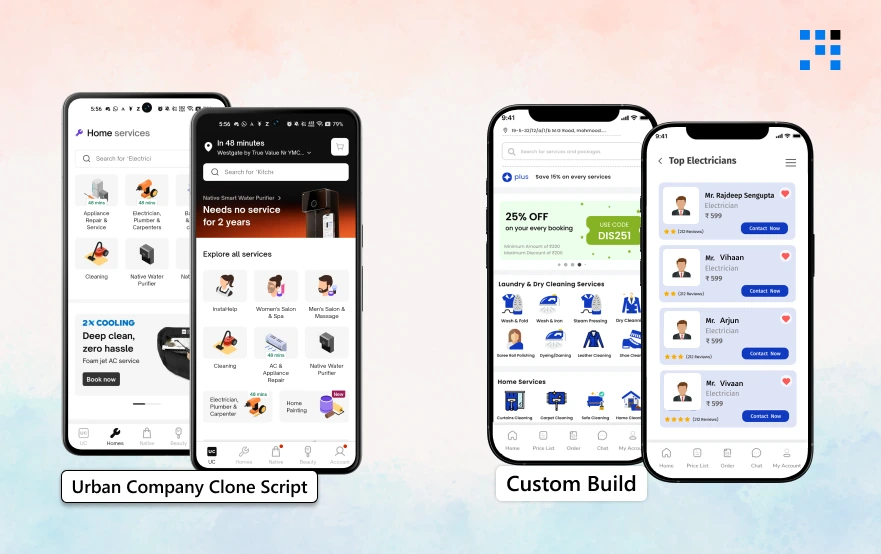
This is the first real decision you’ll face. And most people get it wrong because they focus on the wrong thing, the upfront price.
An urban company clone script is a ready-made app template you buy, rebrand, and launch. It looks like a home services app.
It has a booking screen, a provider list, and a payment button. But underneath, it’s built around someone else’s business logic, not yours.
The moment your business needs something different, your own pricing model, your own assignment rules, your own onboarding flow & you hit a wall.
Most startups that go the clone script route end up rebuilding from scratch within 12 months. The script saved them money upfront and cost them far more later.
| What Do You Care About? | Urban Company Clone Script | Custom Build |
| Speed To Launch | 4 to 6 weeks | 8 to 10 weeks |
| Upfront Cost | $500 to $3,000 | $5,000 to $10,000+ |
| You Own The Code | Usually no | Always yes |
| Can You Change The Business Logic? | Very limited | Completely flexible |
| Can It Grow To Multiple Cities? | Almost always needs a rebuild. | Built in from day one. |
| Payment Gateways | Locked to template defaults. | Any, Razorpay, Stripe, others. |
| Best For | Testing a market idea quickly. | Any business that plans to grow. |
An urban company clone script makes sense for one thing: Proving that people in your city actually want this service before you invest in a full build.
If you already know the demand is there, skip the script. Build it properly the first time.
Are You Ready to Build the Next Urban Company?
Best Tech Stack for a Home Services App in 2026
To make this decision, you do need to understand what each piece does, so you can have an informed conversation with your technical team or the agency you hire.
Here’s what the right stack looks like for a build app like Urban Company project in 2026 and why each piece was chosen:
| Module | Technology | Reason |
| Backend | NodeJs | Handles many bookings at the same time without slowing down. Fast to build. Large talent pool, easy to hire in India and globally. |
| Database | MongoDB | Flexible enough to handle different service types across different cities without complicated database changes. |
| Mobile App | React Native | One codebase for both iOS and Android. About 70% cheaper than building two separate native apps with no noticeable difference in performance for a booking app. |
| Admin Panel | ReactJS | Your operations team uses this to manage bookings, providers, and pricing. Fast to build, easy to extend as your needs grow. |
| Real-time Updates | Socket.io | When a customer books, providers get notified instantly. No delays, no refreshing. Important for the booking-push model that Urban Company uses. |
| Payments | Razorpay + Stripe | Razorpay for India (UPI, cards, wallets). Stripe for the US and Europe. Build it so adding a new market later takes hours, not months. |
This approach is widely used in modern mobile app development to reduce cost while maintaining the same performance on various platforms.
Why NodeJs specifically?
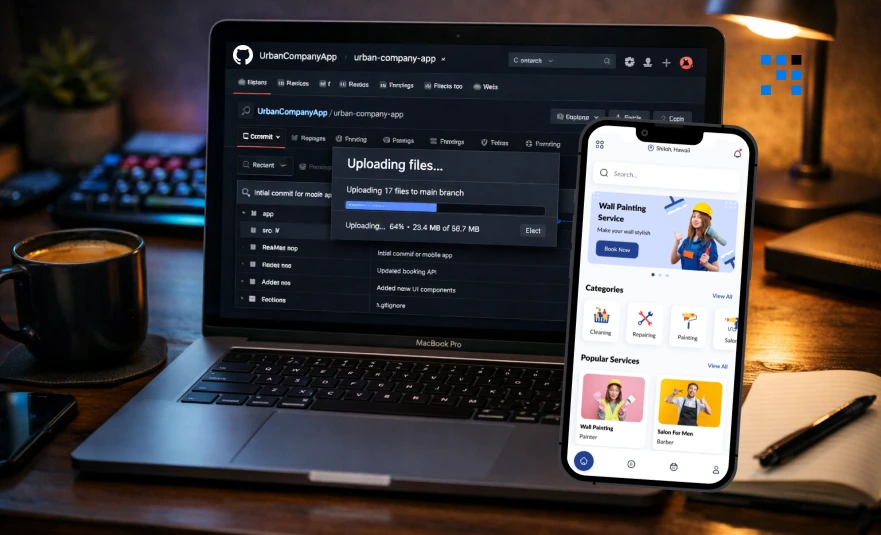
It handles multiple booking requests at the same time without performance problems. Plus, it has mature, well-tested tools for everything you need: Login, location, payments, and notifications.
Your front-end and back-end teams can share code, which keeps your engineering costs lower.
Here’s what the core booking system looks like in NodeJs, the part that creates a booking and instantly sends it to available providers nearby:
routes/bookingRoutes.js
                const express = require('express');
                const Booking  = require('../models/Booking');
                const Provider = require('../models/Provider');
                const { protect } = require('../middleware/auth');

                const router = express.Router();

                // Customer creates a booking
                router.post('/', protect, async (req, res) => {
                const { serviceId, cityId, scheduledAt, address, pricing } = req.body;

                try {
                        // Save the booking as 'pending' — no provider assigned yet
                        const booking = await Booking.create({
                        userId: req.user._id,
                        serviceId, cityId, scheduledAt, address, pricing,
                        status: 'pending',
                        expiresAt: new Date(Date.now() + 5 * 60 * 1000) // providers have 5 mins to accept
                        });

                        // Find the best available providers in the same city
                        const providers = await Provider.find({
                        status: 'available',
                        activeCityId: cityId
                        }).sort({ 'rating.average': -1 }).limit(5);

                        // Push the booking request to each provider in real time
                        providers.forEach(p => {
                io.to(p._id.toString()).emit('new_booking', {
                        bookingId: booking._id,
                        service: booking.serviceId,
                        scheduledAt,
                        expiresAt: booking.expiresAt
                        });
                        });

                        res.status(201).json({ booking });
                } catch (err) {
                        res.status(500).json({ message: 'Server error' });
                }
                });

                // Provider taps 'Accept' — booking is locked to them
                router.put('/:id/accept', protect, async (req, res) => {
                const booking = await Booking.findOneAndUpdate(
                        { _id: req.params.id, status: 'pending', expiresAt: { $gt: new Date() } },
                        { status: 'assigned', providerId: req.user._id },
                        { new: true }
                );
                if (!booking) return res.status(409).json({ message: 'Already taken or expired' });
                res.json({ booking });
                });

                module.exports = router;
How It Handles Bookings?
- When a customer books a service, the app saves the booking and immediately sends a notification to the top 5 available providers in that city.
- The first provider who accepts within 5 minutes gets the job. If nobody accepts, the booking expires.
- That’s the core loop of every successful on demand home services app, and this is how you build it cleanly in NodeJs.
Here’s the
How to Beat Urban Company in Your Local Market
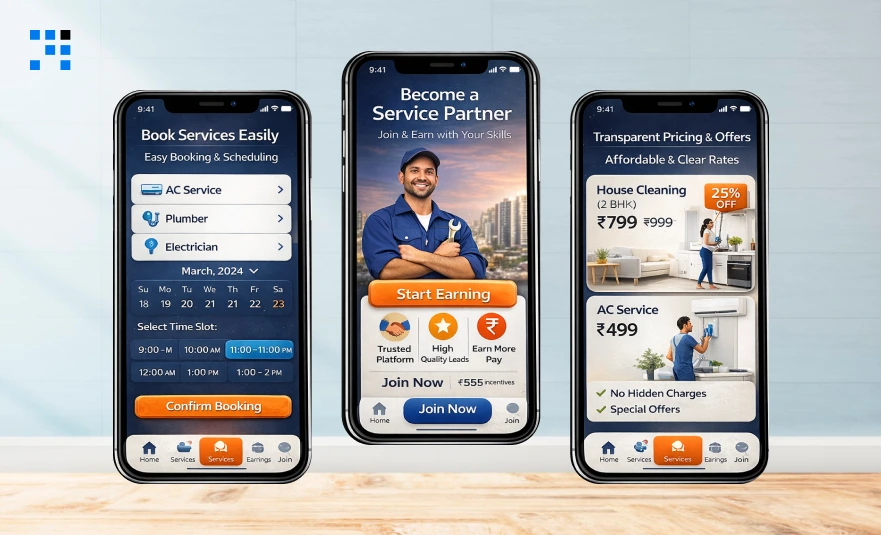
Urban Company is a national platform. That’s their strength and also their biggest weakness.
They don’t know that in New York, customers prefer Saturday afternoon slots. They don’t know that in LA, cleaning demand spikes 3x around public holidays.
They can’t give a provider in Mumbai the kind of personal attention that keeps them loyal. You can. That’s the gap.
Here are the five things that consistently separate successful local platforms from ones that stall:
1. Pick One Service and Dominate It First
- Urban Company offers many services today, but it didn’t start that way.
- The smartest approach is to focus on one high-demand category in your city, like cleaning or salon and deliver it exceptionally well.
- This builds trust faster and helps you gain traction without spreading too many resources.
- We help you identify the right starting category and build a focused platform that gets real users and bookings, not just downloads.
2. Treat Your Service Providers Like Partners
- Many platforms struggle because they treat providers like replaceable resources. But in reality, your providers are your biggest asset.
- Fair commissions, transparent earnings, and flexibility lead to better service quality, which directly increases customer retention.
- Our team designs systems where providers feel valued, with clear payout logic, dashboards, & flexibility, helping you build a strong & reliable supply network.
3. Make Repeat Bookings Smooth
- Your business doesn’t grow on first bookings, it grows on repeat customers.
- Simple features like: One-tap rebooking, saving preferred providers, & subscription plans can increase your revenue without increasing marketing spend.
- We focus on building features that improve retention and lifetime value, not just basic functionality.
4. Control Pricing Based on Your Market
- Every city is different. What works in one location may not work in another.
- Instead of fixed pricing, you need the flexibility to adjust rates based on demand, competition, and local behavior.
- We build smart admin panels that give you full control over pricing, commissions, and offers, so you can stay competitive and profitable.
5. Launch One City, Prove It, Then Grow
- Every home services startup that tried to launch in multiple cities simultaneously ran into the same problem: The supply side (providers) doesn’t scale as fast as the demand side (customers).
- Prove your model in city one first. Nail the repeat booking rate and provider retention. Then expand from a position of strength.
- We help you build a scalable system from day one, so when you’re ready to expand, your platform can handle growth without breaking.
What Does It Actually Cost to Build an App Like Urban Company?
Here’s what affects the cost of home services app development at each stage.
| Stage | What Do You Get? | Timeline |
| Lean MVP ($3000 to $5000) |
|
2 to 4 weeks |
| Full Launch Product ($5000 to $10,000) |
|
5 to 8 weeks |
| Scale Ready Platform ($10,000+) |
|
8 to 10 weeks |
Your Next Steps to Launch
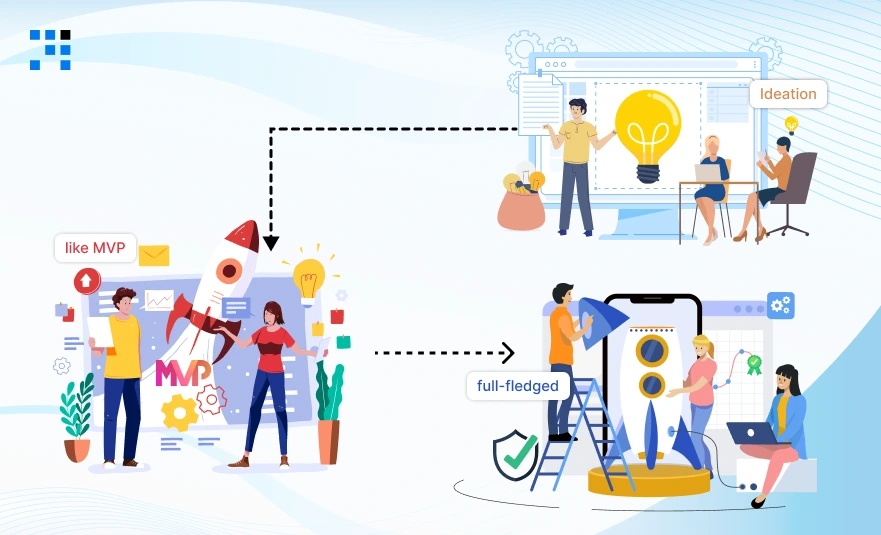
Whether you work with us or build this yourself, here’s the sequence that works. Follow this, and you’ll have a working app.
1. Get Clear On What You’re Building and For Whom
- Pick one city. Pick one service type. Write down what success looks like in 90 days in actual numbers, bookings per week, number of active providers, and repeat booking rate.
- This is basic. Almost nobody does it properly. The teams that do move twice as fast.
2. Design the Architecture Before Writing Any Code
- Database structure, how bookings flow, how providers are managed, how cities are separated, all of this needs to be designed on paper before development starts.
- This is the step that most teams skip because it’s not visible work.
- It’s also the step that determines whether your app can grow or has to be rebuilt.
- A good agency will do this with you as part of the project kickoff.
3. Build the Backend Completely Before Touching the Front End
- Login, services, booking flow, provider assignment, payments, all tested through the API before any screen is built.
- Teams that try to build the app and the backend at the same time almost always run into problems that slow everything down.
- Backend first, always.
4. Build the Mobile App and Admin Panel in Parallel
- With a complete backend, your front-end team can move fast. React Native for the customer and provider app.
- ReactJs for the admin panel. Integration testing, user testing with real people, and deployment to staging.
- Now you have something that you can actually put in front of customers.
5. Add Features Based on What Your Data Tells You
- Real-time tracking, dynamic pricing, ratings, and multi-city expansion- none of these belong in version one.
- Build them when real bookings and real users tell you they’ll make a difference.
- The teams that try to build everything in version one ship nothing in version one.
Want to Get Real Payment Integrations in Your Urban-like App?
The Future of Home Services Apps Is Here
Building an Urban Company-like app is about making the right decisions on what to build, how much to invest, and how fast you can launch.
If you look at the breakdown above, one thing becomes clear: You don’t need a full-scale platform on day one.
Most successful businesses start with a lean MVP (2 to 4 weeks), just enough to:
- Launch in one city.
- Offer one core service.
- Validate real demand.
Once you start getting bookings, you can move to a full product (5 to 8 weeks) with features like notifications, ratings, and provider dashboards.
And when your business is ready to grow, you scale into a multi-city platform (8 to 10 weeks) with advanced features like real-time tracking and dynamic pricing.
FAQs
- Clone scripts help validate ideas quickly, but custom builds are better for long-term growth, flexibility, and scaling across cities without rebuilding later.
- NodeJs, MongoDB, and React Native are widely used for scalable, cost-efficient apps with real-time booking and cross-platform support.
- Costs start from $3,000 for an MVP and can exceed $10,000 for a scalable, multi-city platform with advanced features like real-time tracking and dynamic pricing.
- Start with core features: booking, provider management, payments, and admin control.
- Launch fast, validate demand, then scale. We help you build a focused MVP without unnecessary complexity.