What’s the best way to manage your product catalog?
We’ve spent years building product catalog software, so we compared buying vs building across features, real business use cases, and total costs, covering what each option gets right, where each falls short, and how to choose what actually fits your business.
If you need a fast, cost-effective solution, buying a B2B product catalog software is the right choice.
But if your business has complex workflows, unique pricing models, or deep integrations, building a custom solution gives you more control and scalability.
- Buy product catalog software: Lower upfront cost, faster time-to-market, & limited customization.
- Build product catalog software: Higher initial cost, longer development time, fully customizable, and scalable.
Choose based on your budget, time-to-market, and long-term scalability needs.
Why Are B2B Wholesalers Moving to Digital Product Catalog Software?
Traditional catalogs are no longer enough for modern B2B businesses.
Wholesalers and distributors dealing with large inventories are switching to a digital product catalog for wholesalers to stay competitive. Here’s why:
Problems with PDFs and Manual Catalogs
- Static PDFs get outdated quickly.
- Manual updates lead to errors in pricing and product details.
- Difficult to share across sales teams and distributors.
Challenges in Managing Large Inventories
- Thousands of SKUs across categories.
- Frequent pricing and stock changes.
- No centralized system for product data.
A product catalog system for distributors solves this by organizing all product data in one place, making it easy to update and manage.
Need for Real-Time Updates & Sales Enablement
- Sales teams need access to live product data.
- Distributors expect accurate pricing and availability.
- Faster decision-making improves order conversion.
A digital catalog ensures real-time updates, better visibility, and faster sales cycles, making it an important tool for B2B growth.
Here you can see How to Convert Excel Product Catalogs to a Dynamic Web App.
When Should You Buy vs Build Product Catalog Software?
Choosing the right approach depends on your business size, complexity, and goals.
Choose Ready-Made Catalog Software If:
- You need quick deployment and faster time-to-market.
- You have budget constraints.
- Your workflows are standard and don’t require heavy customization.
- You want to avoid technical complexity.
These are key benefits of ready-made catalog software: Speed, affordability, and ease of use.
Choose Custom Catalog Software If:
- You have complex workflows or unique business logic.
- You need custom pricing models for different customers.
- Your systems require deep integration (ERP, CRM, &inventory).
- You are scaling rapidly and need full control.
If you’re wondering when to build product catalog software, the answer is: When your business outgrows standard tools and needs customized solutions.
Want a Customized Product Catalog Software?
How We Built a Scalable Product Catalog Platform for a Manufacturer?
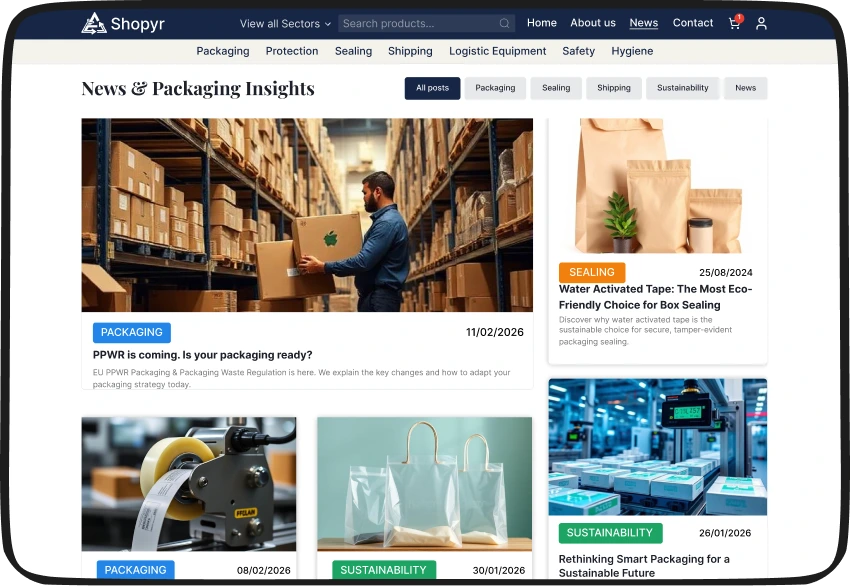
To understand the real impact of the right B2B product catalog software, here’s how we helped a manufacturing business called Shopyr & changed its catalog system.
The client was depending on outdated catalogs and manual processes, which led to:
- Difficulty managing large product inventories.
- No centralized product catalog system for distributors.
- Delays in updating product information.
- Poor experience for sales teams and customers.
They needed a digital product catalog for wholesalers that could handle scale and improve efficiency.
The Solution
We built a custom product catalog management software according to their workflows. The platform included:
- Real-time product updates.
- Centralized catalog management.
- Advanced search and filtering.
- Mobile-friendly access for sales teams.
- Scalable architecture for growing inventory.
The focus was simple: Make product data easy to manage and faster to sell.
The Results
The impact was immediate and measurable:
- 70% faster product updates compared to manual processes.
- 40% improvement in sales team efficiency with real-time data access.
- 2x increase in product inquiries through improved online visibility.
- 60% reduction in catalog errors and inconsistencies.
The new system became a powerful catalog management system B2B, helping the business scale operations and close deals faster.
What Is Product Catalog Software for B2B?
Product catalog software for B2B is a digital system that helps businesses manage, organize, and share product information across teams, distributors, and customers.
It acts as a centralized product catalog management software where you can:
- Store product details, images, pricing, and specifications.
- Update inventory in real-time.
- Share catalogs digitally with sales teams or clients.
How Does It Work?
- Product data is stored in a centralized system.
- Teams can update and access information anytime.
- Catalogs can be shared via web apps, mobile apps, or integrations.
Product Catalog Software vs PIM (Important Difference)
Many businesses confuse catalog tools with PIM systems.
- Catalog Management System B2B: Focuses on displaying and sharing product data for sales.
- PIM (Product Information Management): Focuses on storing, enriching, and managing raw product data across channels.
PIM manages data internally, while catalog software helps present and sell products externally.
Core Features of Product Catalog Software
- Centralized product database.
- Real-time updates.
- Multi-user access for teams.
- Integration with CRM/ERP systems.
- Mobile-friendly catalogs for sales reps.
Buy vs Build Product Catalog Software: A Complete Comparison
Choosing between buying and building is one of the biggest decisions for B2B businesses. Let’s compare the buy vs build catalog management system approach.
What Does “Buying Catalog Software” Mean?
Buying means using ready-made SaaS product catalog platforms that are already built and available on subscription.
Advantages:
- Quick setup and deployment.
- Lower upfront cost.
- Built-in features and integrations.
- Regular updates and support.
Best for businesses that want to launch quickly without heavy development.
What Does “Building Custom Catalog Software” Mean?
Building involves developing a custom solution tailored to your business needs.
Advantages:
- Full control over features and workflows.
- Custom pricing logic and user roles.
- Smooth integration with internal systems.
- Long-term scalability.
Perfect for businesses with complex operations and unique requirements.
Buy vs Build Comparison
| Factor | Buy (SaaS Product Catalog Software) | Build (Custom Product Catalog Software) |
| Cost | Lower upfront, subscription-based | High initial development cost |
| Time to Launch | Fast (days to weeks) | Slow (months) |
| Customization | Limited | Fully customizable |
| Maintenance | Managed by provider | Your responsibility |
| Scalability | Depends on platform | Highly scalable |
The choice between custom vs SaaS product catalog software depends on how much control and flexibility your business needs.
Key Features to Look for in B2B Product Catalog Software
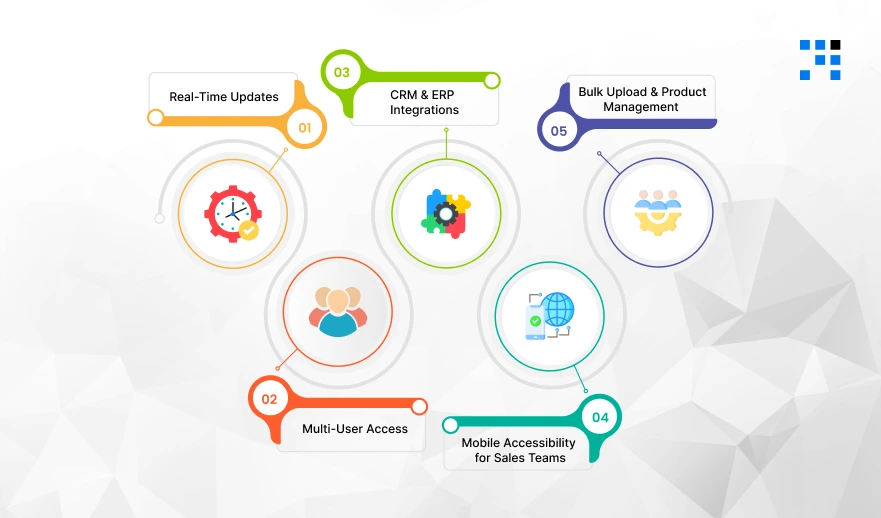
Choosing the right B2B product catalog software is about making your sales process faster and smarter. Here are the must-have features you should look for:
1. Real-Time Updates
A good product catalog software with real-time updates ensures your pricing, inventory, and product details are always accurate.
- No outdated PDFs.
- No manual errors.
- Instant updates across teams.
This is important for wholesalers managing large and frequently changing inventories.
2. Multi-User Access
Your sales teams, distributors, and internal staff should all be able to access the catalog at the same time.
- Role-based access control.
- Easy collaboration across teams.
- Better coordination between departments.
3. CRM & ERP Integrations
Modern businesses need connected systems. A catalog software with CRM integration allows you to sync product data with sales and operations tools.
- Smooth order processing.
- Unified customer and product data.
- Reduced manual work.
4. Mobile Accessibility for Sales Teams
Sales reps are often on the move. A mobile-friendly catalog or app helps them:
- Show products instantly to clients.
- Access updated pricing anytime.
- Close deals faster.
A strong catalog app for sales reps can directly improve conversions.
5. Bulk Upload & Product Management
Managing thousands of SKUs manually is not scalable.
- Bulk upload products via CSV or APIs.
- Easy categorization and tagging.
- Faster updates across large inventories.
This is important for any growing wholesale or distribution business.
Top Product Catalog Software for B2B Businesses
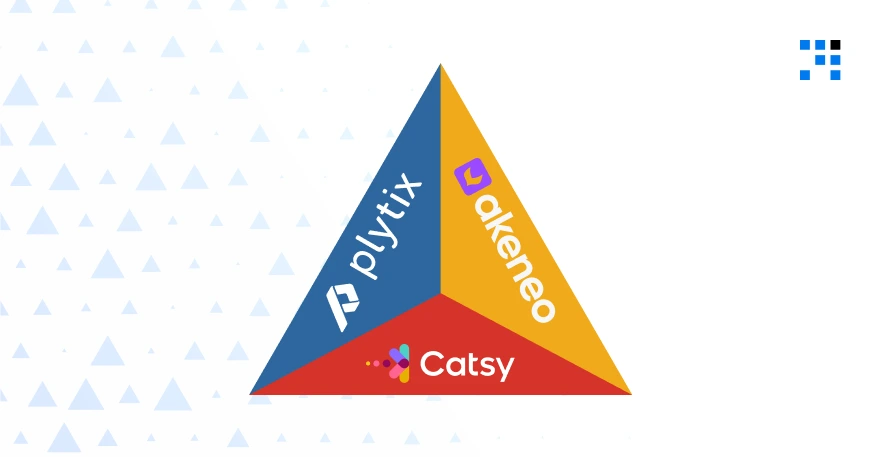
If you’re looking for the best product catalog software for B2B, here are some of the top catalog management tools used by wholesalers, manufacturers, and distributors:
- A simple and user-friendly platform ideal for small to mid-sized businesses.
- Best for: Businesses starting with product data management and digital catalogs.
- A popular PIM-focused platform with strong catalog capabilities.
- Best for: Enterprises needing advanced product data management and enrichment.
- Combines PIM and catalog management in one platform.
- Best for: Wholesalers looking for an all-in-one product catalog system.
Choosing the right tool depends on your business size, complexity, and whether you need a simple catalog or a full product data ecosystem.
Not Sure Whether to Buy or Build Online Product Catalog Software?
How Manufacturers and Distributors Use Catalog Software to Increase Sales?
A well-designed product catalog software for B2B wholesalers is a sales engine. Here’s how businesses use it to drive growth:
Sales Reps Using Mobile Catalogs
Sales teams use mobile catalogs to present products during client meetings.
- Instant product access.
- Live pricing and availability.
- Faster decision-making.
A smart catalog app for sales reps helps close deals on the spot.
Distributors Accessing Real-Time Inventory
Distributors rely on accurate product data to fulfill orders.
- Check stock availability in real-time.
- Avoid over-selling or stockouts.
- Improve trust with customers.
Faster Order Processing
With integrated systems:
- Orders can be placed directly from the catalog.
- Data flows into ERP/CRM systems.
- Manual errors are reduced.
Result: Faster operations, better customer experience, and higher sales conversion rates.
Buy or Build Product Catalog Software?
Choosing between buying and building comes down to your business goals, budget, and complexity.
- Buy if you want speed, lower cost, and easy setup.
- Build if you need customization, flexibility, and long-term scalability.
Simple Decision Framework
- Small to mid-sized business: Go for ready-made software.
- Growing business with unique needs: Consider a hybrid or scalable SaaS.
- Enterprise with complex workflows: Build a custom solution.
FAQs
- The best product catalog software for B2B wholesalers depends on your needs.
- Tools like Plytix and Catsy work well for small to mid-sized businesses, while Akeneo is better for enterprise-level operations.
- If you need quick deployment and lower costs, buying is the best option.
- But if your business has complex workflows, building a custom solution gives you more flexibility and scalability.
- A strong catalog management system B2B should include real-time updates, multi-user access, CRM/ERP integrations, mobile accessibility, and bulk product management.