How to build an NGO website that increases donations and engagement?
What works best in 2026 is reducing friction with dynamic navigation and we have explained how smart filters and multilingual support make it easier for people to support your cause.
Most NGOs today struggle to turn website visitors into donors or volunteers. The problem is their website.
Many platforms are outdated, hard to navigate, and fail to connect with a global audience.
One of the biggest reasons why NGO websites fail is the lack of user-friendly features like smart filters and language accessibility.
When users can’t easily find causes they care about or read content in their preferred language, they simply leave.
That’s why NGO website development is becoming important.
A well-designed multilingual NGO website with dynamic filters can help users quickly discover campaigns, understand impact, and take action.
In this blog, you’ll learn how to build a conversion-focused NGO platform that not only looks good but also drives real engagement, donations, and global reach.
What Makes a High-Performing NGO Website in 2026?
Here you can see some of the main reasons that make a website high performing & engaging.
User-First Design for Donors and Volunteers
- Modern platforms focus on users first. Whether someone wants to donate, volunteer, or explore, the journey should feel simple and dynamic.
- Following nonprofit website best practices, a clean layout, clear CTAs, and easy navigation can significantly improve conversions.
Smart Filtering for Causes, Locations, and Campaigns
- A high-performing website allows users to quickly find what matters to them.
- With smart filtering options like cause type, location, and urgency, users can easily discover relevant campaigns.
- This is one of the most important NGO website features for improving engagement.
Multi-Language Accessibility for Global Audiences
- A multilingual NGO website helps you connect with donors across different regions.
- Instead of limiting your reach, language support ensures your message is understood globally.
- This builds trust and increases participation from international audiences.
Mobile-First and Fast-Loading Experience
- Most users access NGO websites through mobile devices. If your site is slow or not optimized, users will leave within seconds.
- Fast-loading pages and responsive design are essential nonprofit website best practices that directly impact user retention.
How to Build an NGO Website That Drives Donations and Trust in 2026
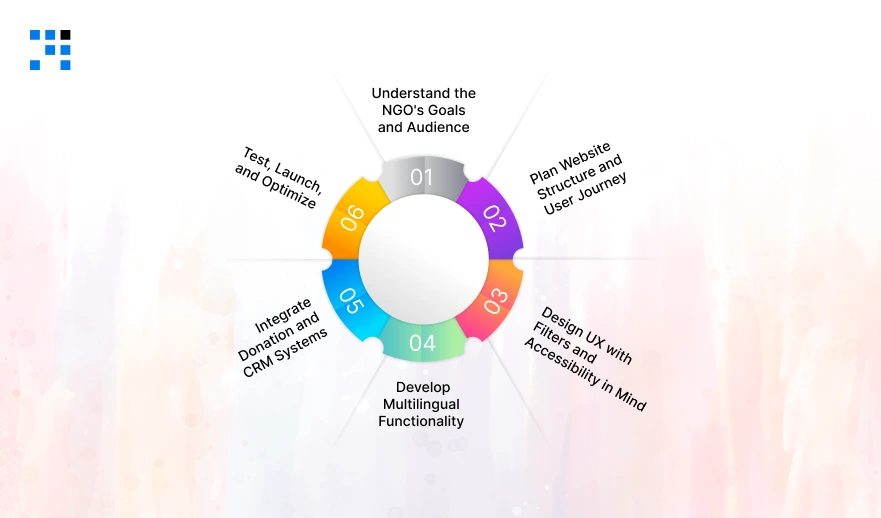
Here’s a proven process we follow for building an NGO website with filters and scalable features.
Step 1: Understand the NGO’s Goals and Audience
- Every NGO is different. Some focus on donations, others on volunteers or awareness.
- The first step in NGO website development is understanding your mission, target audience, and user intent.
- This helps create a website that actually connects with the right people.
Step 2: Plan Website Structure and User Journey
- A clear structure makes it easy for users to navigate your website.
- We plan how users will move from landing on the homepage to discovering causes, and finally taking action.
- This step ensures a smooth experience and avoids confusion.
Step 3: Design UX with Filters and Accessibility in Mind
- User experience is everything.
- We design interfaces that include an NGO website with filters, making it easy to search campaigns by category, location, or urgency.
- Accessibility is also considered so that all users, including those with disabilities, can interact with the platform easily.
Step 4: Develop Multilingual Functionality
- To build a multilingual NGO website, language support is integrated at the core level.
- We implement language switchers and content localization so your platform can reach users across different regions without losing meaning or impact.
Step 5: Integrate Donation and CRM Systems
- A strong backend is just as important as the frontend.
- We integrate secure donation systems, payment gateways, and CRM tools to manage donors, track contributions, and build long-term relationships.
Step 6: Test, Launch, and Optimize
- Before going live, everything is tested, from filters to payment systems and mobile responsiveness.
- After launch, we continuously optimize the platform based on user behavior to improve performance, engagement, and conversions.
Want a Website with Features like Easy Filters and Multiple Languages?
How to Increase Donations Through Your NGO Website in 2026
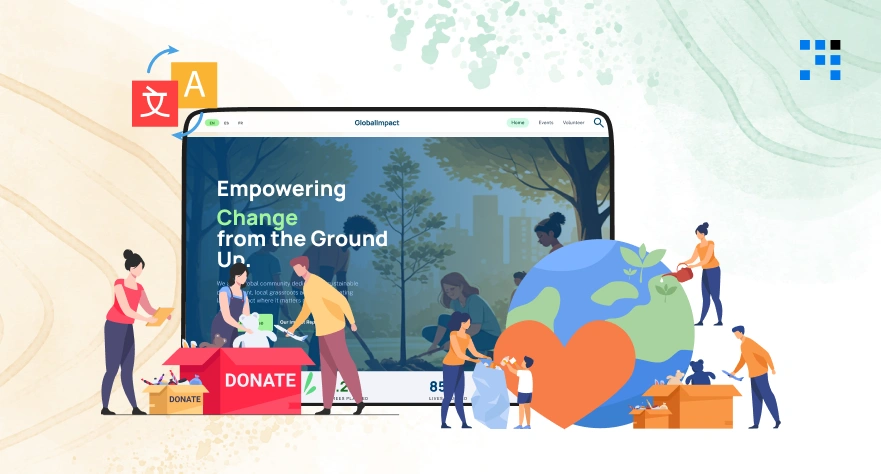
While building a custom NGO website, you need to ensure it has these features.
1. Advanced Filters for Better Discovery
An NGO website with filters makes it easy for users to find exactly what they are looking for.
Instead of scrolling endlessly, users can filter campaigns by:
- Cause (education, health, & environment).
- Location (local or global).
- Donation type (one-time or recurring).
- Urgency (critical or ongoing).
With an NGO website with advanced search functionality, you reduce friction and help users take faster action.
2. Multi-Language Support for Global Reach
A multilingual NGO website is necessary for growth.
Features like a simple NGO website with a language switcher allow users to instantly view content in their preferred language.
A strong content localization strategy ensures your message feels relevant and authentic across different regions.
3. Smooth Donation System
Your donation system should be fast, simple, and trustworthy.
Features like one-click donations and recurring contributions make it easier for users to support your cause without hesitation.
The fewer the steps, the higher the conversion.
4. Volunteer & Event Management System
Many users want to contribute their time, not just money.
An easy signup system with event filtering helps users quickly find volunteer opportunities that match their interests and availability.
This improves participation and community engagement.
5. Impact Visualization & Transparency
Donors want to know how their contributions are making a difference.
Showing real-time data, reports, and impact dashboards builds trust.
Transparency not only improves credibility but also encourages repeat donations.
NGO Website Design Checklist 2026: Features Every Nonprofit Site Needs
A successful NGO website design is about creating meaningful user experiences that drive action.
Keep Navigation Simple and Dynamic
- Users should find what they need within seconds.
- A clean menu, clear categories, & logical structure are key elements of effective nonprofit website design that reduce drop-offs and improve engagement.
Focus on Storytelling and Emotional Connection
- People donate when they feel connected.
- Use real stories, images, and impact narratives to create an emotional bond. This is what turns visitors into supporters.
Optimize for Mobile and Performance
- Most users visit websites on their phones.
- A fast-loading, mobile-friendly website improves both user experience & search rankings.
- Speed & responsiveness are important in modern NGO website design.
Ensure Accessibility and Inclusivity
- Your website should be usable by everyone.
- From readable fonts to screen-reader compatibility, accessibility plays a big role in creating an inclusive nonprofit website design that reaches a wider audience.
How a Custom NGO Website Improves Donations and Global Reach?
A well-built platform plays a key role in NGO digital transformation and long-term growth.
- Better Discoverability of Causes: With filters and structured content, users can easily find causes they care about. This improves engagement and increases the chances of donations.
- Increased Donor Trust: Transparent information, clear navigation, and professional design build credibility. When users trust your platform, they are more likely to donate and stay connected.
- Higher Engagement from International Users: A multilingual NGO website removes language barriers and opens doors for global NGO outreach.
Want a Custom NGO Website According to Your Mission?
When Should You Invest in Custom NGO Website Development?
Not every NGO needs a custom solution from day one, but there are clear signs when it becomes necessary. Signs Your Current Website Is Limiting Growth:
- Users struggle to find information.
- No filtering or personalization options.
- Low donation or engagement rates.
- Limited global reach.
If you notice these issues, it’s time to consider a better solution.
As your NGO grows, you need advanced features like filters, multilingual support, and integrations.
This is where a professional NGO website development company or expert NGO web development services can help you scale effectively.
Build a Scalable NGO Platform That Truly Connects
A successful NGO website is about impact.
By combining smart filters and multilingual capabilities, you can create a platform that connects with users globally, improves engagement, and drives more donations.
Investing in the right NGO website development approach ensures your platform is future-ready, scalable, and aligned with your mission.
FAQs
- An NGO website with filters helps users quickly find relevant causes based on location, category, or urgency, improving user experience and increasing engagement and donations.
- Important NGO website features include donation systems, advanced filters, multilingual support, mobile responsiveness, volunteer management, and impact tracking dashboards.
- Custom nonprofit website development offers flexibility, scalability, better user experience, and advanced features like filters and multilingual functionality that templates usually cannot provide.
- NGOs should upgrade when their current website lacks modern features like filters, multilingual support, mobile optimization, or fails to generate enough engagement and donations.