Ecommerce management software helps businesses run inventory, orders, integrations, automation, and analytics from a single system.
Before investing, you must evaluate:
- Integration capabilities.
- Automation features.
- Inventory & order management strength.
- Reporting & analytics.
- Scalability.
- Security & compliance.
- Total cost of ownership.
Choosing the wrong ecommerce management software leads to operational inefficiency, revenue leakage, and stalled growth.
So if your ecommerce operations are growing but becoming harder to manage, then you need an ecommerce management software to handle everything.
This blog is for you, where you can see exactly what to check before you invest.
What Is Ecommerce Management Software and Why Does It Matter?
Ecommerce management software is a centralized system that manages online store operations such as inventory, orders, payments, shipping, reporting, and integrations across multiple sales channels.
Why Does It Matter?
- Prevents inventory mismatches.
- Reduces manual work through automation.
- Improves order fulfillment speed.
- Provides real-time business visibility.
- Enables multi-channel scalability.
Without proper ecommerce operations software, businesses rely on disconnected tools, spreadsheets, and manual workflows, creating chaos as order volume grows.
Ecommerce management software is not optional once you scale. It is foundational infrastructure.
Learn How a Financial Dashboard Software Can Improve Profitability.
What Real Business Owners Say About Choosing the Wrong Ecommerce Management Software?
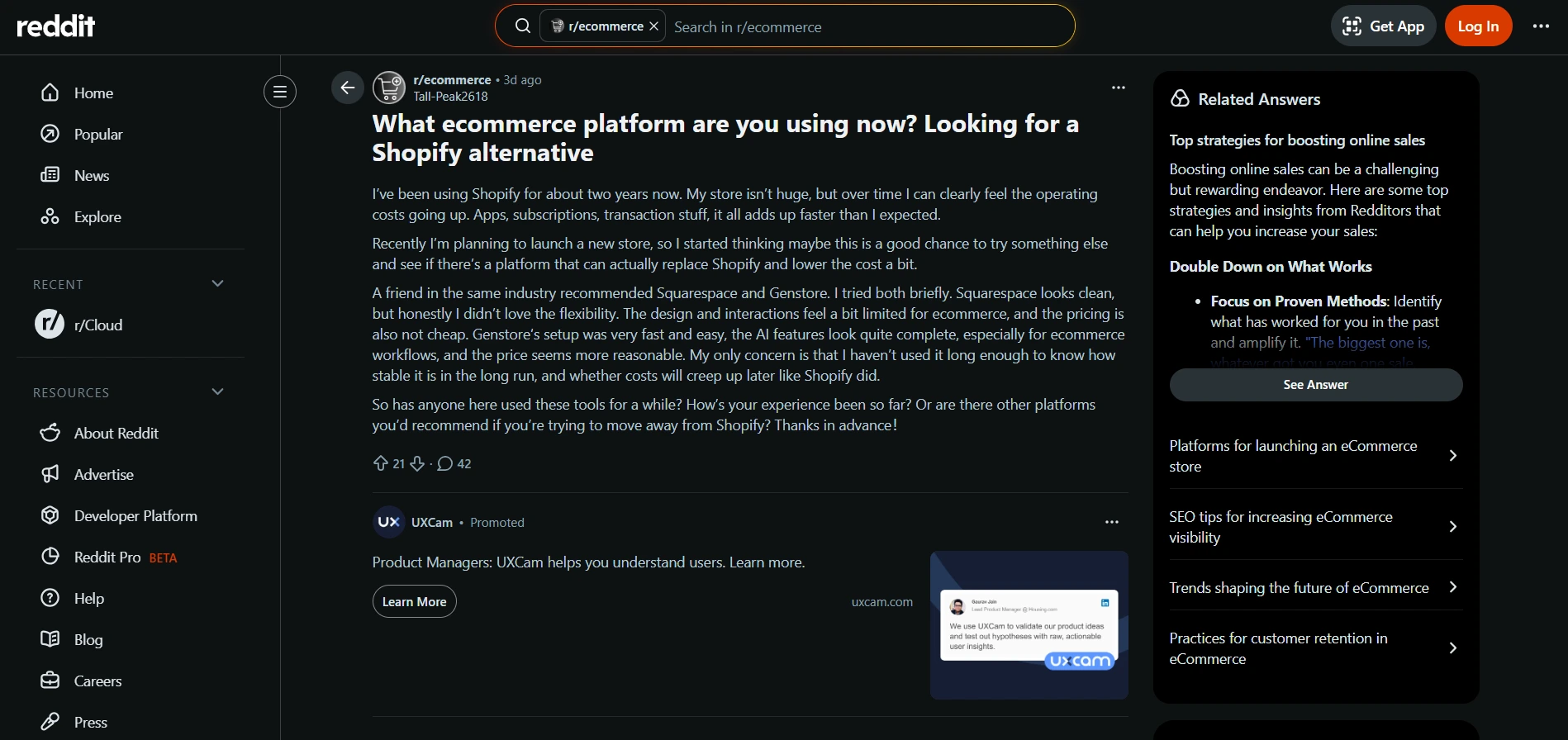
Real ecommerce business owners frequently share their frustrations online about poor ecommerce management software.
Especially around inventory sync, order management, and multichannel data issues, all of which directly impact fulfillment, customer satisfaction, and profitability.
Source: Reddit
What Does It Show?
- Broken or slow integrations lead to overselling and missed orders.
- Inventory sync delays cause fulfillment errors.
- Manual tracking becomes a burden without automation.
- Disjointed tools make multichannel operations chaotic.
It shows that choosing the wrong ecommerce management software costs them time, money, and customer trust.
What to Look for in Ecommerce Management Software?
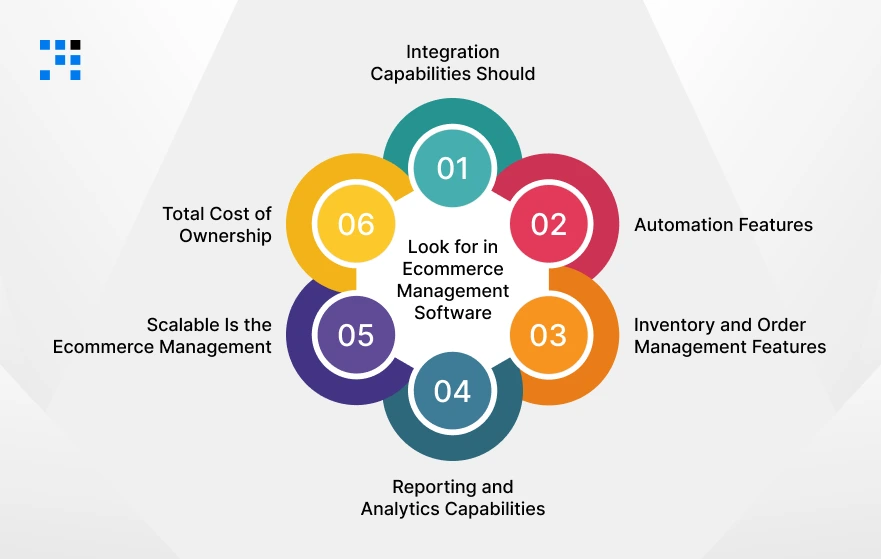
Here you can see some of the major points that you should look for while investing in Ecommerce management software.
1. What Integration Capabilities Should Ecommerce Management Software Offer?
Your ecommerce platform management tools must integrate seamlessly with:
- ERP systems.
- CRM software.
- Payment gateways.
- Shipping & logistics providers.
- Marketplaces (Amazon, Shopify, Flipkart, WooCommerce).
If integrations are weak, automation breaks.
Tip: Always check whether integrations are native or API-based. Custom APIs scale better long term.
2. What Automation Features Reduce Operational Costs?
High-quality ecommerce automation software should automate:
- Inventory synchronization across channels.
- Order routing and fulfillment rules.
- Invoice and tax generation.
- Returns and refund workflows.
Manual order processing is the #1 reason ecommerce teams burn out.
Result: Automation reduces operational costs by 30 to 50%.
3. What Inventory and Order Management Features Are Important?
Your ecommerce inventory and order management software must support:
- Real-time stock updates.
- Multi-warehouse inventory.
- SKU-level tracking.
- Partial shipments and split orders.
- Backorder handling.
If inventory data is delayed or inaccurate, customer trust erodes quickly.
4. What Reporting and Analytics Capabilities Matter?
Ecommerce management tools with reporting and analytics should provide:
- Real-time dashboards.
- Channel-wise sales tracking.
- Profit and margin analysis.
- Forecasting and trend reports.
If you can’t see your numbers clearly, you can’t scale confidently.
5. How Scalable Is the Ecommerce Management Software?
Ask these questions early:
- Can it handle 3x to 5x order growth?
- Does it support multiple currencies and regions?
- Can it scale with new marketplaces?
- Does performance drop at high volumes?
Scalability issues don’t appear on day one; they surface when growth begins.
6. What Is the Total Cost of Ownership?
Don’t look only at license pricing. Evaluate:
- Setup and onboarding cost.
- Customization cost.
- Integration cost.
- Maintenance and upgrade cost.
Many “affordable ecommerce management software” options become expensive after 12 months.
Struggling with inventory, orders, or scaling your ecommerce business?
What Happens When Businesses Choose the Wrong Ecommerce Management Software?
Most failures follow the same pattern:
- Inventory mismatches across platforms.
- Delayed order fulfillment.
- Manual reconciliation of data.
- Poor reporting accuracy.
- Frequent system workarounds.
Reality: Businesses often replace ecommerce backend software within 18 to 24 months due to poor initial evaluation.
How Did We Solve an Ecommerce Operations Breakdown?
A fast-growing ecommerce brand used:
- One tool for inventory.
- One for orders.
- One for reporting.
Nothing was synchronized.
We built a centralized ecommerce management system that:
- Unified inventory and order management.
- Automated order routing.
- Integrated CRM and accounting.
- Added real-time analytics dashboards.
The Result
- 45% reduction in manual errors.
- 32% improvement in operational efficiency.
- Faster fulfillment and clearer reporting.
Key insight: Custom ecommerce operations software always outperforms disconnected tools.
How Do We Build Scalable Ecommerce Management Software?
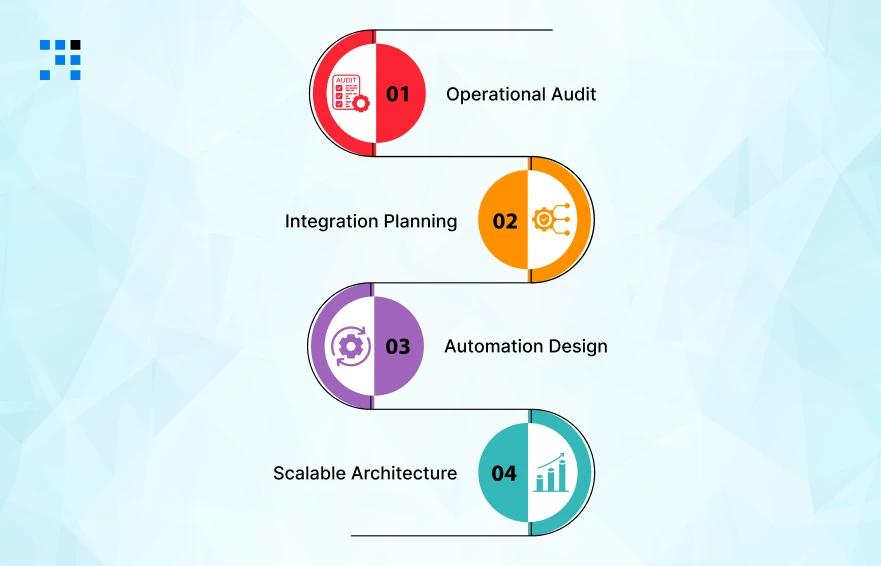
We follow a proven, structured approach.
Step 1: Operational Audit
- We map your current workflows and identify bottlenecks.
Step 2: Integration Planning
- ERP, CRM, payments, shipping, & analytics, all planned upfront.
Step 3: Automation Design
- Manual steps are replaced with rule-based automation.
Step 4: Scalable Architecture
- Systems are built to grow without rework.
We don’t sell software licenses. We build growth-ready systems.
What Should You Do Before Investing in an Ecommerce Management Software?

Before you invest:
- Audit your ecommerce operations.
- Identify integration needs.
- Define automation goals.
- Compare ecommerce management software options.
Or connect with us, we’ll help you decide whether to buy, customize, or build the right ecommerce management software for your growth.
FAQs
- It’s a system that manages inventory, orders, automation, integrations, and analytics for online businesses.
- Evaluate integrations, automation, scalability, reporting, security, and total cost of ownership.
- Yes. It prevents operational chaos as order volume increases.
- Inventory management, order processing, automation, analytics, integrations, and scalability.