A hospital invests heavily in a new internal platform built through healthcare software development. The vendor promises efficiency, automation, & better patient data visibility.
But after launch:
- Doctors still write notes on paper and upload them later.
- Nurses maintain parallel spreadsheets to “stay safe”.
- Admin teams export data and manage it manually.
- Departments create workarounds outside the system.
The software is live, but real healthcare software user adoption is low.
Organizations often blame staff behavior. But in most healthcare technology adoption challenges, the root cause is different.
It’s not just a tech failure. It’s a design + workflow + change strategy failure.
From what we’ve seen across multiple healthcare software development projects, adoption breaks when:
- Software is built around features, not real clinical workflows.
- End users are not involved early.
- Interfaces are complex under time pressure.
- Training is generic instead of role-based.
- Rollout ignores human behavior patterns.
Many failed healthcare digital transformation projects share the same story: The system worked, but people didn’t use it.
We’ve solved this exact problem in real healthcare environments, where adoption was low, resistance was high, & workflows were broken. And the fix is smarter, adoption-focused design.
Why Do Doctors and Staff Resist New Healthcare Software Systems?
The most important question is: Why do doctors resist new healthcare software systems, even when leadership mandates them?
Decision makers often assume resistance is about attitude or habit. In reality, clinician resistance to healthcare software is usually logical and experience-driven.
Here’s what healthcare teams rarely say in meetings, but often say privately.
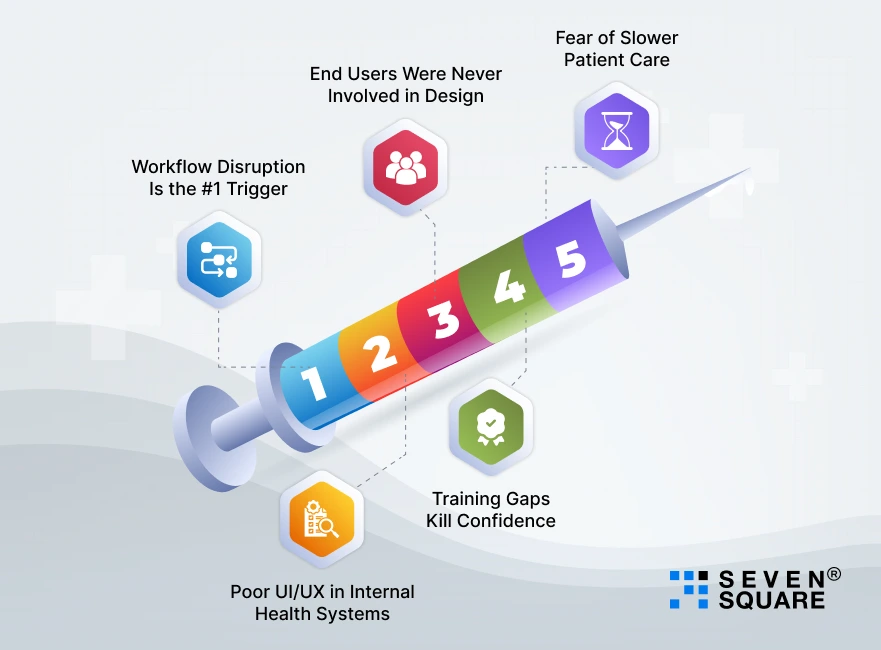
1. Workflow Disruption Is the #1 Trigger
Healthcare workflow disruption technology is one of the biggest adoption killers. If a new system adds even small friction to:
- Patient intake.
- Charting.
- Medication logging.
- Lab review.
- Discharge steps.
It immediately feels like a burden.
Clinicians operate under time pressure. If software adds steps instead of removing them, resistance is predictable.
2. Poor UI/UX in Internal Health Systems
Many internal tools are built for compliance and reporting. Common complaints include:
- Too many clicks for simple actions.
- Cluttered dashboards.
- Hard-to-find patient data.
- Non-intuitive navigation.
- Slow response time.
When UI/UX is weak, healthcare IT adoption drops, no matter how powerful the backend is.
Good healthcare software development must prioritize speed under pressure, not just feature depth.
3. End Users Were Never Involved in Design
One major reason healthcare software user adoption fails: The real users, doctors, nurses, & coordinators, were never consulted during design. Instead:
- Requirements come from management.
- Vendors build from documents.
- Staff see the system for the first time at training.
That creates a disconnect. People support what they help design. They resist what is imposed without input.
4. Training Gaps Kill Confidence
Most healthcare IT software adoption programs underestimate training. Typical problems:
- One-time onboarding sessions.
- Generic demos are not role-based.
- No scenario-based practice.
- No follow-up support.
- No micro-learning modules.
Result: Staff feel unsure → They avoid using the system → Adoption drops.
5. Fear of Slower Patient Care
Clinicians worry, often correctly, that new systems will slow patient interaction.
If software takes attention away from patients and toward screens, resistance increases quickly.
That’s why modern healthcare technology adoption challenges are not solved by technology alone, but by workflow-aligned healthcare software development.
What Are the Most Common Healthcare Adoption Failures?
To understand healthcare software user adoption challenges, you need to see what people are talking about online.
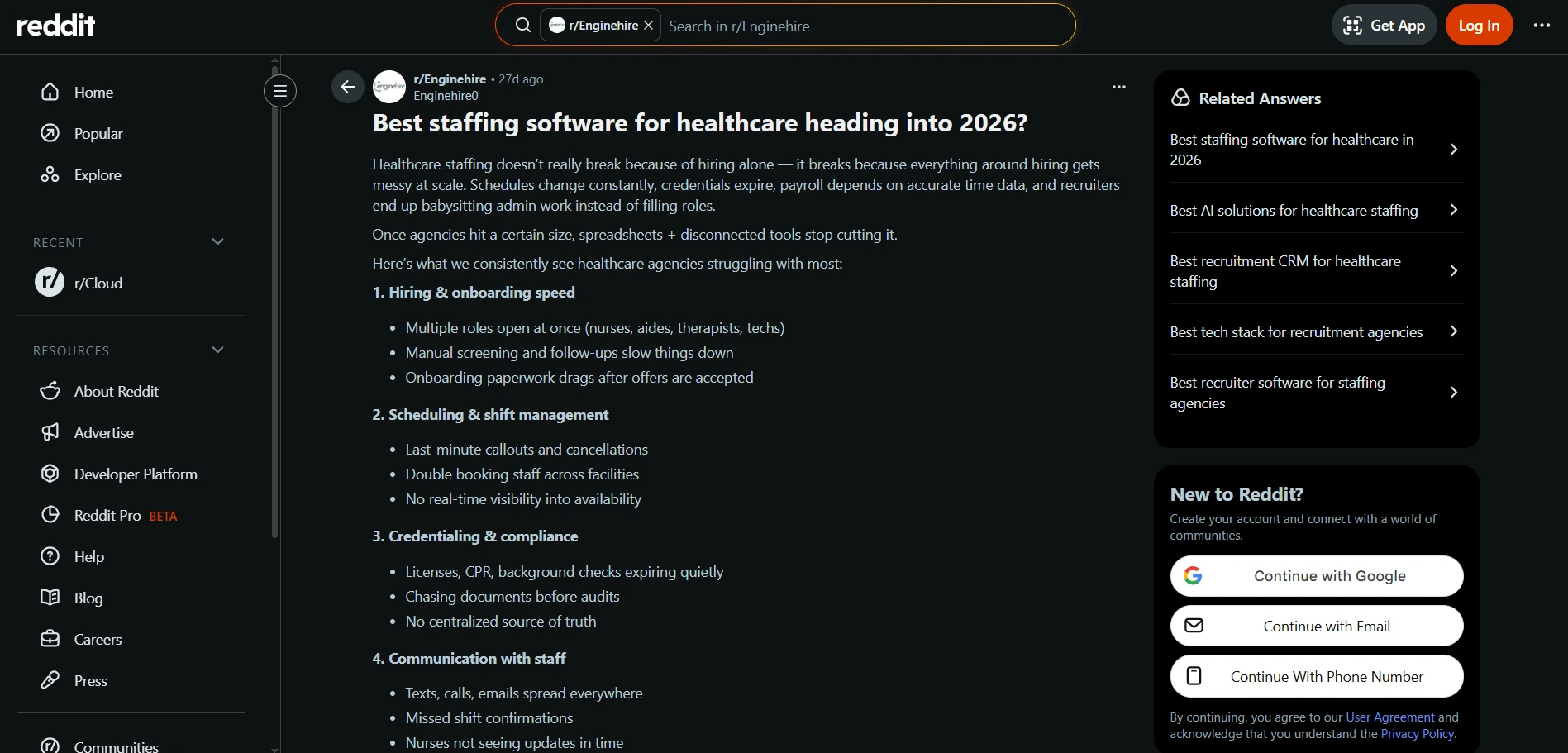
Source: Reddit
What Does It Show?
- Internal systems don’t reflect real clinical workflows.
- Clinicians resist tools that add clicks or cognitive load.
- Lack of integration → fractured experiences.
- Good technology + poor adoption = wasted investment.
- Technical perfection doesn’t equal practical usability.
Hospitals focus on deployment and compliance but neglect the human experience essential for true healthcare IT software adoption.
Why Do Most Healthcare Software Development Projects Ignore Adoption Metrics?
Most healthcare software development projects are measured by the wrong success criteria. What really matters: Are people actually using it properly every day?
That’s where healthcare software user adoption silently fails.
What Adoption Metrics Should Be Measured?
Real adoption-focused healthcare IT software adoption should measure:
- Daily active users by role.
- Feature usage depth.
- Task completion time vs. the old process.
- Drop-off points in workflows.
- Workarounds outside the system.
- Repeat login vs forced login behavior.
Without these metrics, leadership assumes success while usage keeps falling.
We’ve seen healthcare technology adoption challenges where 80% of rollout KPIs were met, but real usage stayed below 35%.
Adoption is not a side metric. It should be a primary KPI in healthcare software development.
Learn How One Healthcare Management System Can Manage Everything.
How Poor Healthcare Software Usability Quietly Kills ROI?
Bad usability doesn’t always cause loud failure. It causes quiet abandonment. Staff won’t file complaints every time. Instead, they:
- Avoid advanced features.
- Use the minimum required fields.
- Keep parallel notes.
- Ask others to enter data later.
- Delay updates.
This creates a dangerous illusion: The system is running, but the value is missing.
The Hidden ROI Damage
Poor healthcare software usability issues lead to:
- Duplicate work.
- Slower patient throughput.
- Billing delays.
- Data quality problems.
- Compliance exposure.
- Staff burnout.
A system with low healthcare software user adoption is more expensive than no system, because you pay for both software and manual fallback processes.
Good healthcare software development must optimize for: Speed, clarity, and low cognitive load under pressure.
How We Solved a Healthcare Software Adoption Crisis?
A healthcare organization approached with an internal platform that had:
- Full feature set.
- Strong backend.
- Good integrations.
- Very low usage.
What We Did?
Instead of rebuilding everything, we ran an adoption-first audit:
- Shadowed real clinical workflows.
- Identified friction clicks and delays.
- Removed non-essential fields.
- Redesigned role-based screens.
- Added quick-action workflows.
- Introduced micro-training modules.
Results:
- Faster task completion.
- Higher daily usage.
- Reduced side-tool dependency.
- Better data consistency.
This is why we say healthcare software user adoption is a workflow alignment exercise.
How to Improve User Adoption in Healthcare Software?
Here’s the Adoption-First Healthcare Software Development Framework that you should follow for the best results:
- Workflow Before Features: Map real clinician workflows before writing requirements.
- Role-Based Interface Design: Doctors, nurses, & admins each need a different UI priority.
- Reduce Click Distance: Critical actions should take a minimum of steps.
- Clinician Co-Design Workshops: Involve end users early, not after build.
- Scenario-Based Training: Train using real patient scenarios, not generic demos.
- Progressive Rollout: Launch in phases, not big-bang deployment.
- Usage Analytics Tracking: Continuously measure healthcare software user adoption metrics.
- Feedback Loop Inside the Product: Let users report friction in one click.
This is how to improve user adoption in healthcare software in real environments.
How Do We Design Healthcare Software That People Use?
Our healthcare software development approach is adoption-driven.
Our Adoption-Focused Approach
- Workflow-mapped healthcare software development.
- Clinician and staff discovery interviews.
- Role-based UX architecture.
- Low-friction task flows.
- Usability testing with real users.
- Embedded onboarding design.
- Adoption metrics dashboards.
- Post-launch usage optimization.
We design for real hospital behavior because real behavior decides adoption.
How Can We Help You Fix Low Adoption in Your Healthcare Systems?
We offer:
- Healthcare software usability audit.
- Adoption risk assessment.
- Workflow alignment review.
- UX redesign roadmap.
- Adoption improvement strategy.
With a personal, consultative approach, because every healthcare environment works differently.
What Smart Healthcare Leaders Do Differently About Software Adoption?
Smart healthcare leaders ask: “Are our people truly using it & benefiting from it?”
Successful healthcare software development today is adoption-first:
- Designed around real workflows.
- Tested with real users.
- Measured by real usage.
- Improved continuously.
FAQs
- Because they are built around features, not real clinical workflows and user behavior.
- Usually, due to workflow disruption, too many clicks, poor usability, and a lack of design involvement.
- No. If usability is poor, training cannot compensate for design friction.
- Workflow mismatch, clinician resistance, usability issues, and weak rollout strategy.
- Yes, adoption metrics should be primary success indicators.