Multi agent systems in artificial intelligence improve scalable AI development by distributing tasks across multiple autonomous agents that collaborate, specialize, & execute in parallel.
Instead of relying on one central AI model, multi agent AI systems divide intelligence, reducing bottlenecks, improving fault tolerance, and enabling horizontal scalability.
If your AI system slows down as usage grows, becomes expensive to scale, or fails under concurrent demand, multi agent development is the architectural solution.
What Are Multi Agent Systems in Artificial Intelligence?
Multi agent systems in artificial intelligence are AI architectures where multiple autonomous agents work together, communicate, and coordinate to solve complex problems more efficiently than a single centralized model.
- A single agent AI handles everything alone.
- A multi agent system distributes intelligence across multiple specialized agents.
- This distribution allows scalable AI development.
In multi agent artificial intelligence, each agent:
- Has a defined responsibility.
- Make decisions independently.
- Communicates with other agents.
- Operates within shared system goals.
Instead of one overloaded AI brain, you have a coordinated AI ecosystem.
For enterprises building AI products, this shift is foundational. Scalability is about architectural intelligence.
Why Traditional Single-Agent AI Fails While Scaling?
Single-agent AI systems fail because they centralize processing and decision-making, creating performance bottlenecks and single points of failure.
Core Problems in Traditional AI Systems
- Sequential task execution.
- Resource overloading.
- Poor parallelism.
- High latency during traffic spikes.
- Expensive vertical scaling.
- System-wide failure if one core component crashes.
Many AI systems work well in MVP stages. But once:
- Concurrent users increase.
- Data streams multiply.
- Tasks become more complex.
The architecture collapses. This is not a model-quality issue. It is a system design issue. Scalable AI development requires distributed intelligence.
How Can We Help You Implement Multi Agent AI?
We specialize in scalable AI system architecture. Our approach includes:
- AI scalability audits.
- Multi agent system design.
- Distributed architecture planning.
- Agent communication framework development.
- Performance optimization.
- Deployment & long-term support.
We focus on business outcomes, not just technical deployment. Whether you are:
- Scaling an AI SaaS platform.
- Optimizing automation workflows.
- Deploying enterprise AI.
- Building AI-powered products.
We can design and implement the right multi agent system for you.
Do You Want to Build a Scalable AI Before Your Competitors?
How Multi Agent AI Improves Scalable AI Development?
Multi agent AI improves scalability by decomposing complex problems into smaller tasks handled by specialized agents executing simultaneously.
1. Distributed Task Execution
In multi agent systems:
- Large tasks are broken into sub-tasks.
- Each agent specializes in a function.
- Tasks run in parallel.
- Results are coordinated and merged.
This eliminates central problems. Instead of one overloaded inference engine, you get distributed computation with optimized load handling.
2. Agent Specialization Improves Performance
Multi agent artificial intelligence thrives on specialization. For example:
- One agent handles data ingestion.
- Another handles reasoning.
- Another manages validation.
- Another optimizes outputs.
This increases accuracy and efficiency simultaneously. Specialized agents outperform generalist architectures in complex environments.
3. Fault Tolerance Through Decentralization
If one agent fails:
- The entire system does not crash.
- Tasks can be rerouted.
- Backup agents can take over.
This makes multi agent systems inherently more resilient than centralized models.
4. Horizontal Scalability
Single-agent AI often scales vertically (bigger servers, more expensive GPUs). Multi agent development allows horizontal scalability:
- Add more agents.
- Distribute load dynamically.
- Scale components independently.
This reduces infrastructure waste and cloud expenses.
Explore the Comparison of Codex vs Claude Code.
Comparison of Multi Agent Systems vs Single Agent AI
| Feature | Single Agent AI | Multi Agent Systems |
| Scalability | Limited | High |
| Fault Tolerance | Weak | Strong |
| Parallel Processing | Minimal | Advanced |
| Modularity | Rigid | Flexible |
| Infrastructure Cost | High at Scale | Optimized |
| Deployment Speed | Slower | Faster Iteration |
If you are planning long-term AI growth, multi agent systems in AI provide structural scalability that single-agent systems cannot match.
What Are the Use Cases of Multi Agent Artificial Intelligence?
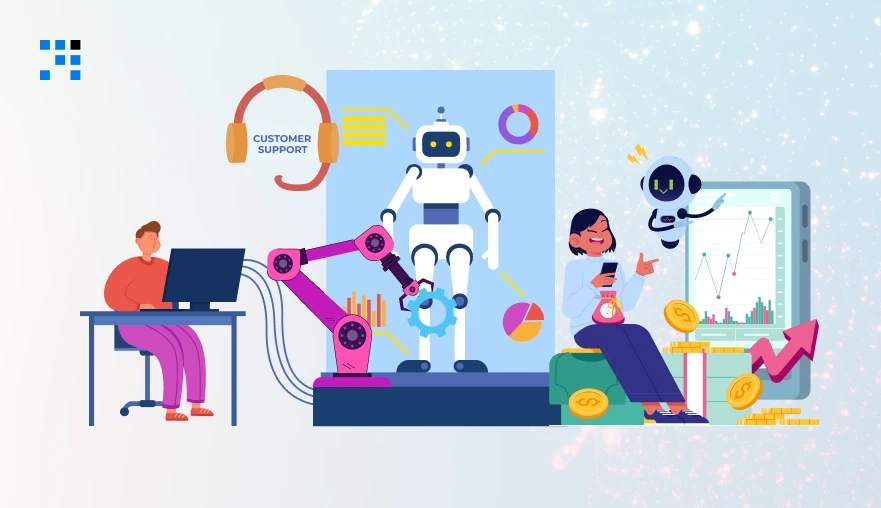
Multi agent systems are used where coordination, complexity, and scalability intersect.
- AI Workflow Automation: Multiple agents manage scheduling, decision routing, execution, and reporting simultaneously.
- Intelligent Customer Support Systems: One agent handles intent detection. Another manages knowledge retrieval. Another escalates complex cases.
- Logistics Optimization: Agents coordinate routing, demand forecasting, and dynamic inventory adjustments.
- AI Trading Systems: Agents monitor markets, assess risk, and execute trades collaboratively.
- Large Language Model (LLM) Orchestration: Different agents handle prompt generation, reasoning, validation, and output refinement.
Multi agent artificial intelligence allows these systems to operate at enterprise scale without collapsing under pressure.
How Multi Agent Development Reduces AI Costs?
Multi agent development reduces cost by optimizing compute usage and minimizing centralized overload.
Cost Advantages
- Parallel task execution reduces idle time.
- Independent scaling prevents over-provisioning.
- Better resource allocation.
- Faster processing reduces runtime costs.
When AI systems grow, costs typically grow exponentially. With multi agent AI, growth is controlled and modular. This is especially important for:
- SaaS platforms.
- AI-powered enterprise tools.
- High-concurrency applications.
How We Solved a Scalability Crisis Using Multi Agent AI?
We had a client whose AI assistant platform:
- Crashed under high concurrent usage.
- Experienced 4 to 6 second response delays.
- Faced escalating cloud bills.
The system used a centralized AI architecture. All reasoning, data handling, and decision-making ran through a single inference pipeline.
Our Multi Agent Solution
We implemented a multi agent system design:
- Built task-specific reasoning agents.
- Designed event-driven coordination.
- Implemented parallel execution workflows.
- Added dynamic load distribution.
Each agent had a focused responsibility. Agents communicated via structured protocols.
Results
- 3x scalability improvement.
- 40% reduction in infrastructure cost.
- 2x faster response times.
- Stable performance during peak load.
The transformation was architectural.
Multi agent systems in artificial intelligence turned a fragile AI product into a scalable ecosystem.
Learn more about Headless B2B Commerce.
How Do We Build a Scalable Multi Agent AI System? (Step-by-Step)
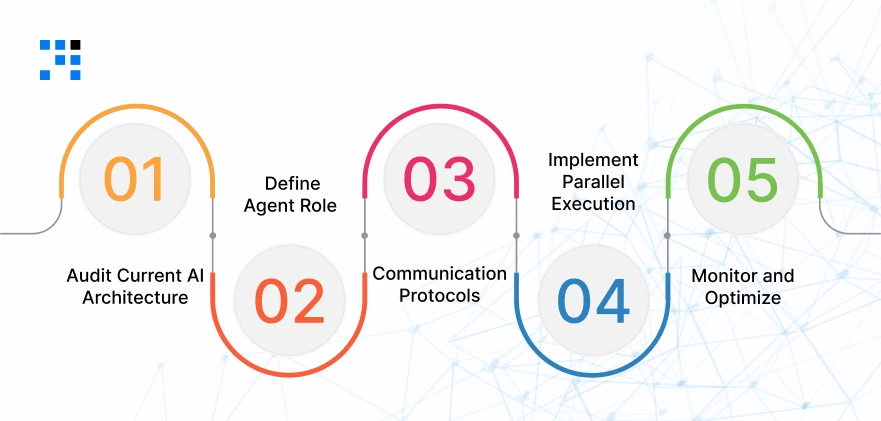
Building scalable multi agent AI requires structured architecture planning, not just model deployment.
Step 1: Audit Current AI Architecture
- Identify bottlenecks and centralized overload.
Step 2: Define Agent Roles
- Separate responsibilities clearly.
Step 3: Design Communication Protocols
- Agents must exchange data efficiently and reliably.
Step 4: Implement Parallel Execution
- Allow concurrent processing across agents.
Step 5: Monitor and Optimize
- Track performance metrics and agent interactions.
Multi agent development is not about adding more models. It’s about designing intelligent collaboration.
Scale Smarter with Multi Agent AI
Multi agent systems in artificial intelligence are not optional for scalable AI development. They are foundational. They provide:
- Distributed intelligence.
- Higher efficiency.
- Reduced cost.
- Improved reliability.
- Long-term scalability.
If your AI system is growing or you expect it to, now is the time to redesign the architecture.
FAQs
- Multi agent systems in artificial intelligence are AI architectures where multiple autonomous agents collaborate, communicate, & coordinate to solve complex tasks.
- Instead of relying on a single centralized model, intelligence is distributed across specialized agents for better scalability and performance.
- Multi agent systems improve scalable AI development by distributing workloads across independent agents that execute tasks in parallel.
- This reduces latency, increases fault tolerance, and provides horizontal scaling without significantly increasing infrastructure costs.
- Yes, multi agent development is particularly effective for enterprise AI systems that require scalability, modular expansion, high availability, & fault tolerance.
- It allows organizations to scale components independently while maintaining performance and system reliability.
- Yes, multi agent systems can orchestrate large language models by assigning different agents for prompt generation, reasoning, validation, & refinement.
- This improves response accuracy, reduces processing delays, and improves scalability in AI-based applications.