PWA vs Native App: Which One Wins?
Compare PWA vs native app with insights on cost, performance, user experience, and practical scenarios to choose what fits your business.
If you’re deciding between a PWA vs Native app, the right choice depends on your business goals.
Choose a PWA if you want a cost-effective solution, faster development, and better reach.
Go for a Native mobile app if you need high performance, advanced features, and a premium user experience.
In short, PWAs are ideal for startups and content-driven platforms, while native apps suit performance-heavy, feature-rich applications.
Why Does This Decision Matters for Your Business Growth?
Choosing between a progressive web app vs native app directly impacts your business growth.
Many businesses make the wrong choice and end up losing users, time, and revenue. Here’s why this decision is important:
- Development Cost: Native apps require separate builds for iOS and Android, increasing cost, while PWAs are more budget-friendly.
- User Retention: A slow or poor app experience can drive users away quickly.
- App Performance: Native apps offer better speed and responsiveness, especially for complex features.
Making the right choice ensures better ROI, faster growth, and a stronger digital presence.
How Do We Help You Choose the Right Mobile App Strategy?
- Instead of generic advice, we map your exact user journeys to decide how to choose between PWA and Native apps based on real usage behavior.
- We validate your idea with market data and answer should I build a PWA or Native app using competitor and user insights.
- For startups, we prioritize speed-to-market using proven PWA vs Native app for startups launch strategies.
- We identify hidden cost leaks early and recommend when to use PWA to reduce development time without compromising core functionality.
- When performance matters, we create scalable solutions and guide you on when to use Native apps for long-term product growth.
Not sure whether to choose a PWA or Native App?
What Is a Progressive Web App (PWA)?
If you’re wondering what is PWA, think of it as a website that behaves like a mobile app.
A progressive web app (PWA) runs in a browser but offers an app-like experience to users. It combines the best of web and mobile apps.
Key Progressive Web App Benefits
- Works in Browser: No need to download from an app store; users can access it instantly.
- Offline Support: PWAs can work even with limited or no internet connection.
- Installable: Users can add it to their home screen like a native app.
Because of these features, PWAs are becoming a popular choice for businesses looking for faster deployment and wider reach.
What Is a Native Mobile App?
A native mobile app is built specifically for a platform like iOS or Android using platform-specific technologies (like Swift for iOS or Kotlin for Android).
Unlike PWAs, native apps are downloaded from app stores and installed on a device.
Key Native Mobile App Advantages
- High Performance: Faster speed and smoother interactions, ideal for complex applications.
- Deep Device Integration: Access to device features like camera, GPS, Bluetooth, and sensors.
Native apps are best suited for businesses that need high-end performance, advanced functionality, and a premium user experience.
Learn How to Choose the Right Tech Stack for Startup in 2026.
Quick Comparison Between PWA vs Native App
Here you can see the difference between PWA and Native app in a side-by-side view:
| Feature | PWA (Progressive Web App) | Native Mobile App |
|---|---|---|
| Performance | Good for most use cases. | High performance for complex apps. |
| Cost | Lower development and maintenance cost. | Higher cost (separate apps for iOS & Android). |
| User Experience | App-like but slightly limited. | Smooth, fast, and highly interactive. |
| Development Time | Faster to build and launch. | Takes longer due to platform-specific development. |
| Offline Capabilities | Available (limited functionality). | Strong offline support. |
This PWA vs Native app comparison clearly shows that PWAs are ideal for reach and cost efficiency, while native apps excel in performance and user experience.
PWA vs Native App Performance: Which Is Faster?
When comparing PWA vs Native performance, Native apps usually have the advantage.
When comparing PWA vs Native performance, Native apps usually have the advantage.
Real-World Performance Comparison
- Native apps load faster and handle complex tasks smoothly.
- PWAs perform well for most business use cases but may lag in heavy interactions.
When Native Apps Win?
- Gaming apps with high graphics.
- Apps with real-time processing (like video editing or AR/VR).
- Heavy interaction platforms.
When PWA Is Enough?
- Content-based websites.
- E-commerce platforms.
- Business apps with moderate functionality.
So, is PWA faster than Native apps?
Not always. Native apps are faster for complex use cases, but PWAs are fast enough for most business needs.
Cost Comparison: PWA vs Native App Development
One of the biggest factors in the PWA vs Native app cost debate is budget.
Development Cost Breakdown
- PWA: Single codebase that works across devices means lower cost.
- Native App: Separate development for iOS and Android means a higher cost.
Maintenance Cost
- PWAs are easier and cheaper to maintain.
- Native apps require ongoing updates for each platform.
Time to Build
- PWAs can be launched quickly.
- Native apps take longer due to platform-specific development.
So, is PWA cheaper than Native apps?
Yes. The cost of PWA vs native app development is significantly lower, making PWAs ideal for startups and small businesses.
User Experience: PWA vs Native App
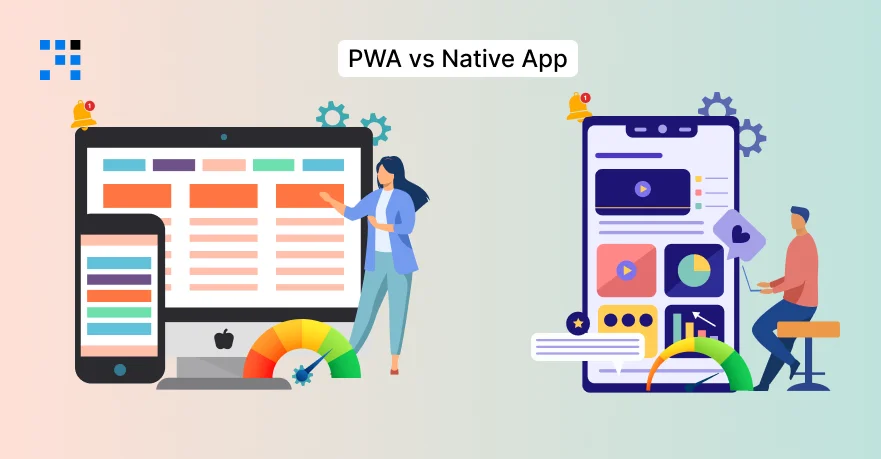
The PWA vs Native app user experience is another key factor in your decision.
Speed
- Native apps feel faster and smoother.
- PWAs are improving, but may feel slightly slower.
Animations & Interactions
- Native apps offer rich animations and smooth transitions.
- PWAs have limited animation capabilities.
Push Notifications
- Native apps support advanced push notifications.
- PWAs support notifications, but with some limitations.
Native apps deliver a premium experience, while PWAs provide a good, practical experience for most users.
When Should You Choose a PWA?
Knowing when to use PWA can save you time and money.
Best Use Cases for PWA
- Startups with Limited Budget: Build faster & launch quickly without high costs.
- Content-Driven Platforms: Blogs, news, and informational websites.
- E-commerce MVPs: Test your idea before investing in a full native app.
A PWA vs Native app for startups comparison clearly shows PWAs are ideal for early-stage businesses.
They are also a great choice as a PWA for small businesses looking for reach and affordability.
When Should You Choose a Native App?
Understanding when to use Native apps helps you avoid performance issues later.
Best Use Cases for Native Apps
- High-Performance Applications: Apps requiring speed and precision.
- Gaming & Heavy Interaction Apps: Smooth graphics & real-time interaction.
- Apps Needing Full Device Access: Camera, GPS, sensors, Bluetooth.
These Native app advantages make them the best choice for businesses focused on performance and advanced functionality.
Not Sure Which One Fits Your Business?
How to Choose Between PWA and Native App?
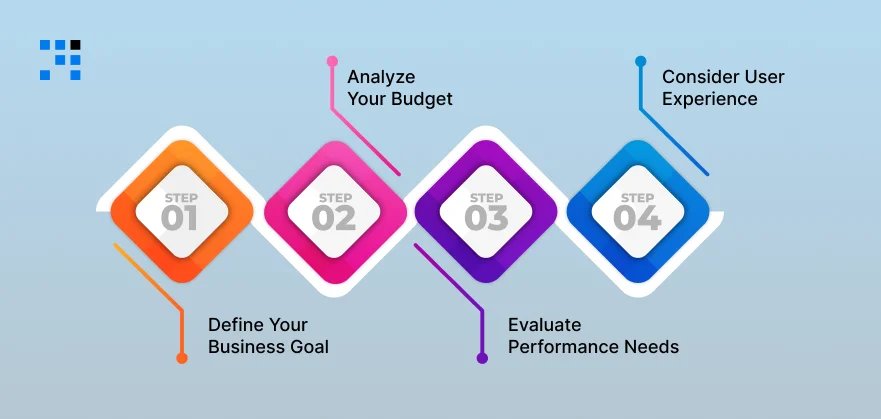
If you’re still wondering how to choose between PWA and Native app, follow this simple step-by-step framework:
Step 1: Define Your Business Goal
- Want fast reach? Go for PWA.
- Want a premium experience and performance? Choose Native.
Step 2: Analyze Your Budget
- Limited budget: PWA.
- Flexible budget: Native app.
Step 3: Evaluate Performance Needs
- Basic to moderate features: PWA.
- Complex, high-performance features: Native.
Step 4: Consider User Experience
- Standard UX is enough: PWA.
- High-end UX required: Native.
Still asking, should I build a PWA or Native app?
Use this framework to align your decision with your business goals.
PWA vs Native App for Your Business
Here’s a simple way to decide:
Choose PWA if:
- You want lower cost and faster launch.
- You are building an MVP or startup product.
Choose Native App if:
- You need high performance and speed.
- Your app requires advanced features.
- User experience is your top priority.
There is no single answer in the PWA vs Native app debate. The best choice depends on your business needs.
FAQs
- It depends on your goals.
- PWAs are better for cost and quick launch, while native apps are ideal for high performance, advanced features, and a premium user experience.
- Yes, PWAs are generally cheaper because they use a single codebase and don’t require separate development for iOS and Android, reducing both development and maintenance costs.
- PWAs can replace native apps for content-based or simple business apps, but they may not fully replace native apps for high-performance or feature-heavy applications.
- No, native apps are generally faster and more responsive.
- However, PWAs are fast enough for most business use cases and provide a smooth experience for everyday users.