How can businesses scale faster with AI route optimization?
Let’s see how real-time data, predictive analytics, and automation outperform static route planning and improve delivery performance.
For logistics companies, meeting customers’ expectations like faster deliveries, real-time tracking, and zero delays is becoming harder.
Especially with increasing last-mile delivery challenges and rising fuel costs. Traditional route planning software is not enough in 2026.
Static routes, delayed updates, and poor adaptability often lead to missed delivery windows and higher operational costs.
That’s why AI route optimization is needed in the logistics industry.
By using AI in logistics, businesses can analyze real-time data, predict delays, and automatically choose the most efficient routes.
In this blog, you’ll learn about the most important AI features for logistics apps, how AI route optimization works, & how it helps reduce delivery time, fuel costs, & inefficiencies.
What is AI Route Optimization in Logistics?
AI route optimization is the use of artificial intelligence to automatically find the fastest, most efficient delivery routes by analyzing real-time and historical data.
How Does It Work? (Data + Algorithms + Automation)
AI-powered logistics route optimization uses:
- Real-time data (traffic, weather, road conditions).
- Machine learning algorithms to predict delays.
- Automation to adjust routes instantly.
This combination allows smart route optimization, helping businesses make better decisions without manual effort.
Difference from Traditional Routing
Unlike traditional route planning software, AI-driven systems:
- Continuously update routes in real time.
- Predict future disruptions.
- Optimize multiple factors like fuel, time, and delivery priority.
AI logistics solutions turn routing from a static process into a dynamic, intelligent system that improves delivery performance at scale.
Learn to Build Real-Time Tracking Apps to Reduce Delivery Delays.
How to Choose the Right AI Route Optimization Software?
Choosing the right route optimization software is critical for long-term success.
Must-Have Features Checklist
- Real-time route optimization.
- Predictive route planning.
- Multi-stop route optimization.
- AI-based analytics.
Scalability Considerations
- Can the system handle growing delivery volumes?
- Does it support multiple locations and fleets?
Integration with Existing Systems
- Should integrate with GPS, ERP, and fleet systems.
- Easy API support for logistics platforms.
Cost vs ROI
- Compare pricing with expected savings.
- Focus on long-term benefits like fuel reduction and efficiency.
The right AI route optimization software should deliver measurable ROI.
Want a Customized AI Route Optimization Software?
Core AI Features Every Logistics App Must Have in 2026
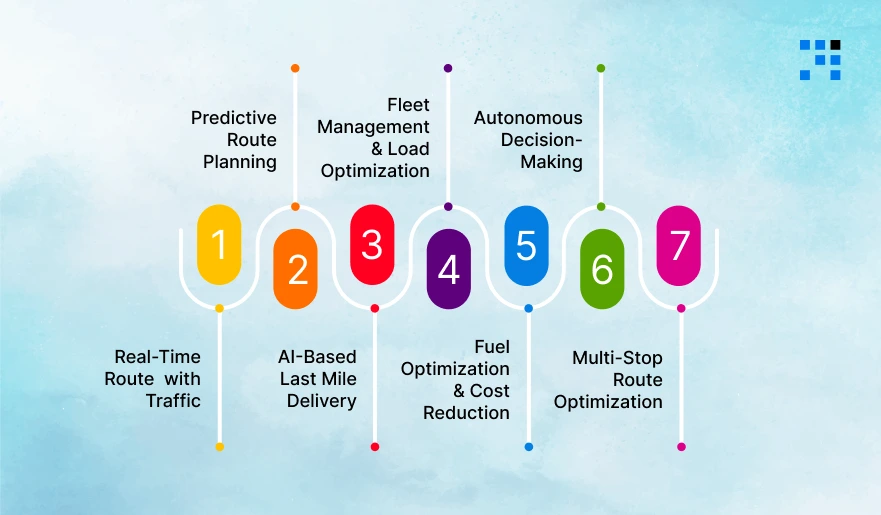
To stay competitive in 2026, logistics businesses need AI route optimization by intelligent features that adapt, predict, and automate decisions in real time.
Here are the must-have AI features for logistics apps that drive faster deliveries, lower costs, and higher efficiency:
1. Real-Time Route Optimization with Traffic Intelligence
One of the most powerful features in modern route optimization software is the ability to adjust routes instantly.
- Uses real-time route optimization to adapt to traffic, roadblocks, and delays.
- Combines GPS route optimization with AI for accurate navigation.
- Automatically reroutes drivers using live data.
Result: Fewer delays, faster deliveries, and better customer experience.
2. Predictive Route Planning Using Machine Learning
Instead of reacting to problems, AI helps you predict them before they happen.
- Uses machine learning route optimization to forecast traffic patterns.
- Predicts delivery demand, peak hours, and possible delays.
- Provides smarter route planning software decisions.
Result: Improved delivery accuracy and better time management.
3. AI-Based Last Mile Delivery Optimization
The last mile is the most expensive and complex part of logistics, and AI makes it smarter.
- Optimizes last mile delivery with intelligent scheduling.
- Uses route clustering to group nearby deliveries.
- Allocates delivery slots based on priority and location.
Result: Faster deliveries with reduced operational complexity.
4. Intelligent Fleet Management & Load Optimization
Efficient fleet usage is important for scaling logistics operations.
- Provides fleet route optimization by assigning the right vehicle to the right route.
- Optimizes vehicle capacity to avoid underloading or overloading.
- Uses AI for smart dispatching and task allocation.
Result: Higher productivity with fewer resources.
5. Fuel Optimization & Cost Reduction Algorithms
Fuel costs are one of the biggest challenges in logistics, and AI helps minimize them.
- Selects the most efficient routes, not just the shortest ones.
- Uses AI logistics solutions to reduce unnecessary mileage.
- Improves driving patterns and route efficiency.
Result: Lower fuel consumption and reduced delivery costs.
6. Autonomous Decision-Making Systems
Modern AI logistics software can make decisions without human intervention.
- Automatically selects the best routes based on real-time conditions.
- Adjusts delivery priorities and schedules instantly.
- Reduces dependency on manual planning.
Result: Faster operations and scalable logistics systems.
7. Multi-Stop Route Optimization Engine
Handling multiple deliveries in one trip is complex, but AI simplifies it.
- Optimizes delivery route optimization for multiple stops.
- Finds the most efficient sequence for deliveries.
- Improves route density and reduces travel time.
Result: More deliveries completed in less time.
By integrating these advanced capabilities, businesses can change their logistics operations with AI-powered route optimization.
From predictive route planning to real-time route optimization, these features ensure faster deliveries, lower costs, and smarter decision-making.
How AI Improves Route Optimization Efficiency?
Implementing AI route optimization directly impacts business performance & profitability.
Faster Delivery Times
- With real-time route optimization and predictive insights, AI selects the fastest routes and avoids delays.
- Businesses report 20 to 30% faster deliveries using AI-based routing.
Reduced Fuel Consumption
- AI identifies the most efficient routes, reducing unnecessary mileage.
- Companies achieve 10 to 25% fuel savings with AI logistics solutions.
Increased Fleet Productivity
- Using fleet route optimization, AI ensures better vehicle utilization and smarter dispatching.
- Up to 35% more deliveries per vehicle per day.
Better Customer Satisfaction
- Accurate ETAs and faster deliveries improve customer trust.
- Delivery accuracy improves by up to 40% with predictive route planning.
AI Route Optimization vs Traditional Routing
| Factor | Traditional Routing | AI Route Optimization |
| Data Usage | Static | Real-time + predictive |
| Efficiency | Limited | High |
| Cost | Higher | Lower |
| Adaptability | None | Dynamic |
Traditional route planning software struggles to adapt to real-world conditions.
In contrast, AI-based route optimization continuously learns, adjusts, and improves delivery performance.
This is why businesses are quickly shifting to AI in logistics for smarter operations.
Want to Build a Logistics App with AI-based Route Optimization?
Key Use Cases of AI in Logistics Route Optimization
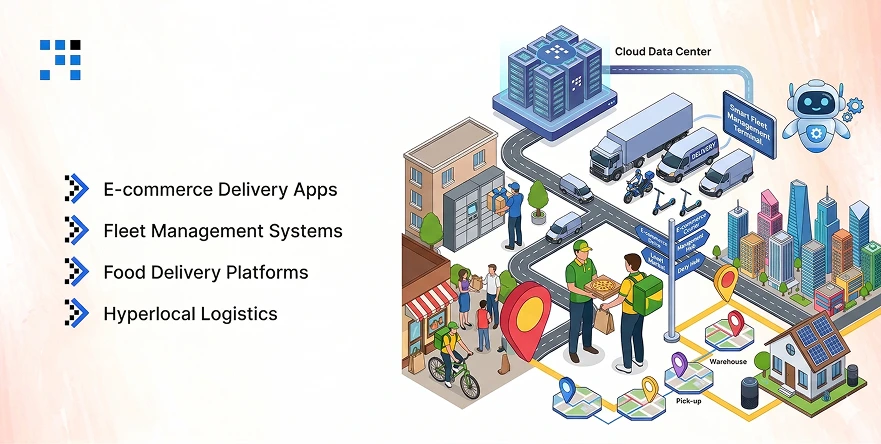
AI is transforming multiple logistics segments with smarter decision-making and automation.
- E-commerce Delivery Apps: Optimize last mile delivery. Handle high-order volumes efficiently.
- Fleet Management Systems: Improve fleet route optimization. Track and manage vehicles in real time.
- Food Delivery Platforms: Provide ultra-fast deliveries using real-time route optimization. Reduce delays during peak hours.
- Hyperlocal Logistics: Improve delivery within small geographic areas. Use smart route optimization for faster service.
These use cases highlight how AI logistics software adapts to different business needs.
What’s Next for AI Route Optimization in 2026?
The future of AI in logistics is driven by smarter, more autonomous systems.
- Autonomous Logistics Systems: AI will manage routing decisions without human input, improving speed and efficiency.
- AI + IoT Integration: Connected devices will provide real-time data for better logistics route optimization.
- Self-Learning Routing Engines: AI systems will continuously improve based on past data and performance.
- Hyper-Personalized Delivery Routes: Routes will be customized based on customer preferences, time slots, and behavior.
These trends will change AI-powered route optimization in the coming years.
Start Optimizing Your Routes with AI Today
In 2026, logistics success depends on adopting AI route optimization.
From faster deliveries to reduced costs and improved customer satisfaction, AI is transforming how businesses manage routes.
Companies using AI in logistics get a strong competitive advantage by improving efficiency, scalability, and decision-making.
If you want to stay ahead, investing in AI-powered route optimization has become a necessity.
FAQs
- AI route optimization uses artificial intelligence to find the most efficient delivery routes using real-time and predictive data.
- AI improves routes by analyzing traffic, weather, and delivery conditions to provide real-time route optimization and reduce delays.
- Features like smart route optimization, predictive planning, and efficient route selection help reduce fuel consumption.
- The best route optimization software includes AI features like real-time tracking, predictive analytics, and multi-stop optimization.
- Use AI logistics solutions that combine GPS data, machine learning, and automation to continuously improve route efficiency.