How can I scale my Porter-like app to multiple cities?
Start with one city, optimize operations, and then expand by adding more drivers, improving infrastructure, and marketing locally.
Building an app like Porter is one of the fastest-growing opportunities in today’s digital market.
With an on-demand logistics app, you can earn through booking commissions, surge pricing, and business partnerships while reducing manual work and delays.
It helps you manage transport operations smoothly, track deliveries in real time, and scale your business across cities.
In this guide, you’ll learn everything, from features and cost to step-by-step logistics app development using Flutter, along with real insights and code direction.
Why Are Startups Quickly Investing in Apps Like Porter?
The logistics industry is changing fast. Traditional transport businesses rely on phone calls, manual bookings, and no real-time tracking.
This leads to delays, confusion, and lost revenue. This is where on-demand logistics app development comes in. Businesses want to:
- Automate truck booking.
- Track deliveries in real-time.
- Reduce human errors.
- Improve customer experience.
When you build an app like Porter, you solve all these problems in one platform. Customers can book a vehicle in seconds, track it live, and pay digitally.
That’s why logistics app development is becoming a must-have for modern transport businesses.
What is Porter App & How Does It Work?
If you’re planning to build a Porter clone app, you must first understand how the Porter app works.
Porter is an on-demand truck booking app that connects users with nearby drivers for goods transport.
User Flow (Step-by-Step)
- The user enters the pickup & drop location.
- The app shows available vehicles and pricing.
- The driver gets a request and accepts it.
- The user tracks the delivery in real-time.
- Payment is completed after delivery.
Porter App Business Model
- Commission per ride.
- Surge pricing during peak time.
- Partnerships with businesses.
This porter app business model works well in India because:
- High demand for local transport.
- Growing small businesses.
- Need for fast and affordable logistics.
Here’s the
Why Choose Us for Logistics App Development?
If you’re looking for a reliable logistics app development company, choosing the right team makes all the difference.
Here’s what we offer:
- Faster Development: Quick turnaround using Flutter.
- Scalable Architecture: Built to handle future growth.
- Custom Solutions: Personalized according to your business needs.
- Ongoing Support: We help you even after launch.
We help you build a successful logistics business.
Want to Build a Customized Logistics App like Porter?
Step-by-Step Guide to Build a Porter Clone in Flutter
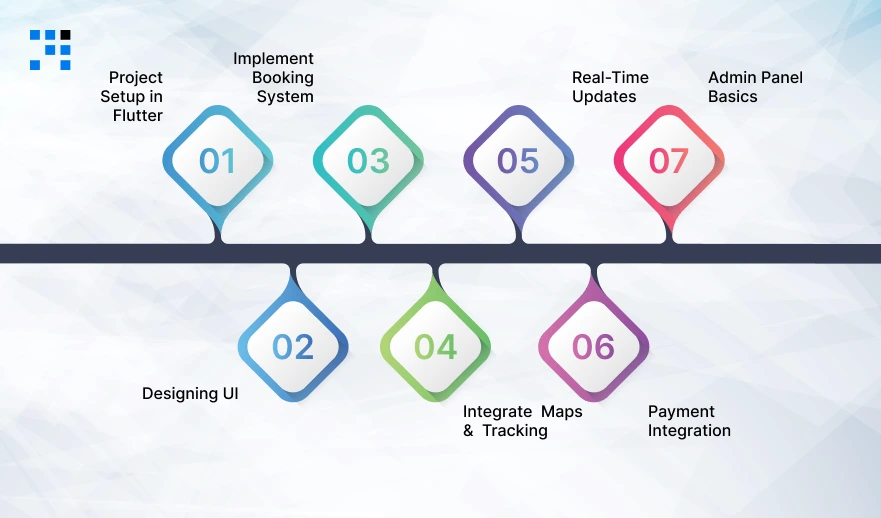
If you’re planning to build a logistics app using Flutter step by step, here you will have a clear idea of how a Porter clone app in Flutter with source code is actually built.
Step 1: Project Setup in Flutter
To start your Flutter app development, first create a new project.
                flutter create porter_clone_app
                cd porter_clone_app
Add Required Dependencies (pubspec.yaml)
                dependencies:
                flutter:
                        sdk: flutter
                google_maps_flutter: ^2.5.0
                geolocator: ^10.0.0
                firebase_core: ^2.0.0
                cloud_firestore: ^4.0.0
                provider: ^6.0.0
                http: ^1.0.0
Then run:
flutter pub get
This setup is the base of your logistics app development using Flutter.
Step 2: Designing UI (User + Driver Flow)
A Porter clone app has two main flows:
- User (booking).
- Driver (accepting rides).
Simple Booking Screen UI
                import 'package:flutter/material.dart';
                class BookingScreen extends StatelessWidget {
                @override
                Widget build(BuildContext context) {
                        return Scaffold(
                        appBar: AppBar(title: Text("Book a Truck")),
                        body: Padding(
                        padding: EdgeInsets.all(16),
                        child: Column(
                        children: [
                                TextField(decoration: InputDecoration(labelText: "Pickup Location")),
                                TextField(decoration: InputDecoration(labelText: "Drop Location")),
                                SizedBox(height: 20),
                                ElevatedButton(
                                onPressed: () {
                                // Booking logic
                                },
                                child: Text("Find Truck"),
                                )
                        ],
                        ),
                        ),
                        );
                }
                }
This is the starting UI for your truck booking app like Porter.
Step 3: Implement Booking System
Now we connect UI with backend logic.
Booking API Call (Example)
                import 'dart:convert';
                import 'package:http/http.dart' as http;

                Future<void>createBooking(String pickup, String drop) async {
                final response = await http.post(
                Uri.parse("https://yourapi.com/bookings"),
                        headers: {"Content-Type": "application/json"},
                        body: jsonEncode({
                        "pickup": pickup,
                        "drop": drop,
                        }),
                );

                if (response.statusCode == 200) {
                        print("Booking Created");
                } else {
                        print("Failed");
                }
                }
This is the core of any on-demand logistics app where users can book trucks.
Step 4: Integrate Google Maps & Location Tracking
Real-time tracking is the heart of any delivery app like Porter.
Google Map Integration
                import 'package:google_maps_flutter/google_maps_flutter.dart';
                import 'package:flutter/material.dart';

                class MapScreen extends StatefulWidget {
                @override
                _MapScreenState createState() => _MapScreenState();
                }

                class _MapScreenState extends State<MapScreen>{
                GoogleMapController? mapController;

                final LatLng _center = const LatLng(22.3072, 73.1812); // Example: Vadodara

                void _onMapCreated(GoogleMapController controller) {
                        mapController = controller;
                }

                @override
                Widget build(BuildContext context) {
                        return Scaffold(
                        appBar: AppBar(title: Text("Track Driver")),
                        body: GoogleMap(
                        onMapCreated: _onMapCreated,
                        initialCameraPosition: CameraPosition(
                        target: _center,
                        zoom: 12.0,
                        ),
                        ),
                        );
                }
                }
This provides real-time tracking in logistics app development.
Step 5: Real-Time Updates (Driver Assignment)
Use Firebase for real-time updates.
Firebase Setup
                import 'package:cloud_firestore/cloud_firestore.dart';
                final FirebaseFirestore firestore = FirebaseFirestore.instance;

                Future<void>assignDriver(String bookingId, String driverId) async {
                await firestore.collection("bookings").doc(bookingId).update({
                        "driverId": driverId,
                        "status": "assigned"
                });
                }
Listening to Updates
                StreamBuilder(
                stream: firestore.collection("bookings").snapshots(),
                builder: (context, snapshot) {
                        if (!snapshot.hasData) return CircularProgressIndicator();

                        var docs = snapshot.data!.docs;
                        return ListView(
                        children: docs.map((doc) => Text(doc["status"])).toList(),
                        );
                },
                )
This is how driver assignment works in a Porter clone app.
Step 6: Payment Integration
For any truck booking app like Porter, payments are essential.
Example Payment API Call
                Future<void> makePayment(double amount) async {
                final response = await http.post(
                Uri.parse("https://yourapi.com/payment"),
                        body: {
                        "amount": amount.toString(),
                        },
                );

                if (response.statusCode == 200) {
                        print("Payment Success");
                } else {
                        print("Payment Failed");
                }
                }
You can integrate Razorpay, Stripe, or Paytm for real-world apps.
Step 7: Admin Panel Basics
Admin panel helps manage the entire logistics app development system.
Basic Admin Dashboard (Flutter Web / Simple UI)
                class AdminDashboard extends StatelessWidget {
                @override
                Widget build(BuildContext context) {
                        return Scaffold(
                        appBar: AppBar(title: Text("Admin Panel")),
                        body: Column(
                        children: [
                        ListTile(title: Text("Total Bookings: 120")),
                        ListTile(title: Text("Active Drivers: 45")),
                        ListTile(title: Text("Revenue: ₹50,000")),
                        ],
                        ),
                        );
                }
                }
This is the base for fleet management and analytics.
Must-Have Features of a Porter Clone App
To successfully build a truck booking app like Porter, you need the right set of features.
User App Features
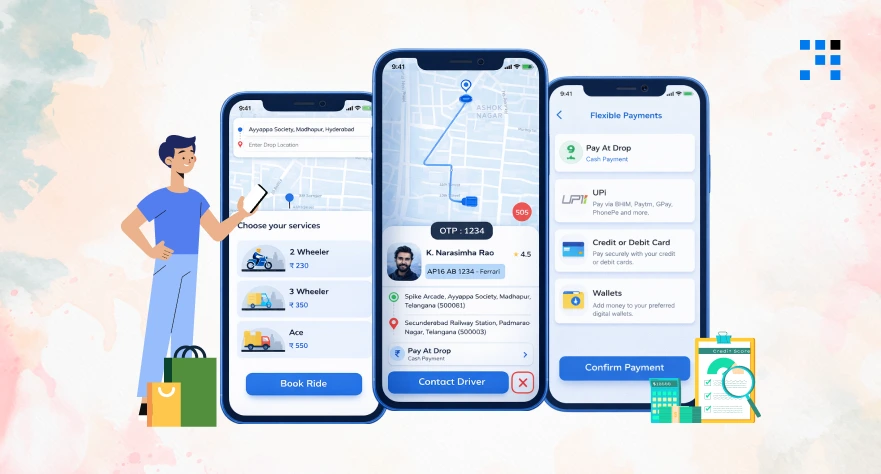
- Easy Booking: Book trucks in a few clicks.
- Real-Time Tracking: Track driver location live.
- Fare Estimation: Know cost before booking.
- Flexible Payments: Multiple payment options.
Driver App Features
- Ride Requests: Accept or reject bookings.
- Route Assistance: Navigation support.
- Earnings Dashboard: Track daily income.
Admin Panel Features
- Fleet Management: Manage drivers and vehicles.
- Customer Interaction: User management.
- Analytics: Track bookings, revenue, and growth.
These are the most important porter app features and truck booking app features that make your app successful.
Have an Idea for an app like Porter?
Cost to Build an App Like Porter
Here you can see how much it costs to build an app like porter.
Basic vs Advanced Cost
- Basic App: $3000 to $6000
- Advanced App: $6000 to $10,000+
Factors Affecting Cost
- Number of features.
- UI/UX complexity.
- Tech stack (Flutter, backend).
- Development team experience.
Final cost depends on your requirements, but starting with an MVP is always recommended.
Choosing the Right Tech Stack for Logistics App Development
Choosing the right technology is critical for building a scalable app.
Why Flutter for App Development?
- Single codebase for Android & iOS.
- Faster development.
- Cost-effective.
- Great UI performance.
This makes Flutter app development perfect for startups.
Backend Options
- Node.js (scalable & fast).
- Firebase (quick setup for MVP).
Database & APIs
- MongoDB / MySQL.
- Google Maps API (for tracking & routes).
- Payment gateway integration.
A strong tech stack ensures your logistics app development is future-ready.
How to Launch & Scale Your Logistics App Like Porter?
Building the app is just the first step. Growth is where real success happens.
MVP Launch Strategy
- Start with basic features.
- Launch in one city.
- Test with real users.
Marketing Tips
- Target local businesses.
- Use digital ads.
- Offer discounts initially.
Scaling to Multiple Cities
- Add more drivers.
- Optimize backend performance.
- Introduce advanced features.
If you want to start a logistics business with an app, focus on gradual scaling instead of launching everything at once.
Is Building a Porter Clone Worth It?
Yes, building a porter clone app is a great business opportunity.
With increasing demand for on-demand logistics apps, businesses are rapidly shifting online.
Whether you’re a startup or an existing transport company, investing in a Porter-like app can boost efficiency and revenue.
With the right features, tech stack, and strategy, you can build and scale a successful logistics platform.
FAQs
- The cost to build an app like Porter ranges from $6000 to $10,000+, depending on features, complexity, and development team.
- The Porter app earns through commission on each booking, surge pricing, and partnerships with businesses for regular transport needs.
- Key features include booking system, real-time tracking, fare estimation, driver dashboard, and admin panel.
- Yes, the logistics app business is highly profitable due to growing demand, repeat customers, and scalable business models.